
Table of Contents
Running a soccer program means juggling registrations, schedules, payments, and a constant stream of questions from families. It adds up fast.
A well-designed soccer website can help. But if your background is coaching, not web development, it's hard to know where to start.
This guide covers the essentials: the pages you need, the features that matter most, and practical ways to build everything without any web design experience.
Get it right, and your website becomes the one place families check for updates throughout the season.
Start with the right website builder for youth soccer clubs and leagues
For a youth soccer club or league, the best website builder is one made for sports organizations, where registration, schedules, and family messaging are part of the same site and under one login.
Jersey Watch is a sports-specific website builder used by more than 2,800 youth sports organizations. It's free to explore and a live site costs $19 for the first month and then $348 a year, with a custom domain, custom design, and no setup fees.
The soccer calendar never really stops, so an easy-to-update website platform that connects registration, payments, schedules, and team communication saves volunteers the most time. Between recreational programs, competitive clubs and seasonal tournaments, volunteers are given a lot to manage. Finding a builder that ties in all of your season tools means a smoother process for everyone involved.
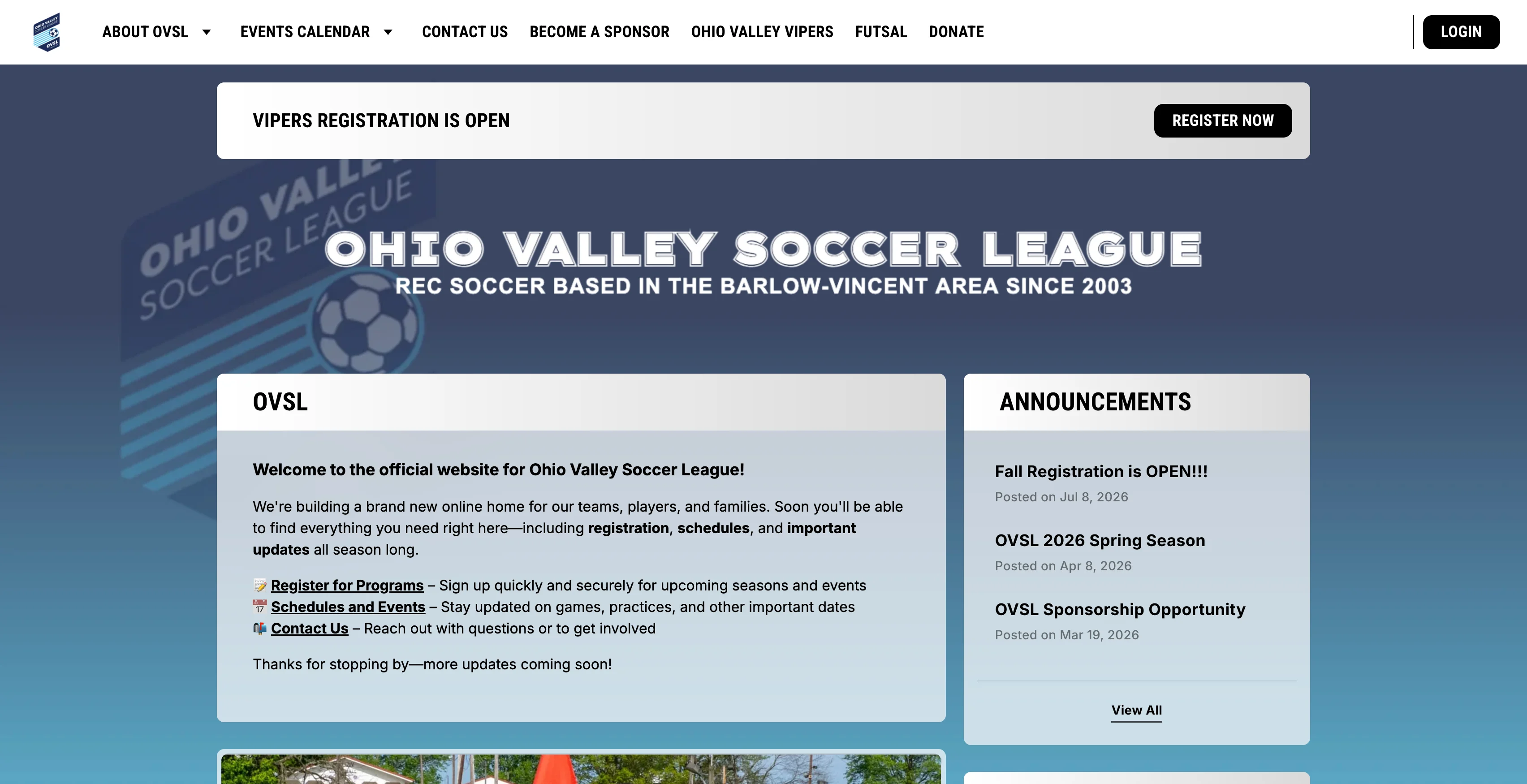
Soccer leagues like the Ohio Valley Soccer League run registration, schedules, and updates through their Jersey Watch website. Looking for a similar platform for your league or club? Read customer reviews and look to more soccer website examples to see what a website looks like once it's fully up and running.
Look for features that support soccer clubs and leagues
When choosing a website builder, look for features that match your needs:
- Drag-and-drop page editing so you can make quick updates without needing a developer.
- Built-in registration and payment tools that keep sign-ups organized in one place.
- Scheduling and announcement features to keep families in the loop.
- Simple navigation that's easy for new and returning families to figure out.
- Reliable customer support so help is close by when you need it.
- One central hub where families can register, pay, and stay updated throughout the season.
Choose a platform that is easy to manage year-round
Most programs run well beyond the playing season: leagues, camps, clinics, and events. Your website needs to hold up all year, not just during sign-ups.
Pre-built soccer website templates let you build and launch quickly, and simple editing tools mean you can update schedules, post dates, or promote tryouts without much hassle.
A platform that supports different program types also saves you from rebuilding pages every time something new starts up. When everything lives in one place and is easy to update, families start treating your website as their go-to source, and you spend less time answering the same questions over and over.
Plan what your soccer website needs to do
Before you start building pages, take a minute to think about what you actually need the site to accomplish. Some programs just need the basics: registration and schedules. Others need payment collection, sponsor pages, team pages, or a place to share league-wide updates.
Keep your plans realistic. Overbuilding is easy, but a site that does a few things really well is more useful than one that tries to do everything. Focus on what matters most to your families and volunteers, then build from there.
Focus on what families and volunteers need most
Think about the questions you're already fielding:
- How do families register?
- Where do they find schedules or last-minute updates?
- Who do they contact with payment questions?
- Where can coaches and volunteers find what they need?
- For someone brand new, is it clear what your program offers?
The best league websites answer those questions so volunteers don't have to spend hours fielding them. When people can find what they need on their own, things run more smoothly for everyone.
Start simple and build from there
Your soccer website doesn't need to be large or complex to do its job. Starting with a simple version, just the core pages and key information, makes it easier to build, easier to navigate, and easier to manage from day one.
Getting something live quickly also means you're not stuck trying to make everything perfect before launch. Improve it as you go. As your program grows, your site can grow with it.
Build the core pages first
Start your new site with a small set of essential pages containing the information families look for most often. Keeping things clear and practical from the beginning creates a strong foundation, reduces admin work, and keeps communication consistent.
Homepage
Your homepage is the first thing people see. Give visitors a quick sense of what your program offers and point them toward whatever they need next.
Start with:
- A short introduction: Location, offerings, program highlights
- Current announcements: Training camps, season wrap-ups, real-time updates
- Upcoming matches or events: Season starts, camp weeks, parent nights
- Quick links: Registration, payments, schedules
- A clear registration button: Make it easy to find and easy to act on
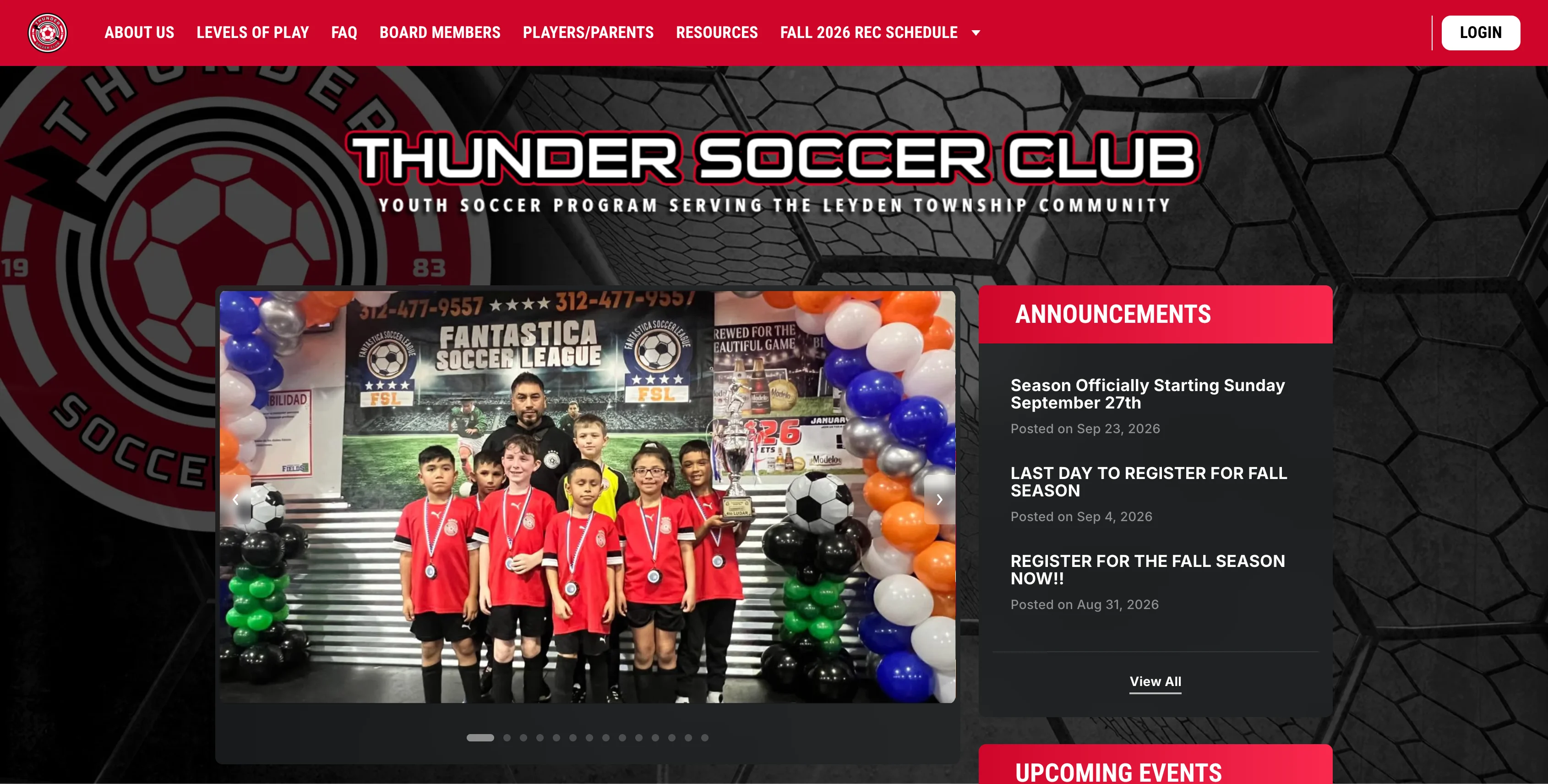
A youth soccer club website built using Jersey Watch
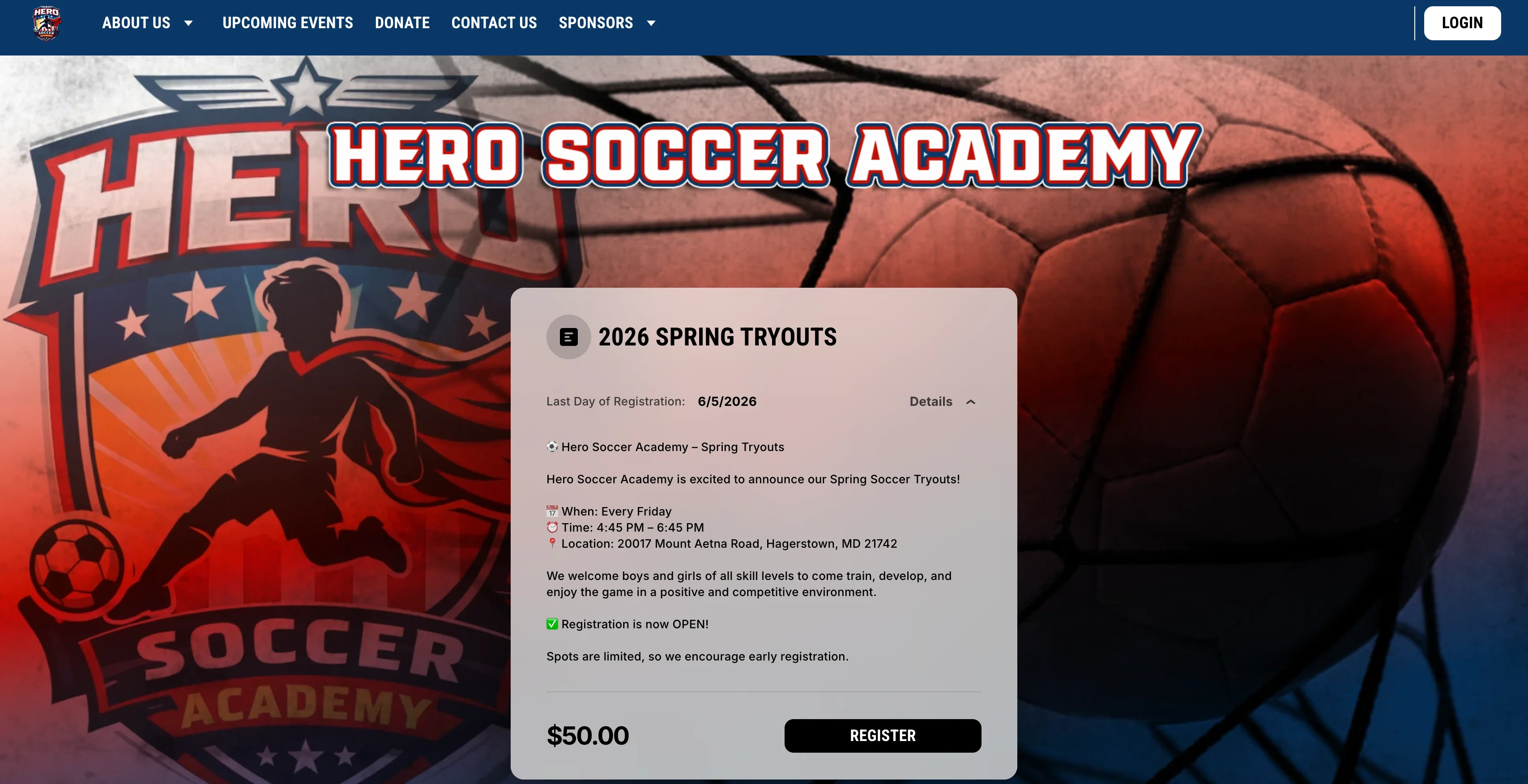
Registration page
Registration is one of your most important pages, so make it easy to find and easy to complete. Link to it clearly from your homepage. The page itself should spell out:
- Key dates: When registration opens and closes, season start, tournament weekends
- Who can sign up: Ages, grades, genders
- Fees and deadlines: What things cost and when payment is due
- Forms or waivers: Make these downloadable or completable online
Payments or fees page
If your program collects fees, use your team website to make that process clear and straightforward. List registration costs, due dates, installment options, and what the fees cover.
Include a contact for payment questions. To make things even easier, integrate soccer league management software to handle payments, installments, and refunds right through your site.
About page
Your About page introduces your program to families who don't know you yet, and it's where you build trust before they commit. Include your program's mission, a short history, leadership or board information, and contact details.
Use it to explain what makes your program worth choosing: a focus on player development, a strong community atmosphere, experienced coaches, options for different skill levels. These details help families understand why your program might be the right fit over others nearby.
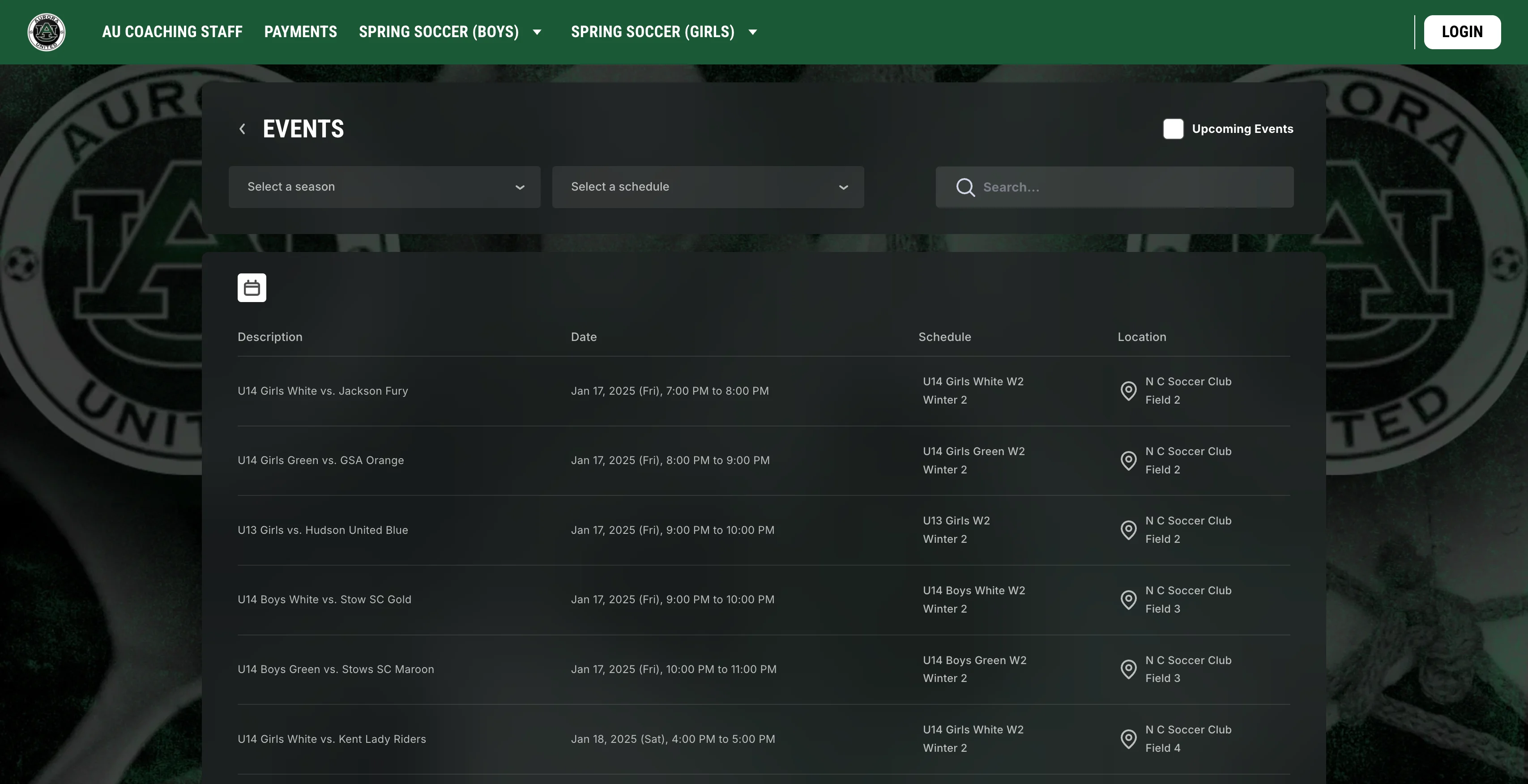
Schedule and updates page
New practice schedule? Rain delay? Post it here. Share practice times, game schedules, league events, weather changes, and reminders. Keeping this page current reduces repeat questions from families and keeps everyone in the loop.
Contact page
A clear contact page makes your organization feel organized and approachable. Include a main email address, a phone number, and a simple contact form. A short FAQ or list of next steps for common questions is a useful addition too.
Customize the website for your soccer program
Once the core pages are up, make the site feel like yours. A few consistent choices go a long way toward making it look polished and trustworthy, especially for families visiting for the first time.
Add your logo, colors, and photos
Branding your site is how you stand out. Use your club or league logo, stick to consistent colors, and include real photos from games, practices, camps, or events. Simple visuals that reflect your program make the site more recognizable and help build trust with families. For layout ideas, look at real soccer websites built with Jersey Watch.
Platforms like Jersey Watch have pricing plans that include custom design support, so you can tailor your team’s site with your branding at no additional cost.
Keep the website design clean and easy to use
Simple design works best. Clear navigation, readable font, buttons that stand out, and a mobile responsive layout that works well on a phone. Families come to your site to find answers quickly, so the easier it is to navigate, the better.
Use your website to simplify registration, payments, and communication
A good sports website actively makes the program easier to run. When registration, payments, schedules, and updates are all connected, families always know where to sign up, how to pay, and where to find the latest information.
It also takes pressure off your volunteers. Less time tracking down missing forms, answering repeat questions, or chasing payments means more time focused on running the program.
Make registration easy to find and complete
Registration should feel like a natural part of your site. Include:
- Clear links from your homepage
- A parent-friendly sign-up flow
- Required registration forms or waivers
- Deadlines for registration and payments
- Clear next steps after signing up
Make fee collection easier for families and volunteers
When families can see a clear breakdown of their fees and pay online, there are fewer follow-up questions and less manual tracking for your team. Using one central system keeps everything organized and easy to find.
Keep communication organized through the website
Make your website the main hub for updates:
- Share announcements and standings
- Post schedule changes
- Remind families of deadlines and upcoming games
- Send important news as it comes up
- Highlight key season information
When families know exactly where to look, communication becomes more consistent and easier to manage.
Launch your site and keep it updated
Once your site is live, keep it accurate and useful year-round. A website that goes stale stops being a resource families rely on.
A quick weekly check-in to update announcements, confirm upcoming dates, and remove anything outdated keeps things clean and accurate, and helps families trust that the information they're seeing is current.
Review the site before launch
Before you go live, do a quick review to make sure everything is in order. Check all your links, test the forms, review the mobile layout, confirm your information is accurate, and make sure your registration and payment buttons work properly. A few minutes of review now can prevent a lot of frustration after launch.
Keep the website current throughout the year
The best way to build trust with families is to keep your information current and correct. Update announcements regularly, adjust schedules when dates change, remove outdated content, and keep registration and payment details accurate. Reminders for upcoming events, camps, or tryouts help families stay on track too.
Use your soccer website to support growth
A well-built soccer website helps your program grow. When your site makes it easy to understand what you offer and how to get started, it becomes a natural tool for bringing in new players and families.
Clear, easy navigation helps new visitors understand your program quickly, decide if it's a good fit, and take the next step to register. It also shows families that your organization is organized and active, which matters when they're deciding where to sign up.
Help new families understand the program quickly
New visitors should be able to get a clear picture of your program within a few minutes. Most families are looking for the same basic information:
- What your organization offers
- Who can join
- How to register
- What the season looks like
- Where to go with questions
Cover those bases clearly: outline your age groups or divisions, share a simple season timeline, and make the registration steps easy to follow. Details like practice frequency, game expectations, and key dates help families know what they're signing up for before they commit.
Support coaches, volunteers, and program credibility
Your website can work for the people running your program too. Easy access to coach and volunteer information, plus links to training and seasonal resources, helps everyone stay prepared and on the same page.
Clear program details and a consistent online presence make a strong first impression on new families and build trust in your program over time.
Build your soccer website with confidence
Building a soccer website doesn't require technical skills or a complicated setup. A simple site with the right pages, clear navigation, and a few connected tools is often all it takes to make a real difference for families and volunteers.
When your website is easy to use and easy to keep updated, it becomes a resource people rely on, not another item on your to-do list. Families know where to go. Volunteers spend less time answering repeat questions.
The best soccer websites do the work: they make registration, payments, schedules, and communication easier to manage, and they serve as a central hub throughout sign-ups, the season, and everything in between.
Level up your program with a branded soccer website from Jersey Watch. Create your free account today to get started.
FAQs
What should a soccer website include?
A good soccer website covers the basics: a homepage, registration page, payment information, schedules, announcements, contact details, and a short program overview. These pages help families find what they need without having to ask.
Do I need technical skills to make a soccer website?
No technical skills required. A simple sports website builder and a clean template make it easy for volunteers to launch and manage a soccer website without any web design experience.
What is the best website builder for a youth soccer club?
A sports-specific builder such as Jersey Watch, because it combines the website with online registration, payments, schedules, and messaging, so one volunteer can run the whole club from a single login. General builders like Wix or Squarespace can produce a good-looking soccer site, but registration and payments have to be added with third-party tools and kept in sync by hand.
How do soccer websites help with registration?
They give families one place to find registration dates, fees, forms, and sign-up links, which makes the process simpler for families and reduces admin work for volunteers.
Can a soccer website help collect payments?
Yes. A website makes payment information easy to find and connects families to online payment tools, which reduces manual tracking and follow-up for your team.
How often should a soccer website be updated?
Regularly, especially for announcements, schedules, registration dates, and fee details. An up-to-date site keeps families informed and builds trust in your program.

Sierra SwigertOperations Manager
Sierra Swigert is the Operations Manager at Jersey Watch. She works directly with youth sports organizations every day and writes educational resources based on her firsthand experience supporting league administrators and volunteers, as well as her background competing in cross country and track.


