
Most volunteers sign up to support their kids and communities, not to spend their weeknights wrestling with clunky spreadsheets. Juggling disconnected tools like group texts, manual registration forms, and separate payment links creates a patchwork system that leads to volunteer burnout and frustrated parents.
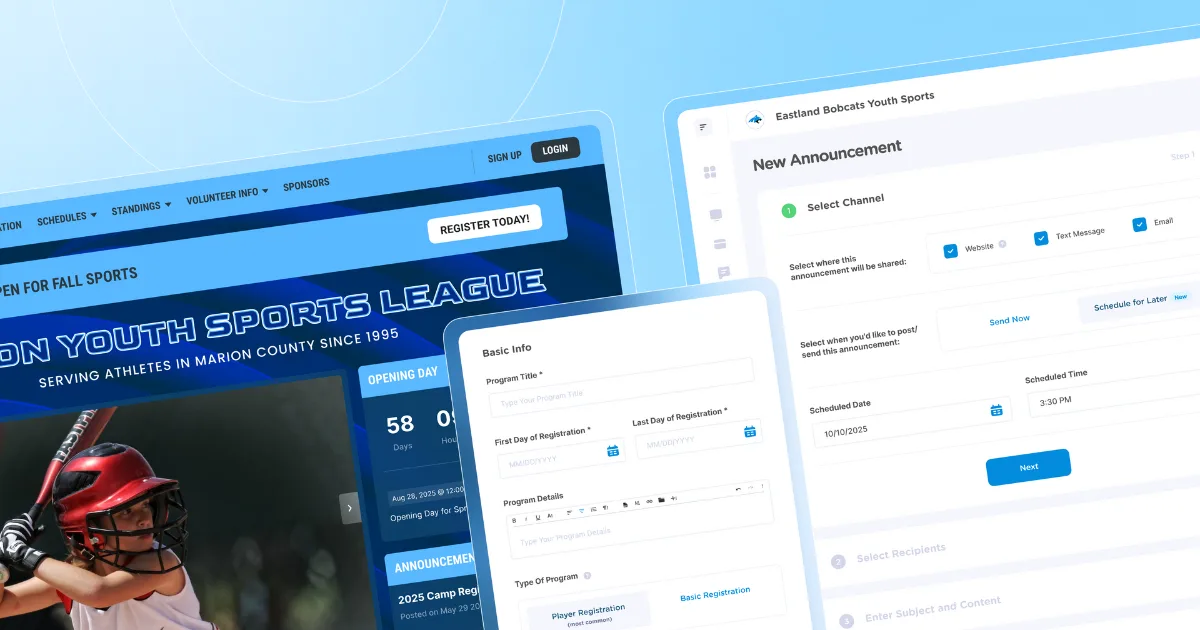
The solution is sports league management software: an all-in-one platform that handles registration, payments, scheduling, communication, and websites in a single system.
In this guide, we’ve narrowed the field to the top six options to help you find the best fit for your league’s size, budget, and needs.
How to evaluate youth sports management software
With so many platforms claiming to be the “best,” it’s easy to get lost in a list of features. But for a volunteer-run organization, most of those bells and whistles aren’t especially useful.
To find a system that makes your life easier, you’ll want to evaluate the options through three lenses: ease of use, all-in-one coverage, and the quality of user support.
Ease of use for volunteers
Volunteer turnover is one of the biggest challenges youth sports leagues face. If your software is so complicated that it takes a 40-page manual and a computer science degree to operate, you’ll struggle to find anyone willing to take on registrar or treasurer roles.
When testing software, ask yourself: Could a busy parent who only has 15 minutes between work and dinner figure this out?
Look for platforms with no coding, a minimal learning curve, and easy setup (think minutes, not days). You should be able to update your homepage, open a new registration session, or send a league-wide email without touching a line of code.
Make sure you test the registration flow from a parent’s perspective. If a parent is trying to find league schedules for her three kids from the sidelines of a game — but the mobile interface is clunky or confusing — your volunteers may get flooded with emails asking for help.
All-in-one feature coverage
The goal of league software is simple: give volunteers one place to manage all the moving pieces. You want to move away from a world where your registration lives in Google Forms, your payments live in Venmo, your game schedules live in Excel, and your communication lives in a dozen different group chats.
A true all-in-one platform should provide:
- A professional website: A central place for parents to find field locations, rain-out updates, and season dates, along with volunteer signups and fundraising tools.
- Online registration: Custom forms to collect player data, background checks, and signed waivers fully online
- Payment processing: Secure registration fee collection, with options for “set-it-and-forget-it” installment plans
- Scheduling management: A way to generate and share game and practice times that sync directly to a central calendar
- Communication tools: Integrated email and text messaging so you can reach every parent in the league (or just one segment) with one click
Avoid platforms that require integrations or third-party add-ons for these core tasks. Every time you add another plugin to your system, you’re adding another potential point of failure and another subscription cost.
Responsive customer support
League administrators often work evenings and weekends, so support availability outside business hours matters. If your registration site goes down or a parent has a payment issue on a Tuesday evening, you can’t afford to wait days for a support ticket to move through a queue.
Before committing, look at third-party review sites like Trustpilot. Pay attention to how users describe the support team, especially during evenings, weekends, and registration crunch time. Are they talking to a human who understands youth sports, or are they stuck in an automated chat loop?
High-quality, responsive support isn’t just a nice-to-have. It can be the difference between a smooth season and a time-consuming mess. So it’s a good idea to test the platform’s support before committing.
The top 6 sports league management software options
Every league has different needs. Some prioritize the lowest possible cost, while others need advanced statistics for competitive travel teams. Each platform has different strengths, depending on league size, sport type, and budget. These reviews focus on what matters most to volunteer-run youth sports organizations.
1. Jersey Watch
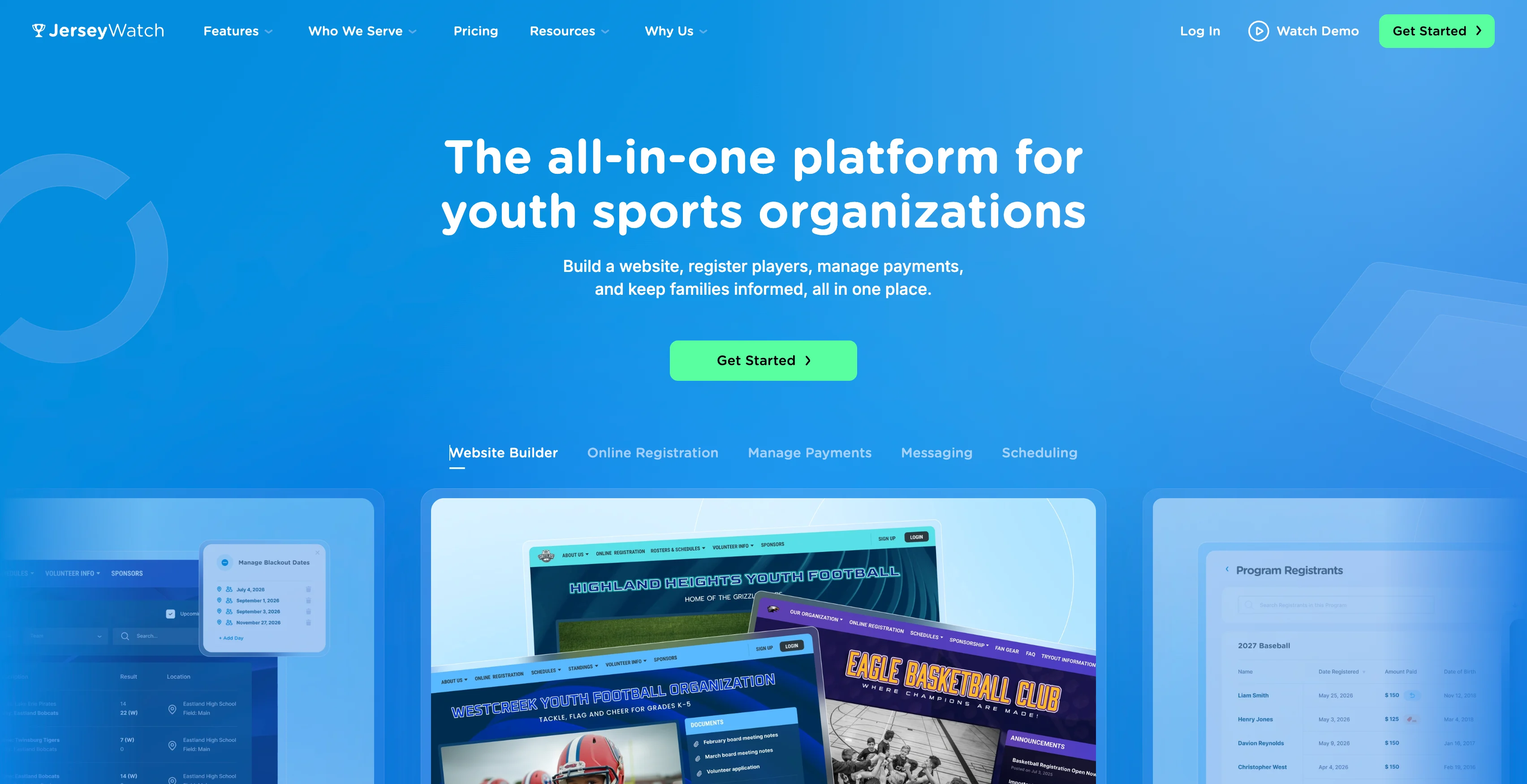
Jersey Watch is built specifically for the busy volunteer who needs simplicity and affordability. It’s one of the simplest all-in-one solutions for small- to mid-sized youth sports organizations that need to get up and running quickly with a low learning curve.
It focuses on the core needs of league admins (website, registration, payments, communication) to avoid the “feature bloat” that makes other platforms feel intimidating. Everything lives under one roof, meaning you don’t have to navigate five different windows to send a message to a specific division or check who hasn’t paid their dues yet.
Key features:
- Award-winning support: Known for having some of the fastest and most helpful human support in the industry
- Instant website builder: Create a professional-looking site in minutes with zero technical skills required
- Online registration: Easily set up player registration forms, collect payments, and even get waivers and other forms signed in one place
- Scheduling: Post events, create schedules for your division, share game results, and track league standings
- Integrated SMS and email: Send league-wide alerts or individual team updates directly from the dashboard
- Background checks: Streamlined tools help keep your league compliant and safe
Pricing: Create your account for free to explore all of the features. When you’re ready to launch, get your first month for just $19, including full-service website and online registration setup from their team. After the first month, pay $348 to keep your website and registration for the year.
Verdict: With a top-tier G2 ease-of-use ranking (4.7/5 stars, with 236 reviews) and more than 2,800 organizations using the platform, Jersey Watch is the best choice for volunteer-run leagues that value their time and want a stress-free admin experience.
2. SportsEngine HQ
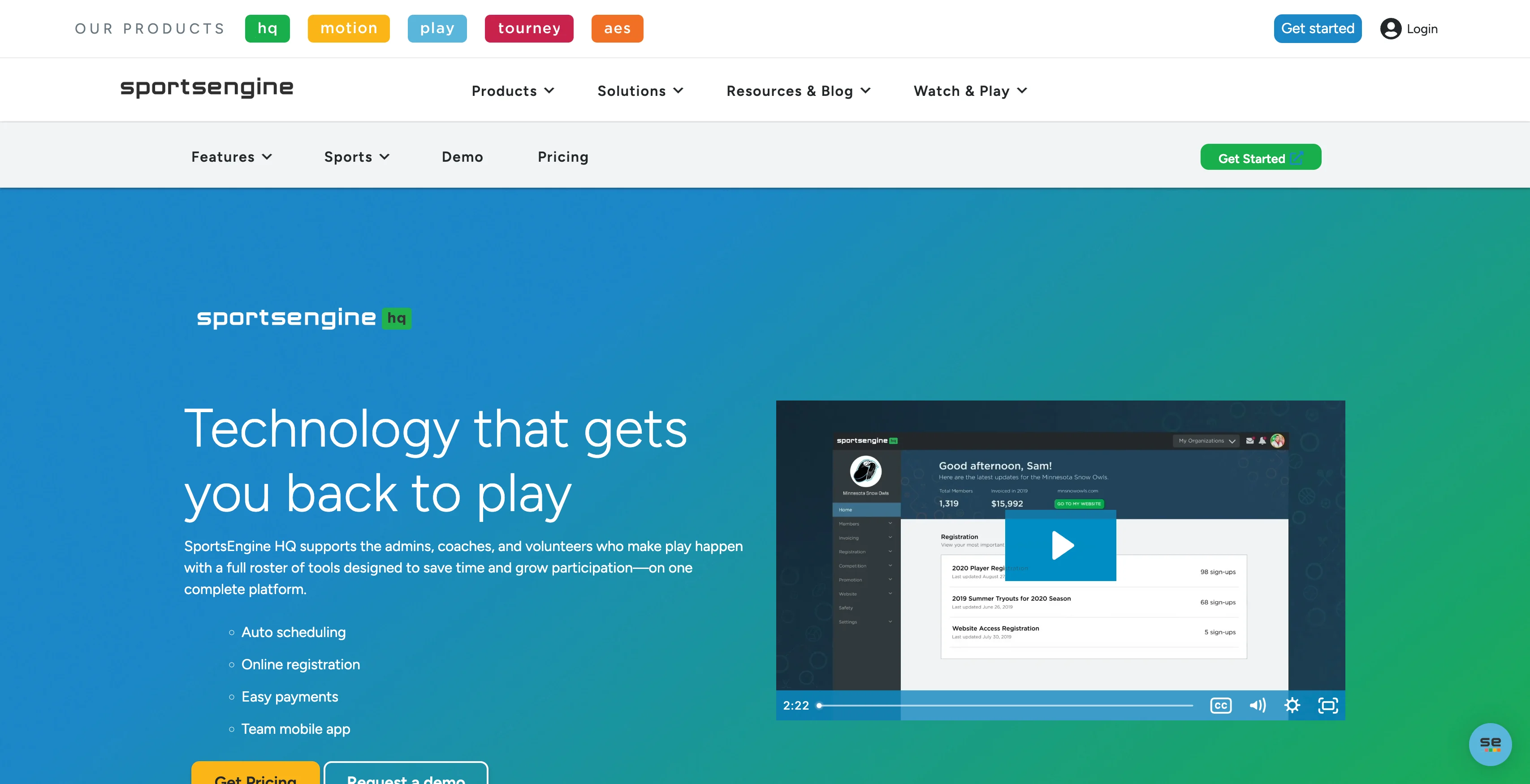
Acquired by PlayMetrics in May 2026, SportsEngine is one of the best-known names in the industry. It’s a robust platform full of advanced scheduling features, plus division creation, teams, automated matchups, and real-time game stats with a mobile app. So it’s a solid choice for very large orgs or multi-sport complexes that need high-level data management. It currently has a G2 rating of 4.5 out of 5 based on 23 reviews.
Key features:
- Advanced scheduling: One of the most powerful scheduling engines available, capable of handling complex divisional structures
- Stat sharing: A dedicated mobile app that lets coaches and parents track real-time game stats and scores
- Marketplace access: A marketplace of third-party tools for things like uniforms and specialized insurance
Pricing: Pricing is custom and varies based on your team's needs and specifications.
Verdict: SportsEngine is a great fit for large organizations with dedicated staff members who have the time to learn a more complex system. If you need deep statistical tracking and advanced team management, it’s a strong contender, though some volunteers find the initial setup to be a bit of a heavy lift.
3. LeagueApps

LeagueApps is a popular choice for competitive youth leagues, especially elite travel clubs and tournament organizers who need an all-in-one system. The platform can handle high-volume registration, communication, waivers, payments, schedules, and complex facility management all in one place. Currently, it has a G2 rating of 4.8/5 based on 21 reviews.
Key features:
- Facility management: Court and field availability tracking for multi-complexes
- Professional branding: High levels of customization for orgs that want their digital presence to feel like a pro sports brand
- Robust mobile app: A comprehensive app for admins, coaches, parents, and players, with everything from RSVP tracking to in-app messaging
Pricing: LeagueApps uses a custom pricing model based on your size and feature needs, but it tends to be pricier than DIY volunteer tools.
Verdict: If you’re running a high-revenue competitive club for a large-scale tournament circuit, LeagueApps has the enterprise power you need — as long as you're comfortable with a more robust feature set.
4. TeamSideline

TeamSideline is an all-in-one team management solution built for leagues that need a polished web presence, with website, registration, scheduling, and communication features all built in. It has a strong reputation for customer satisfaction, with a high G2 rating of 4.8 out of 5, but only based on 11 reviews.
Key features:
- Free team site setup: Offers free site setup for teams within the league
- Integrated communication: Handles email and text alerts seamlessly
- Registration flexibility: Allows for complex registration setups, such as draft styles or tiered tryouts
Pricing: Pricing is based on the specific modules your league needs, but it’s competitive with other mid-to-large-scale platforms.
Verdict: TeamSideline is a solid middle-ground option. It’s more robust than a basic tool, but it maintains a high level of user satisfaction. It’s a good fit for leagues that want a polished web presence with integrated management tools.
5. SportNinja

SportNinja is a mobile-first platform that’s gained traction with amateur leagues, especially hockey and soccer. It focuses heavily on the fan and player experience during the game.
Key features:
- Live scoring and highlights: Live-streamed mobile scoring that generates automated highlights and game stars
- Web plugin: Offers a plugin that you can drop into an existing website instead of building a site from scratch
- Entry-level free tier: Offers a basic free version for small organizations or startup leagues
Pricing: SportNinja has a free tier with basic features, while paid plans start at $50/month. Prices increase as you add more advanced scoring, additional participants, and management tools.
Verdict: If your league is already satisfied with your current website but you need a live game management tool with a modern feel, SportNinja is an excellent choice. It has a strong G2 rating of 4.8 out of 5 (from 25 reviews) and ranks second in ease of use.
6. TeamSnap ONE
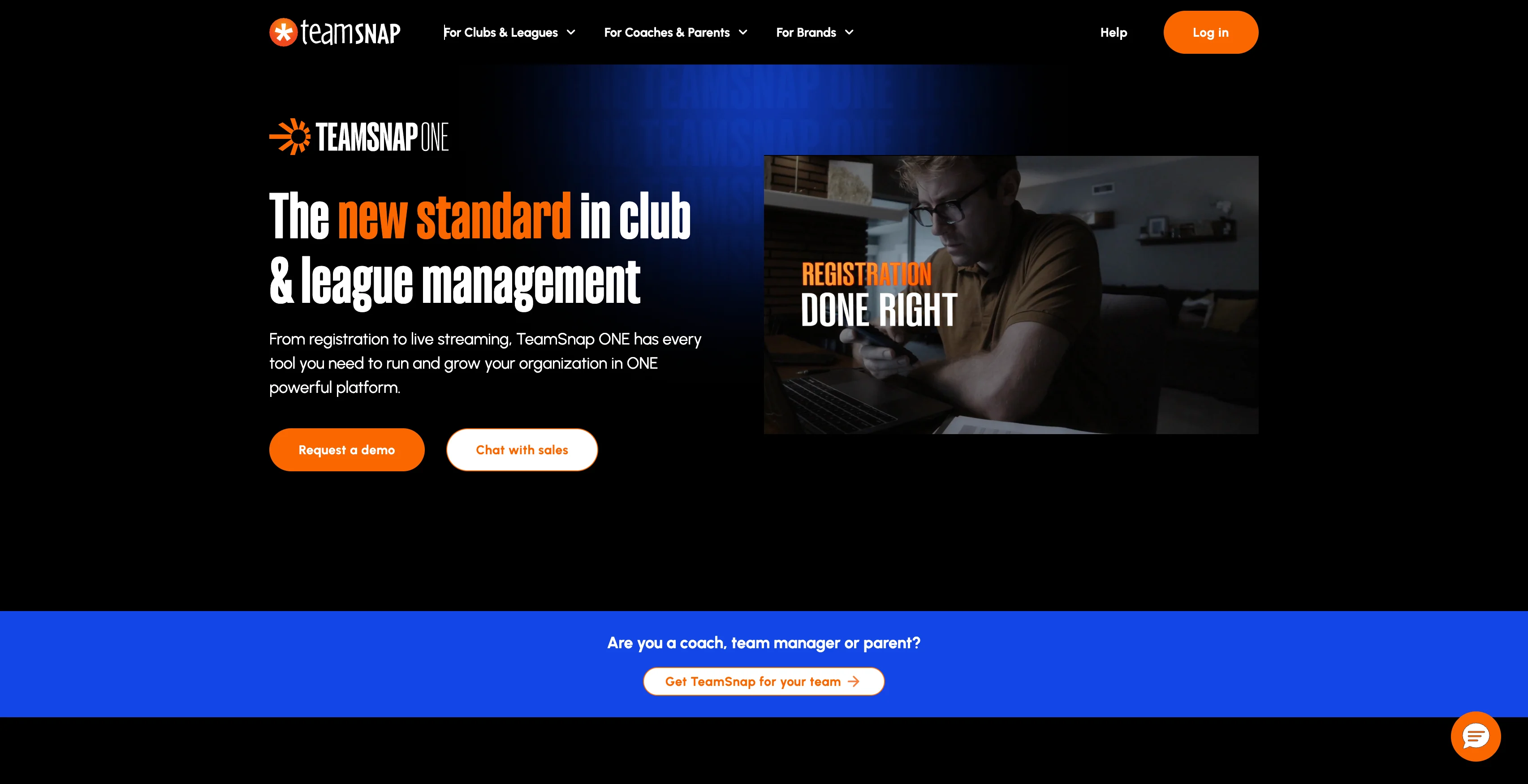
TeamSnap ONE is one of the most recognizable names in the space, primarily because so many parents already have the personal TeamSnap app on their phones for team communication. It’s a well-rounded option with features for clubs, leagues, coaches, and players, including schedule sharing and messaging. While it started as a team coordination tool, it’s expanded into a full league management suite.
Key features:
- Brand familiarity: Most of your parents and coaches likely already know how to use the TeamSnap interface
- Availability tracking: Excellent tools for coaches to see who’s coming to practice or games in real time
- Team-to-league sync: Automatically pulls team data into the league-level dashboard for easier oversight
Pricing: The basic team app is free (with ads), but league-level management features require a subscription that can get expensive as you add more teams.
Verdict: With a G2 rating of 4.0 out of 5 based on 59 reviews, TeamSnap One can be a safe choice for leagues where the parents are already using the app. But make sure you compare the league-level costs against alternatives to verify you aren’t paying a premium just for the brand name.
Choosing the right league management platform for your organization
The right software is the one your volunteers will actually use. So the best choice depends on your league size, budget, technical comfort, and specific feature needs. If you’re a small- to mid-sized league run primarily by parents who have full-time jobs, prioritize ease of use and support over advanced features.
If you’re a large, multi-sport organization with a physical office and paid staff, you might benefit from the advanced data and facility management functionalities in SportsEngine or LeagueApps.
Before you make a final decision, we recommend:
- Involving the board: Have your registrar and treasurer review the demo. They’re the ones who will be in the software every day.
- Requesting a demo: Don’t just look at screenshots. Ask for a live walkthrough where you can ask specific questions about your league’s edge cases, like family discounts or late fees.
- Checking the “hidden” costs: Some platforms charge per-player fees, while others charge a flat monthly rate. Do the math for your total player count to see which one fits your budget over the full year.
Remember, switching platforms mid-season is a hassle for everyone involved. Investing a few hours now to find the right fit can save you hundreds of hours of frustration over the next few years.
Ultimately, choose the platform that best matches your league: simple and supported for volunteer-run leagues, or more advanced and customizable for larger orgs with dedicated admin time.
Make season prep easier with Jersey Watch
When it comes down to it, running a youth sports league is about the players on the field, not the software on your laptop. At Jersey Watch, we believe that managing your organization should be the easiest part of your day. That’s why we bring registration, payments, scheduling, communication, and websites together in one affordable platform.
We’ve helped over 2,800 organizations simplify their registration, automate their payments, and build professional websites that keep their communities connected. Our award-winning support team is there when questions pop up, because we know that when your software works, your league thrives.
Ready to see how simple your next season could be? Sign up for a free account today and start building your league’s new online home in minutes.
FAQs
What sports can I manage with league software?
Most sports management platforms support any organized sport, including baseball, soccer, basketball, football, hockey, lacrosse, volleyball, and swimming. Choose software flexible enough to handle your league's specific scheduling and registration needs. The best platforms adapt to your sport's unique requirements without forcing you into rigid templates.
Is there free sports league management software?
Some platforms, like SportNinja, offer free entry-level plans with basic features. Free options often have limitations on participant numbers or features, so evaluate whether upgrading makes sense as your league grows. Testing a free plan can help you understand the platform before committing to a paid tier.
What’s the best sports team management app?
The best app depends on your needs—Jersey Watch excels for volunteer-run leagues wanting simplicity, while TeamSnap One is popular for individual team coordination. Look for platforms that match your organization's size and the features you'll actually use. Testing demos or free trials helps you find the right fit for your specific situation.

Tim GusweilerCo-Founder / CEO
Tim is the Co-Founder of Jersey Watch, where he works with the product, marketing, and customer support teams to build software for youth sports organizations. He writes about youth sports management based on years of experience working with league administrators, coaches, and volunteers, along with a lifelong passion for sports.


