
Your logo is often the first thing a player, parent, or sponsor sees — and it shapes how they feel about your program before they ever show up to a game.
A youth sports logo is the visual symbol that represents your team or organization on uniforms, websites, social media, and printed materials.
Many sports programs today have outdated, blurry, or unusable logos. That’s because it’s generally hard and expensive to create a high-quality logo for your team. Designers aren’t cheap.
Whether you run a recreational or travel program, you should have a clean logo that promotes your organization to bring in more players and families.
To create a youth sports logo, start with ideas, study examples you like, choose readable fonts, pick the right design path, and then use your new logo consistently online.

5 steps to create a youth sports logo
1. Brainstorm logo ideas
The first step is gathering ideas. You can do this on your own or bring together a group of volunteers and coaches to bounce ideas around.
If you can’t get together in person, you can use a virtual whiteboard tool like Miro to share ideas with others virtually.
A fun way to kick things off is to use AI tools to generate logo ideas. There are many popular AI image generators. AI probably won’t be able to create the final version of your logo, but it’s a fun way to generate some quick ideas that you may not have thought of.
2. Research examples
Once you’ve done some brainstorming, you should research examples. A few questions you can consider are:
- What are other organizations in your community using? Can you use the same logo colors or fonts for consistency? Or should your team’s logo be completely different?
- What do the logos of leagues or teams in neighboring communities look like?
- What are your favorite collegiate or professional sports logos?
Researching examples is very helpful if you plan to hire a designer to create the final version of the logo. Sending them some logos you like for inspiration helps them produce the logo you want. Just make sure to differentiate yourself enough to avoid causing issues or confusion.
3. Consider fonts you like
Sports logo fonts usually work best when they are easy to read, simple, and flexible enough to use in different sizes. Try to choose a font that still looks clear on a jersey, a website header, and a social media profile.
Don’t overcomplicate things. Some of the most popular and long-lasting sports logos are some of the simplest.
To research potential fonts, use the sites below:
4. Choose a way to create your sports logo
High-quality logos can cost thousands of dollars (though some famous logos were designed for almost nothing).
The right path depends on your budget, how hands-on you want to be, and whether you have someone in your community who can help.
Here are a few quick, relatively cheap options for getting a professional logo made for your teams.
Recruit a local volunteer
The best option is to get your logo created at no cost by someone in your community. You can start by searching for a phrase like "graphic designer in {insert your town}" on Google.
You might be able to find a local student, freelance designer, or even marketing agency. Post on social media to let your community know you need a new logo and are looking for a talented designer to volunteer their time.
Designing a logo for your youth sports program can be a fun project for a designer to add to their portfolio. It’s also a great opportunity for them to give back to the community.
If you're able to find a designer, you can list them as a sponsor for your upcoming season in exchange for their time. Local designers might be willing to do pro bono work to help your youth sports organization.
Find a professional designer online
Finding freelancers online is easier than ever. You can use a site like Upwork or Fiverr to search for designers who specialize in logo design.
When using freelance marketplaces, check reviews for each potential freelancer and view their portfolio. You can also post your project and budget, allow designers to apply, and browse logo styles using a tool like Kittl before deciding which direction to take.
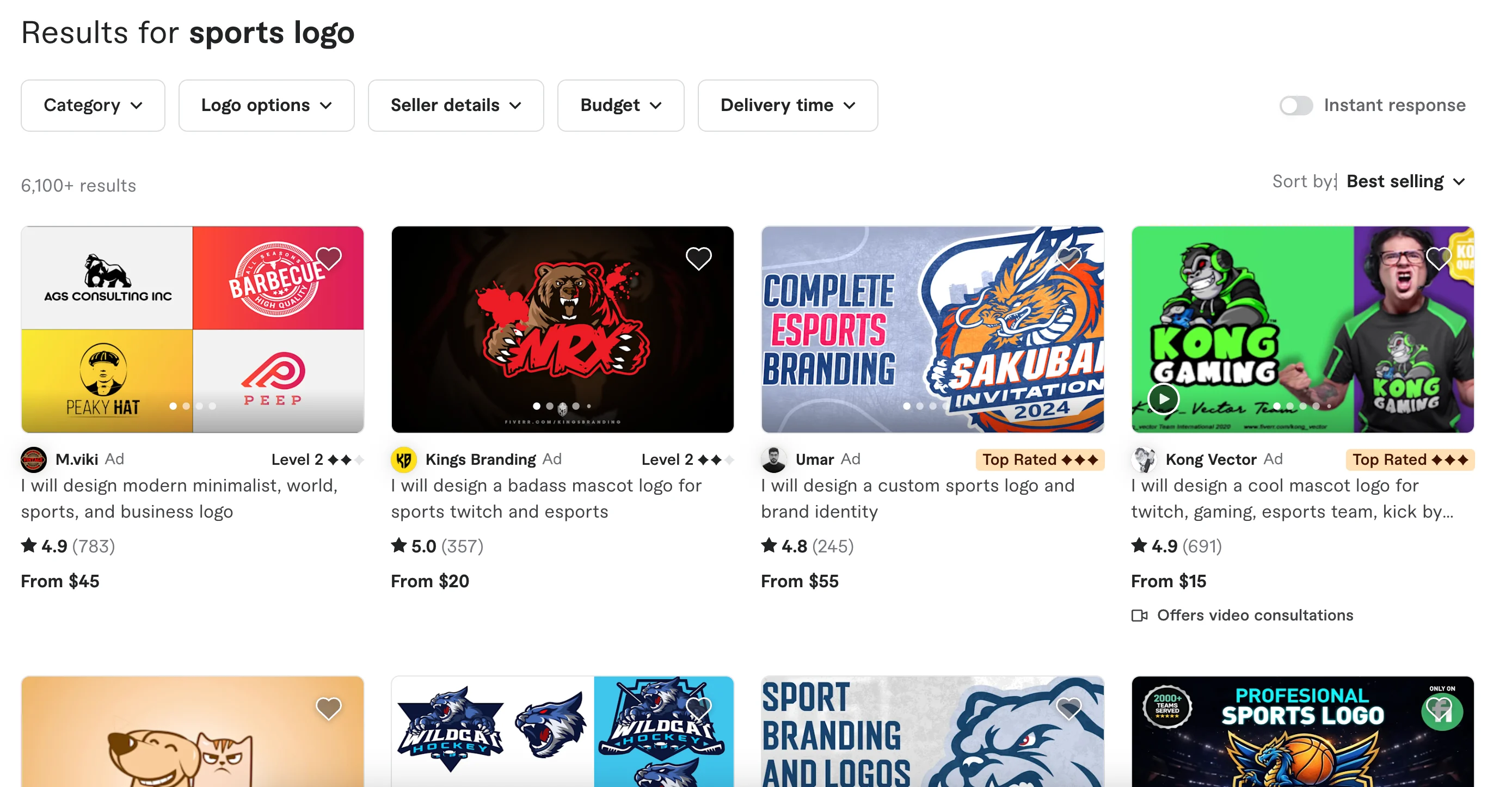
Sports logo designers on Fiverr
If you use one of the websites above to find a freelancer, you should be able to get a high-quality logo created for your organization for between $100 and $500.
Posting a job on Upwork only takes a few minutes, and you can work with designers from all over the world without spending a lot.
Use an online logo maker
If you'd rather have more control over the logo creation but don't have any design skills, you can try using a sports logo creator.
These free logo makers work by prompting you to enter your name and some general information about your club. Then it creates a custom logo with cool typography and design elements. From there, you can download the logo in various formats, like PNG, and use it across your websites, business cards, brochures, and more.
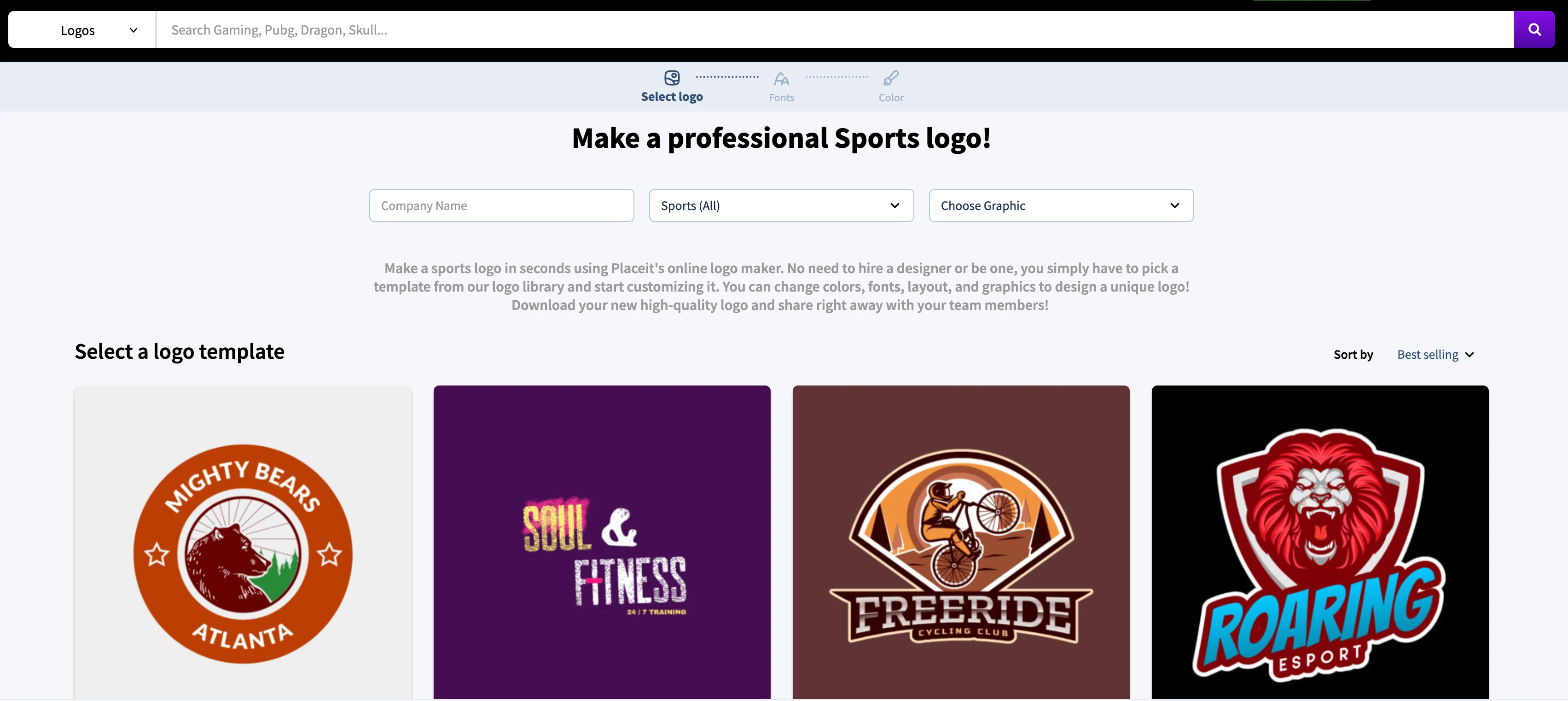
Logos created by Placeit, an online logo generator
There are lots of logo generators online. You can start by Googling "sports logo generator", "business logo generator", and other related phrases. You may also find some good sports logo templates.
🧠 Learn: The Best Sports Logo Makers Compared
5. Promote your logo on your website and social media
Once you have your new logo files, add them to your website. Most website builders let you integrate the logo into the site's design.
If you're registering players online, include your logo in email receipts and other player notifications. Your website, social media, and other online content should all have consistent colors and branding.
Once your website is updated, replace your logo across all your social media accounts. Well-organized social media pages can help your organization build credibility in your community. Your logo should be sized correctly and look clean on all of your profiles.
Best sports logo design examples
Even though your youth sports program won't have a budget like a professional team, you can still emulate the most popular logos in sports.
It's critical to have several versions of your logo for different purposes. For example, if you run a football program, you'll want a simple version of the logo for helmets and another version with text for t-shirts and other apparel.
You should also have a specific font you can use across different materials, such as your website, donation letters, and sponsorship materials. The best sports logos represent a team’s history, mission statement, and fanbase.
St. Louis Cardinals
The St. Louis Cardinals value their team’s tradition, and their logos and branding are timeless.
The Cardinals have a variety of logos, each used for different purposes. For example, the main "STL" logo appears on their main cap, and the bat logo with text appears on their jerseys. The text version is used throughout their website, and the single cardinal sitting on a bat works great on their social media accounts and alternate cap.
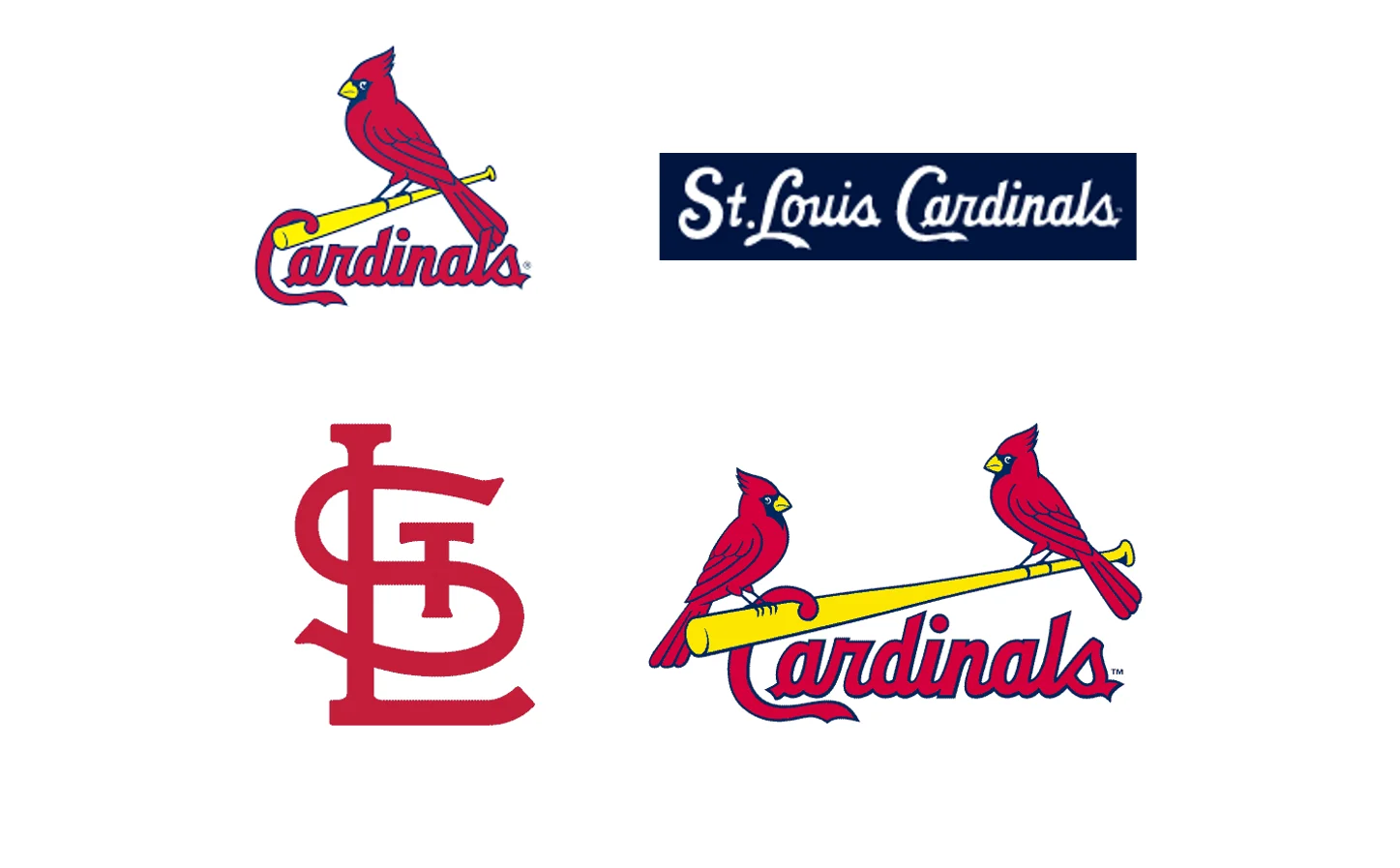
Your youth sports organization should have a few different versions of your logo and branding. Source: cardinals.com
Los Angeles Rams
The LA Rams logo has a blue-and-gold color scheme that matches their city and sport well. They have several different variations that they use on their helmets, jerseys, 50-yard line, and end zones.

The Rams' primary logo is used across all platforms, including apparel, their website, and uniforms.

The Ram head has been used at the 50-yard line at SoFi Stadium and on a lot of the team's merchandise.

The Rams' wordmark is simple and clean. It can be used in many marketing and promotional materials for the team.
Thunder Soccer Club
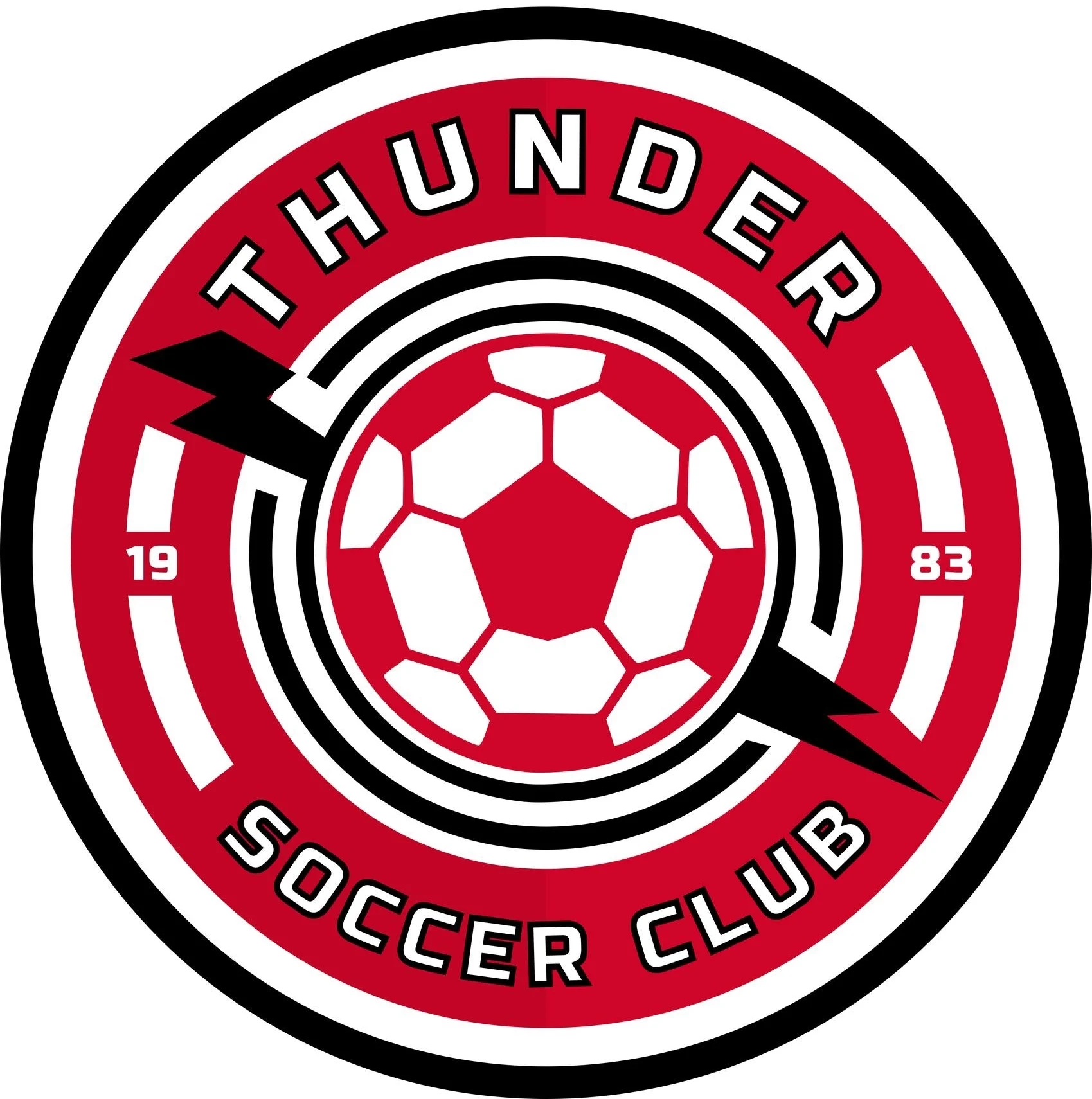
Thunder Soccer Club is located in Franklin Park, IL, and supports youth soccer players of all skill levels. Their logo is simple and clean, but also has subtle references to the club's 40-year history.
The lightning bolt behind the logo’s text also sets the logo apart from others and identifies the club’s name.
Hopkins Wrestling
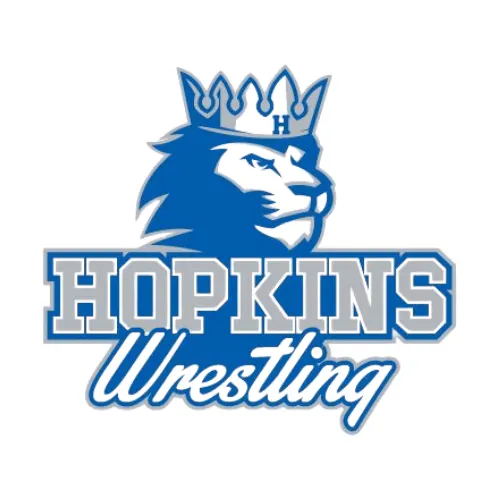
The Hopkins Wrestling program uses the main “Hopkins Royals” logo used by the rest of the sports programs in Hopkins, MN. This creates consistency with the mascot, colors, and fonts across the different sports.
But the wrestling club adds the text “Wrestling” in a different font below the rest of the logo, creating a unique version for use on the wrestling website, apparel, and other materials.
Saving your own sports logo for future use
Once your logo is finalized, be sure to set yourself up for success by asking for editable source files, not just a finished image file. That way, you can make changes later if your organization's name, colors, or branding ever needs an update.
Instead of a .png, make sure the designer sends you the “working files” they used to create the final version. Most commonly, these will come as Photoshop (.psd), Illustrator (.ai), or SVG (.svg) files.
If you change your organization's name or color scheme, make sure you update the file promptly and save it as a new version (v2).
Getting started with your youth sports logo
A strong logo helps your league look professional and makes it easier to attract players, sponsors, and families. Once you've got a design you love, make sure you save your working files so you can update it down the road. From there, you're ready to start putting it to work — on your website, social media, uniforms, and anywhere else your organization shows up.
Ready to take your league to the next level? Sign up for Jersey Watch and see how easy it is to manage registrations, collect payments, and build a website your whole community will love.
FAQs
What is a logo for a sports team?
A logo for a sports team is an image or symbol that visually represents the organization. It gives players, coaches, parents, and fans a quick way to recognize the team across uniforms, apparel, websites, and other official materials. The logo typically includes different parts of the team identity—such as the team name, mascot, colors, and sport.
What makes a good sports team logo?
A good sports team logo is simple, memorable, and easy to use in different places. It should help rally players, coaches, fans, and the community around the team. It also needs to stay clear on uniforms, a website, social media, and printed materials.
- Simplicity: Clean and simple logos are generally more memorable and timeless.
- Versatility: The logo needs to be used in a variety of ways (uniforms, website, social media) and in several different color variations.
- Uniqueness: The logo should be distinct from other team logos. While using popular logos as inspiration can be useful, you should still create a distinct brand for your team that sets it apart from other teams.
How to design a sports club logo?
To design a sports club logo, start with a simple plan and get feedback from the people who know your program best. Good logo projects usually start with input from coaches, board members, or parents, followed by examples you like and a clear direction for fonts and colors. Once the design is finished, save the files, make any final tweaks, and start using the logo on your website and social media.
Designing a sports logo shouldn’t break your organization’s budget. Most youth sports programs can get a quality logo without a big investment.
Here are the steps to design a sports club logo:
- Brainstorm ideas with other board members, coaches, or community members.
- Research examples of other sports logos that can inspire your design.
- Choose a font and colors for your logo.
- Hire a freelance graphic designer or find a volunteer to create the final version of your logo.
- Have your designer create a few different variations of the logo for your team to approve. Make any final tweaks with your designer, save the logo for future use, and start promoting it on social media!
What fonts work best for sports logos?
Fonts that work best for sports logos are usually easy to read, simple, and flexible. A good font should still look clear on a jersey, a website header, and a social media profile. If you want ideas, you can compare styles on Google Fonts, Font Space, and Adobe Fonts.

Tim GusweilerCo-Founder / CEO
Tim is the Co-Founder of Jersey Watch, where he works with the product, marketing, and customer support teams to build software for youth sports organizations. He writes about youth sports management based on years of experience working with league administrators, coaches, and volunteers, along with a lifelong passion for sports.


