
Your league's registration deadline is two days away, and the sign-up link is buried under 40 comments on last week's Facebook post about uniform pickup. Parents are texting your coaches instead of finding answers themselves, and your treasurer is fielding the same "where do I pay" question for the fifth time today.
This happens because you don’t have a one-stop shop for all of your important information.
A youth sports organization needs a website because it's a unified, public, reliable home for registration, payments, schedules, forms, sponsor information, and family updates. It's a place that stays put and is accessible even when volunteers change or a social platform shifts its rules. Nothing else in a typical league's toolkit does that job.
Once that home base exists, you stop chasing scattered messages and start pointing families to one clear answer. Here's what that looks like in practice, and how to get there without a design background or tech budget.
Is a Facebook group really enough to run your league?
Facebook groups spread reminders effectively, but they're not built to be your league's system of record. Many leagues run on a Facebook group or page, plus GroupMe, WhatsApp, or Band chats, sometimes with a link-in-bio page tying it together.
That's a lot of scattered pieces holding up your season. Facebook groups also have a few other major administrative and visibility considerations:
Admin turnover can lock you out overnight
Your league can lose access fast when one admin leaves, but an organization-controlled website keeps authority with the league, no matter who's in charge. Facebook pages, group chats, and payment apps are usually tied to a single personal account, which means a single departure can cut everyone else off.
A treasurer who handles the Facebook page, the Venmo account, and registration sign-ups can move out of state right before the season opens. When that happens, sign-ups stall, parents can't pay, and the board scrambles to recover login credentials from someone who's no longer responding to messages.
Protect against this now. Set up your website, domain, and payment processor under a shared organizational login, not a volunteer's personal email. Give at least two current board members admin access, and update those permissions every time your board changes hands.
Algorithms bury your most important posts
Social feeds don’t show every post to every parent, and group chats bury messages the moment new replies roll in. A field closure post that gets 10 replies about carpools pushes the original update off the screen fast. The same thing happens with playoff schedules, uniform pickup times, and last-minute time changes.
When your rainout announcement sits three replies deep in GroupMe, a parent scrolling on their lunch break never sees it. When that same update lives on a dedicated schedule or announcements page, it’s visible whether it's been five minutes or five days since you posted it.
Publish urgent updates on a stable website page first, then share a link to that page in your Facebook group or team chat. That way, families always land on the current, correct version instead of piecing it together from scattered replies.
Website vs. Facebook group vs. team chat: What each one is good at
Websites, Facebook groups, and team chats each play a different role. Your website holds the official record, while Facebook and chat apps handle announcements and everyday conversation. That split gives each tool its actual job.
Here's how the three stack up across the areas that matter most to running a league:
Feature | Website | Facebook Group/Page | Team Chat (GroupMe, Band, etc.) |
Registration & Payments | Built-in forms and online payment collection | Requires linking out to a third-party tool | Not designed for this at all |
Search & AI Discoverability | Public pages that search engines and AI tools can read | Private groups are invisible to search; pages have limited reach | Not discoverable |
Admin Control & Ownership | Stays with the organization, not one person's account | Tied to whoever holds admin rights | Tied to whoever created the group |
Schedule Access for New Families | Public, no login needed | Often requires joining or requesting access | Only visible to existing members |
Season Records & History | Archived and searchable year over year | Buried under new posts | Lost when the thread ends |
Sponsor Visibility | Dedicated, permanent sponsor pages | Temporary posts that disappear from feeds | Not applicable |
How a website keeps registration and payments in one place
A website combines registration and payments into a single workflow, so families can sign up and pay without extra chasing. Compare that to what most volunteer-run leagues juggle today: paper forms handed out at practice, checks that need depositing, Venmo or Zelle screenshots buried in a group chat, and a treasurer's private spreadsheet trying to match it all up.
That fragmented setup means someone has to manually track who paid, who's missing a waiver, and who never turned in a form at all. A payment can slip through the cracks, and that's often why players aren't registering for your sports league, even when they intend to.
A connected website workflow looks different. Families open the registration page, submit player details and required forms, and pay online in the same session. From there, volunteers see payments recorded automatically, and rosters build themselves as families sign up, which removes the need for spreadsheet reconciliation.
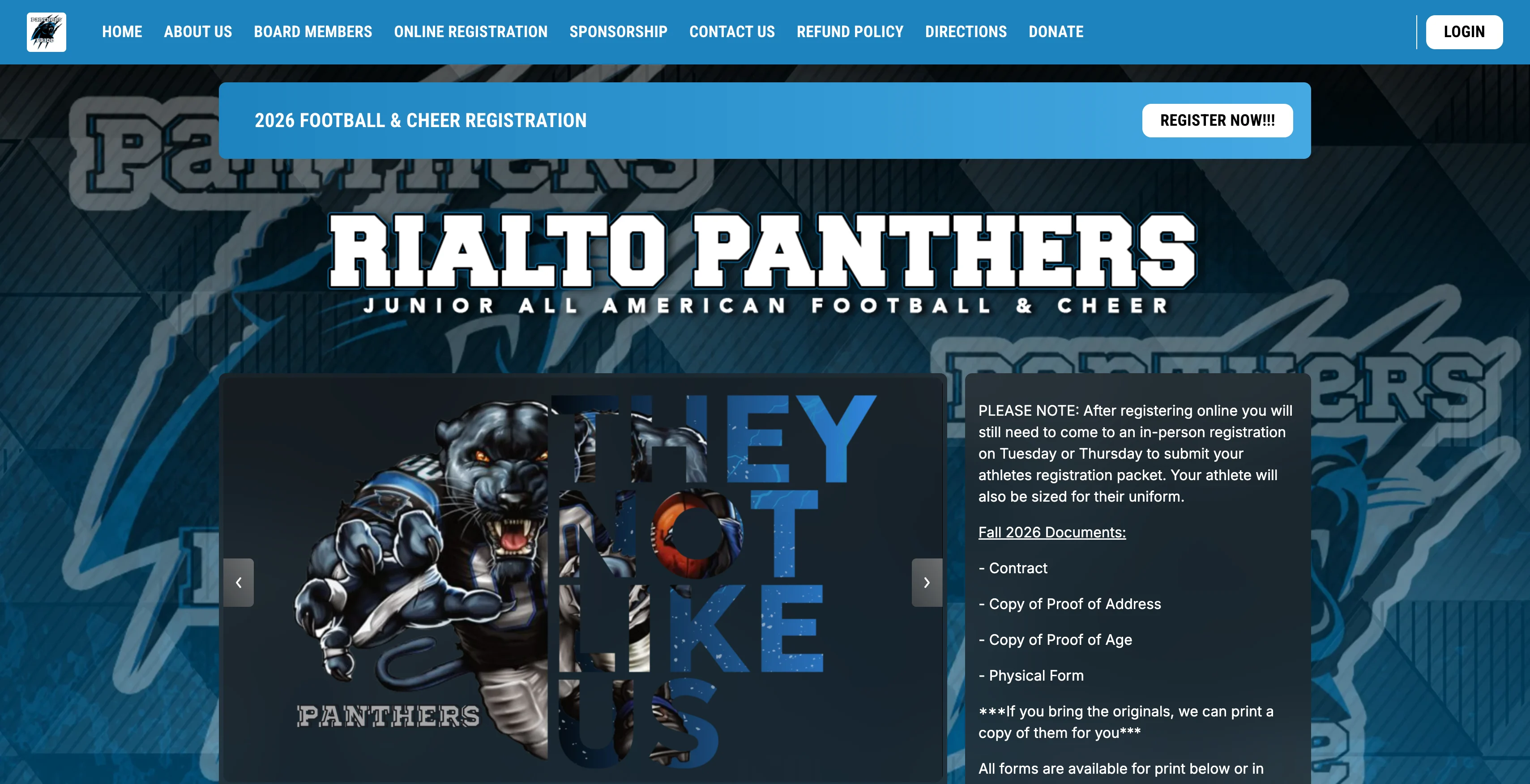
A website built on Jersey Watch showcasing youth football and cheerleading registration
Why your league needs to show up in search and AI results
Today, families search Google or ask AI assistants about local leagues, and public website pages give those tools readable information that private social posts usually can't provide.
Search crawlers and AI assistants can't open a private Facebook group or read messages buried in a closed thread. Even a public Facebook page has limits. At best, it might rank when someone searches your exact league name, but it won't surface when a new family searches by sport, town, or age group.
A public website page works differently. It gives search engines and AI tools clear, readable details about your program, so your league can show up for searches beyond just its name.
To make that happen, publish pages that plainly state:
- Your league's name
- The sport you offer
- Your city or town
- Age divisions
- Season dates
- Registration details
- Working sign-up link
Get that information live on a public page today, and you're giving families a real way to find you before they ever think to search Facebook. See how Jersey Watch's website builder makes it easy.
Why a professional website builds trust with families and sponsors
A professional website makes your league look organized before families register or sponsors commit. Whether it’s a parent checking you out online before typing in a credit card number or a local shop owner deciding whether to back your season, both size you up the same way a lender sizes up a loan application.
First impressions for new families
A clear public website tells new families your league is organized by answering their basic questions before they ever register. New parents shouldn't have to join a private group or send a message just to find out details about your league.
Six details need to live in plain view: age divisions, fees, deadlines, locations, contact info, and the registration link.
Test this yourself before registration opens. Pull up your public site on your phone, no login, and check each of those six items in order. If any of them take more than a few taps to find, that's a gap a new family will notice.
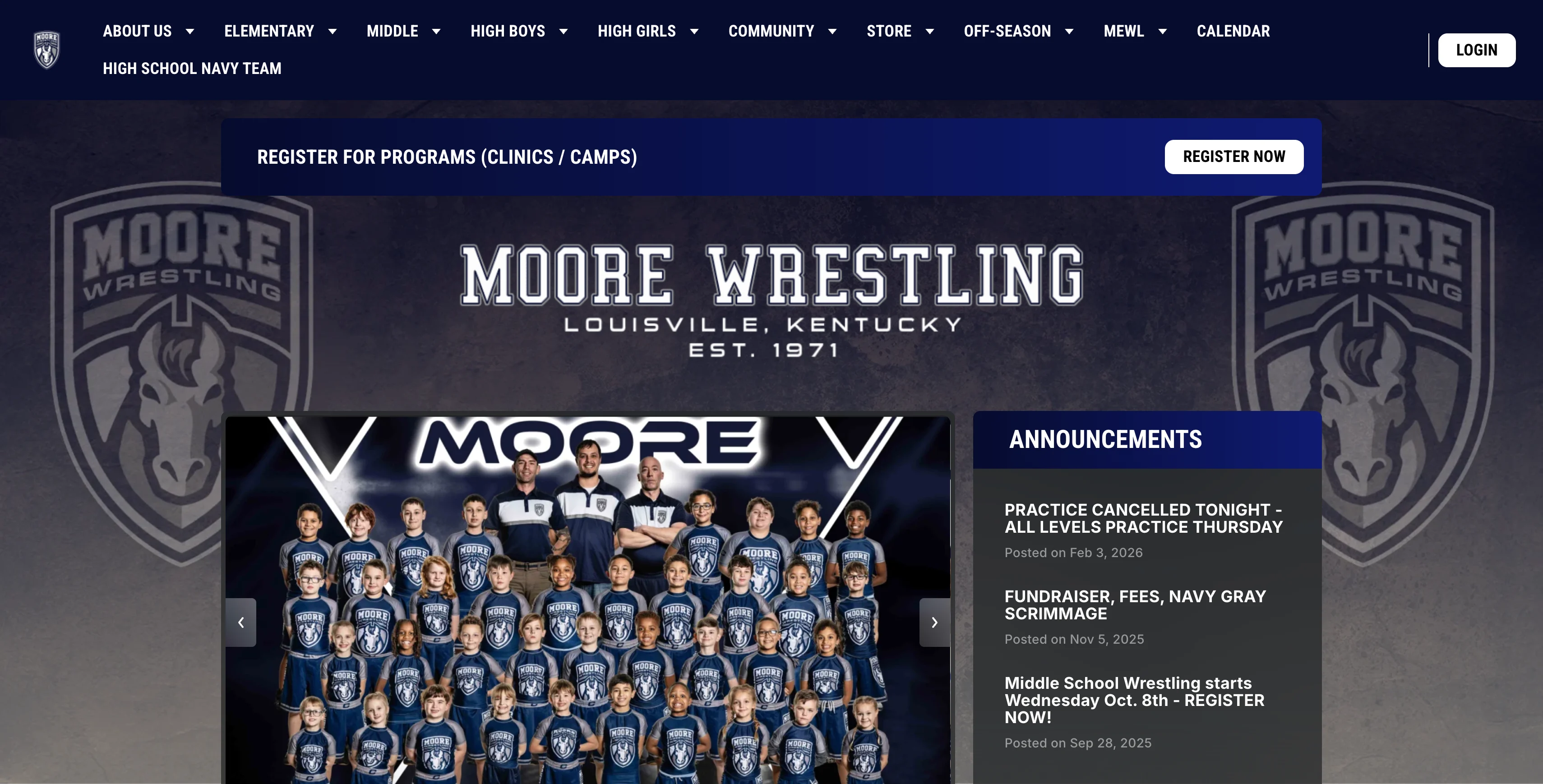
For page layout inspiration, check out these examples of well-built youth sports websites.
Sponsor pages that make fundraising easier
Local businesses can also get visible, shareable proof that their support matters on a public sponsor page. A Facebook post thanking your sponsors scrolls out of sight in a day or two, but a dedicated page on your website stays put all season long, ready to show off whenever someone asks who backs your league.
Build that page with a few key pieces:
- Sponsor logos
- Short sponsor descriptions
- Event shoutouts
- Fundraising forms
- Renewal links
Give each sponsor their own public URL. That way, a business can drop the link in an email newsletter, post it on their own storefront window, or hand it to a manager deciding whether to renew next year.
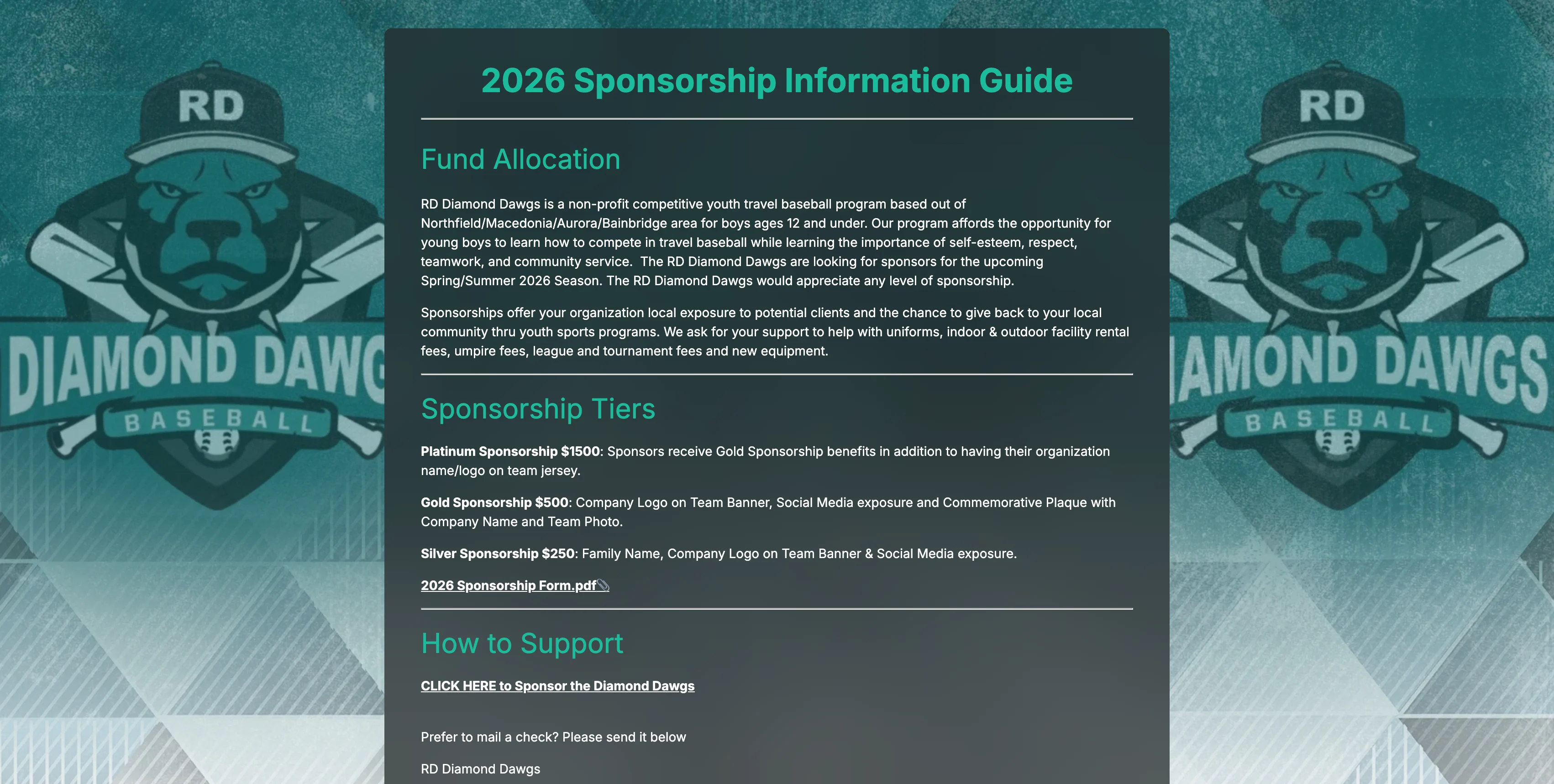
A youth baseball website's sponsorship information page
How does a website help protect family data?
A website lets you collect family information through organized forms instead of tracking down player details scattered across DMs, comments, chat threads, and a single person's private spreadsheet. When a parent fills out a registration form, the submission lands in one place with defined access.
Compare that to a typical team chat. A birthdate, allergy note, or home address dropped into GroupMe or a Facebook comment has no clear access control and no reliable record of who saw it or how long it stayed visible.
Families expect their children’s data to be handled properly, and the FTC's COPPA rule mandates it. Governments are also paying closer attention to kids' online experiences in general. Neither a website nor any single tool automatically makes your league compliant.
Before you trust any form, ask three questions: Who can access submitted data? Where is it stored? How do you change permissions when a volunteer leaves?
Will you lose your team's history if you leave Facebook?
Leaving Facebook doesn’t mean losing your league's memories. Team photos, celebration posts, and old comment threads can stay right where they are.
What matters is separating keepsakes from operational records. Photos and memories can live on social media forever, but schedules, forms, rosters, policies, and season records belong on a website your organization controls rather than a page tied to one volunteer's personal login.
Migrate in order of urgency. Move this season's schedule, registration forms, and active rosters first, then go back and archive past champions, historical standings, or founding-year stories once the essentials are live.
Building a website doesn't require any tech skills
A purpose-built sports website builder handles setup and upkeep for you, no developer needed. A platform like Jersey Watch's sports website builder skips the parts that scare volunteers off, such as installing plugins, learning code, or keeping an IT person on call. You can even update your site from your phone, just like you'd post on social media.
Jersey Watch comes with tools made specifically for volunteer-run leagues, covering everything a board needs to launch and run a site:
- Drag and drop homepage modules
- Custom domain
- Schedule display
- Roster pages
- Sponsor pages
- Website design assistance
- Content migration support
With a drag-and-drop website builder, you can make changes to your website in seconds
Give your league the home base it deserves
Running your league through a social media feed means scrambling to find last season's registration form buried in a Facebook Messenger thread from 11 months ago. Social media still earns its spot as your megaphone for game-day reminders and quick shout-outs, but it was never built to hold your rosters, your payment history, or your sponsor agreements.
Jersey Watch pairs a simple website builder with registration, scheduling, and communication tools, so your league's information lives in one place instead of scattered across apps nobody fully controls. No design skills or tech-savvy board member required, just a willingness to give your organization a real home base.
If that sounds like the kind of stability your league has been missing, start building your organization's official home base for free with Jersey Watch.
FAQs
How much should a youth sports organization budget for a website?
A youth sports website can cost as little as a low annual software fee, or several thousand dollars for custom development. For most volunteer-run leagues, a sports website builder keeps costs predictable and avoids developer bills for routine updates. When comparing options, include registration, payments, the domain, setup help, messaging, and scheduling in your budget.
How long does it take to launch a youth sports website?
A simple youth sports website can launch in a few days when your league has basic information ready. Gather your logo, contact information, divisions, registration dates, schedules, and sponsor logos before starting. Website design assistance and content migration support may also help busy volunteers move faster.
Who should own the league website account and domain?
Your board should own the website account, domain, and payment details instead of tying them to one volunteer. Use a shared administrative email, document access rules, and review permissions whenever officers change. This keeps your league's digital home steady through normal board turnover.
How do you get parents to use the website instead of group texts?
Parents are more likely to use your website when it consistently has the information they need before they ask for it. Put registration links, schedules, field locations, weather updates, and contact details in predictable places on your site. Then point every email, text, and social post back to those pages so families build the habit.
What is the first step to moving your league from Facebook to a website?
Start by choosing one official website home for registration, payments, schedules, and league updates. Copy over your current-season details first, including open programs, key dates, fields, contacts, and sponsor information. Move older records and selected photos once families can find everything they need for the active season. With Jersey Watch, setup help and content migration support are included, so this doesn't have to be a solo effort.

Kayleigh O'KeefeGrowth Team Lead
Kayleigh is Growth Team Lead at Jersey Watch, where she works with the marketing, product, and customer care teams to help youth sports organizations grow their programs. She writes about growth and community building for youth sports organizations, drawing on her background in fundraising and partnerships with schools and teams, along with a lifelong passion for football, hockey, and soccer!


