

A simple, easy-to-use website is a cornerstone of any youth sports organization. When parents are looking for registration details, current schedules, or last-minute updates, they’re far more likely to search online than scroll through old social posts or emails.
A mobile-friendly website gives families one dependable place to find what they need and saves volunteers time by reducing repeat questions and missed information.
Let’s look at seven strong examples of youth sports websites and explain what makes each one effective. You’ll also learn what to look for in a sports website builder to improve communication, build trust with families, and keep information manageable throughout the season.
The importance of a youth sports website
A website is the most practical way to keep parents, coaches, and volunteers informed, whether you’re sharing early-bird registration details or announcing a last-minute cancellation.
Unlike social media or word-of-mouth, a well-organized website groups information into dedicated pages. Families can quickly find what they need, and volunteers spend less time answering questions and more time supporting the season.
24/7 access to information
Families juggle busy schedules, so around-the-clock access to game details, alerts, and key logistics is essential for any youth sports program. An up-to-date website reduces late-night emails and early-morning phone calls, saving time for both parents and volunteers.
Make registration deadlines, program requirements, and time-sensitive updates easy to find. That way, families can quickly confirm what’s required before signing up, or see what to do next if the weather shifts or a coach has an emergency.
Enhanced communication
A website supports more consistent communication throughout the season. With the right website builder, you can share everything from announcements to codes of conduct in one place. Many platforms also include built-in communication tools, making it simple to send text messages or emails to key contacts.
Use automated messages for routine updates, such as welcome emails or deadline reminders, and send custom messages when plans change. If an opposing team cancels a game, for example, you can quickly notify families without scrambling.
Increased credibility
A professional, branded website helps families feel confident in your program. When parents are deciding where to register, a clear site signals reliability and attention to detail.
You can reinforce credibility by including:
- High-quality team photos
- Strong staff bios
- Concise program overviews
- Testimonials and success stories
- Consistent branding across pages
Use your website to highlight what makes your organization stand out, whether that’s skill development, community involvement, or local pride. A strong site answers common questions and gives families the clarity they need to move forward.
The anatomy of a powerful sports website
While every sports league has its own needs, the most effective websites share a few key elements. Building a functional user experience starts with understanding how coaches, parents, volunteers, and players interact with each page.
Modular homepage
A homepage should clearly show what your program offers and direct visitors to essential resources, such as practice schedules or registration. A modular homepage makes it easy to add, rearrange, or remove content as the season evolves.
The right website builder will let volunteers update layouts quickly, even on the go. Use hero banners, intuitive navigation, and timely announcements to keep the homepage organized and easy to navigate.
Online registration page
A dedicated online registration page simplifies the sign-up process, giving families an easy way to:
- Verify deadlines
- Understand age divisions
- Choose a program
- Complete forms
- Submit payments
Busy parents don’t have time to scroll through long or confusing pages, and slow-loading forms can lead to abandoned registrations.
A mobile-friendly form helps capture essential details and process payments securely, allowing parents to complete registration from their phone without switching devices. It also reduces the need for volunteers to collect and manage paper forms or checks.
Sponsorship page
A sports sponsorship page is a great way to recognize current sponsors and invite new partners to get involved. Include an embedded sponsorship sign-up form or a clear link out to a separate sign-up page to make the process easy.
Show how sponsorships support the team and connect local businesses with families. Testimonials or short examples can help explain how these contributions benefit everyone — the team, the community, and the sponsor.
Events page
Families rely on your calendar to plan for both the expected and unexpected. Use your events page to list:
- Upcoming games
- Practices
- Tournaments
- Fundraisers
- Community events
Choose a website platform that can easily create schedules and events. Find tools that allow you to quickly add recurring events, like practices or game days, to populate your calendar quickly. You should also be able to add one-off events, details like directions or parking information, and league standings.
If you run a league, consider finding a sports schedule generator to quickly create round-robin schedules that allow you to manage locations, add blackout dates and post results.
Staff pages
Staff pages put faces to names, whether that’s coaches, volunteers, or board members. Updated photos, concise bios, and contact information help families understand who’s involved and how to get in touch.
This is especially helpful for prospective parents who may be comparing programs and want a better sense of the people leading the organization.
Donation page
A donation page gives families and supporters a practical way to contribute, especially as many parents report making financial sacrifices to keep their children in youth sports. Donations can help offset costs, expand access, or support scholarships that keep programs affordable.
Start with a brief mission statement that explains how the team benefits the broader community. Keep the page simple and easy to navigate. Let donors know where their contributions go, and offer one-time payment options that make giving easier.
Contact us
Your website’s contact page should include contact forms, email addresses, and phone numbers. Make it clear who to reach out to for common questions or concerns, whether the inquiry comes from a parent, sponsor, or community member.
A well-organized contact page supports open communication and helps families reach the right person. If your team management roles change during the season, update the pages to reflect the new contact details.
Benefits of using youth sports websites
Youth sports websites can significantly improve day-to-day operations. Key benefits include:
- Better organization: A centralized website reduces paper handling and manual tasks, helping teams manage schedules, registrations, and participation in one place.
- Improved communication: Post updates directly on your site and use built-in tools to send text or email notifications. Whether it’s a weather-related cancellation or a routine deadline reminder, families stay informed without extra follow-up.
- Increased visibility: A professional website helps attract new players, sponsors, and supporters by explaining what your program offers and what makes it different.
- Easy online registration: A digital youth sports registration tool simplifies the sign-up process by capturing registration details and processing payments online. This helps prevent errors, like mistyping a birthdate, and eliminates the need to track paper forms or checks.
- League updates: Sharing news, league standings, and scores helps keep families engaged and connected as the season unfolds.
A youth sports website answers the questions families care about most. Instead of piecing details together from social posts or email threads, parents can quickly find information about teams, schedules, costs, and staff in one central hub.
The 7 best youth sports websites
The following examples show how different youth sports organizations use their websites to keep information organized, accessible, and easy for families to find.
Thunder Soccer Club
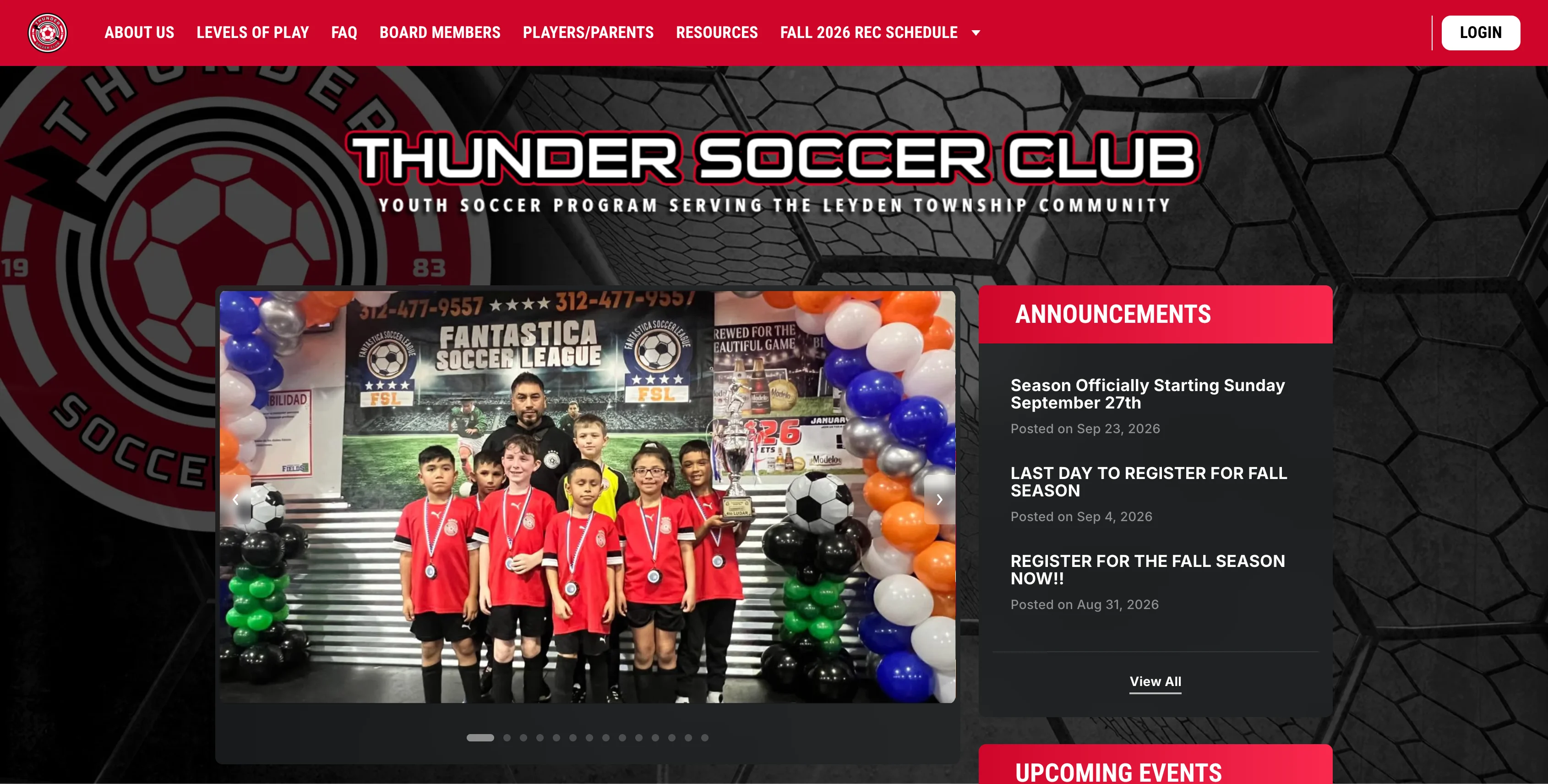
Thunder Soccer Club is a volunteer-led soccer organization with a long history in the community. The homepage uses a photo carousel to feature all-star opportunities, skills clinics, and travel teams.
The website balances the club’s history with current program information. Parents can quickly find board member details, schedules, age charts, and rules, making it easy to understand how the program is organized and what to expect.
Boulder Bears Football
Boulder Bears Football is a tackle football program that welcomes players of all experience levels. The homepage highlights experienced coaches, skill development, teamwork, and affordability.
The website does a good job of sharing essential information while encouraging community involvement. A prominent donation portal and a Support Us dropdown make it easy to learn about sponsorship options or the team’s rewards program.
The Treasure Coast Sports Association
The Treasure Coast Sports Association is a nonprofit basketball league designed for young athletes. This website reflects a higher level of competition and includes a dedicated dropdown section for recruiting opportunities.
Clear navigation leads families to key resources, such as schedules, playbooks, season videos, and the team store. This structure helps parents better understand the level of competition, along with the expected time commitment and costs.
Moore Wrestling
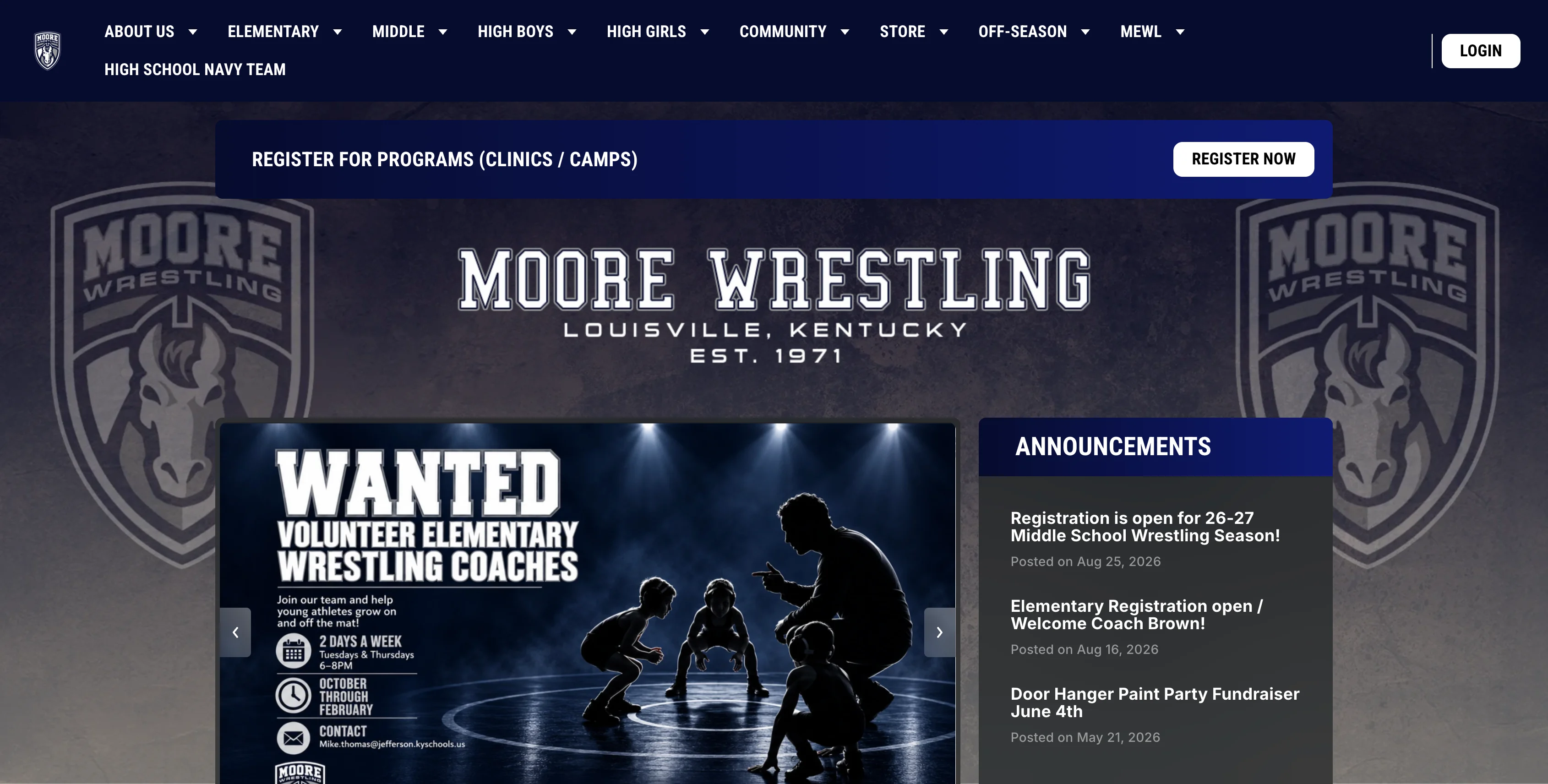
Moore Wrestling serves youth athletes from kindergarten and up. Many families have multiple children participating at the same time, and the website organizes teams by age group to make information easier to manage.
The homepage shares broad updates, such as registration announcements and tournament standings. Individual team pages break down schedules, meetings, and additional opportunities like off-season training. This structure helps parents keep track of commitments and avoid missing important deadlines or events.
Desoto Baseball Organization
Desoto Baseball Organization’s homepage features team photos, announcements, and upcoming events. A For Parents dropdown organizes details like age divisions, game and practice schedules, and bat size, so families can quickly access the information they need.
As a larger organization, Desoto uses its website to share everything from refund policies to rainout lines for weather-related cancellations. This site functions as a central communication tool, helping families access important resources when they need them, including details about the league’s scholarship program.
Irondequoit Youth Lacrosse
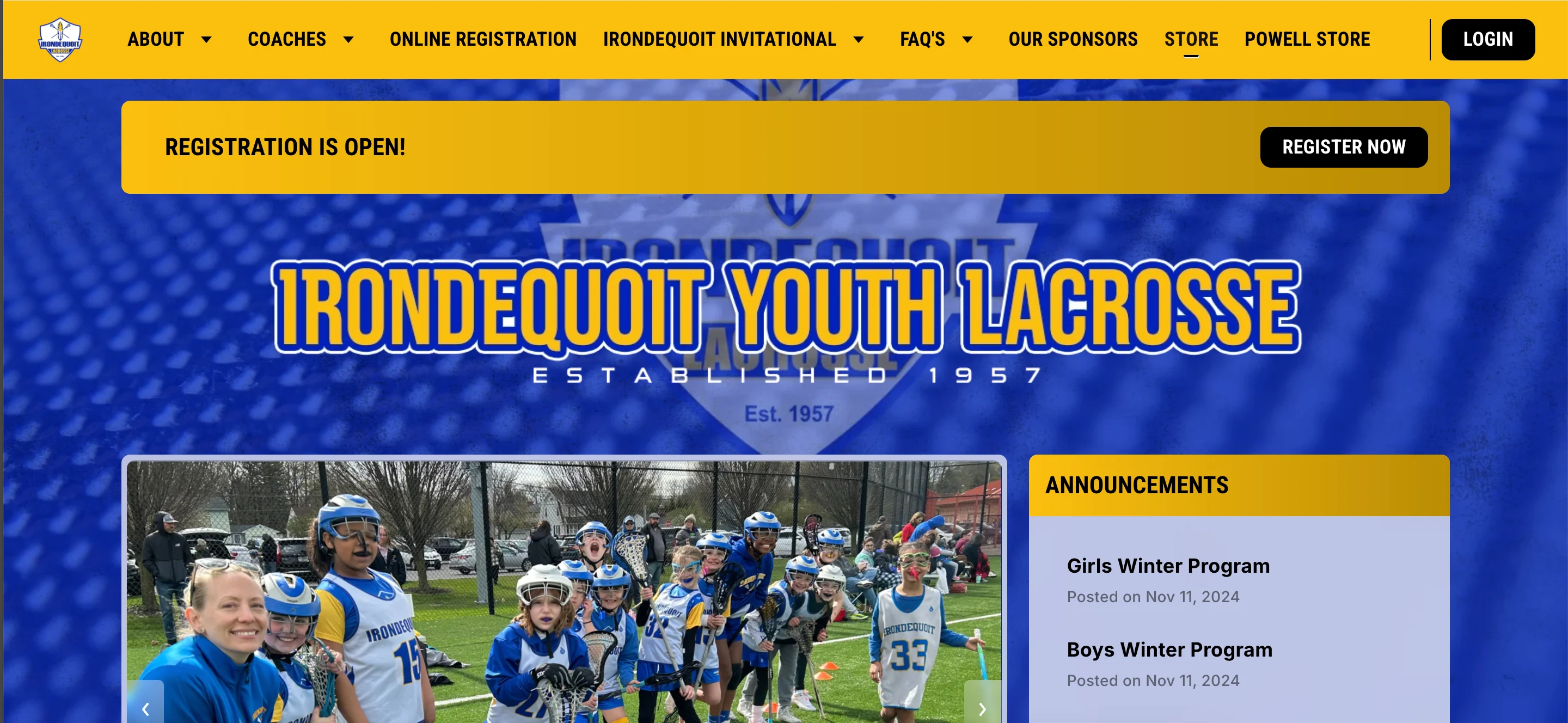
Irondequoit Youth Lacrosse’s website focuses on in-season visibility for families. A registration banner, weather widgets, sponsor information, and invitational details help parents stay informed about costs, schedules, and game-day conditions.
Visitors can donate, view team photos, or learn more about the league’s leadership team. The website also reflects the organization's long-standing presence in the community.
Hilton Select Basketball
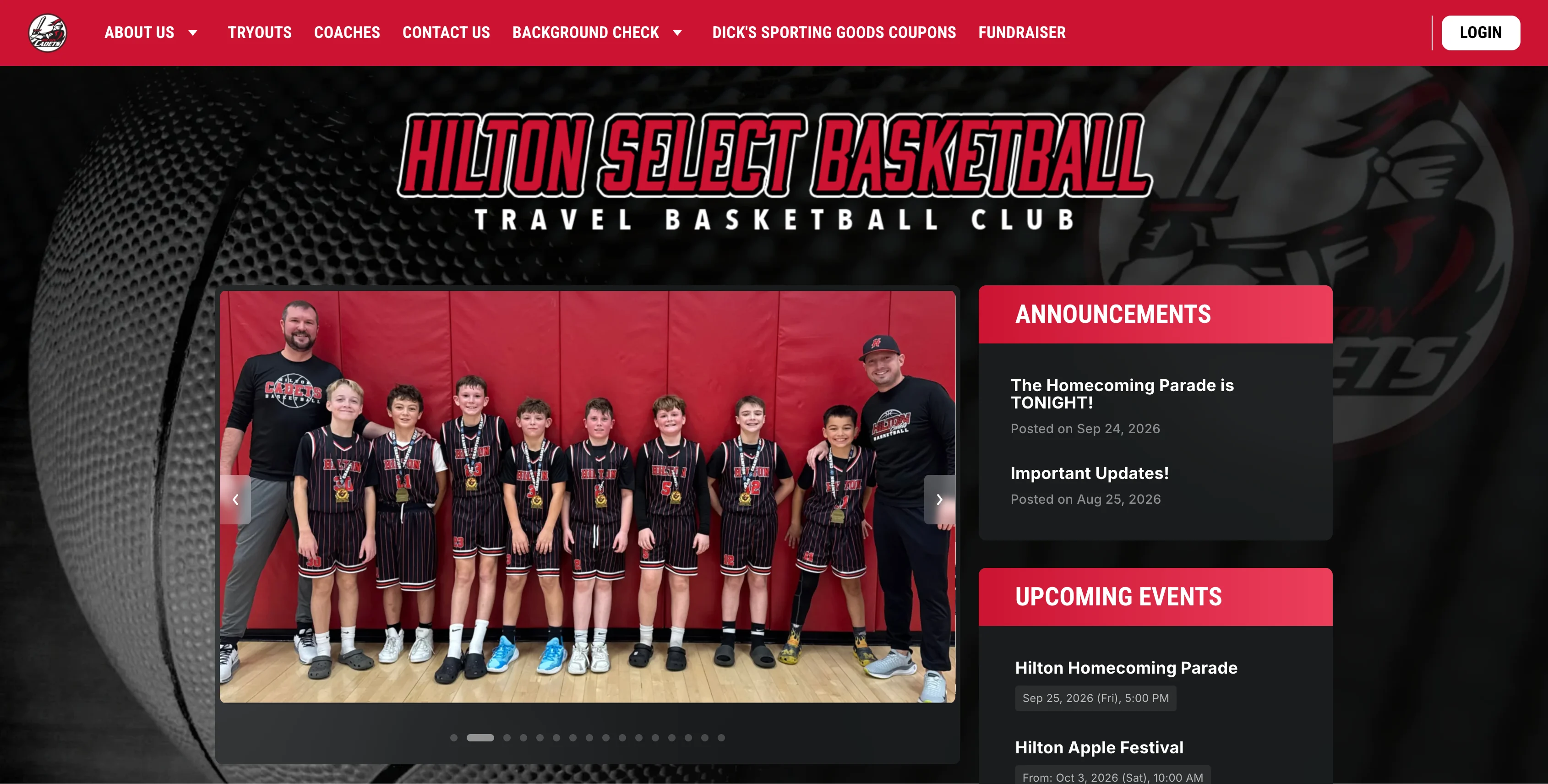
Hilton Select Basketball is a feeder program serving players from elementary through high school. The homepage clearly lists the age divisions, costs, and dates for games and tournaments.
The website emphasizes a predictable schedule, which is especially helpful for families managing busy routines. It also includes information about board members and background check requirements, giving families greater confidence and visibility into how the program is run.
Choosing the right youth sports website builder
Before choosing a youth sports website builder, consider the following:
- Ease of use: A user-friendly website builder should work for both volunteers and families. Parents should be able to find information and staff should be able to make updates without needing technical expertise.
- Customization: Your website builder should support your organization’s branding and adapt to the needs of your league or sports team, including season-specific pages, programs, and updates.
- Features: Focus on essentials like registration, scheduling, secure payment processing, and communication tools. These core features help organizations manage day-to-day operations as participation levels shift over time.
- Cost: Look at the full cost of the platform, including subscription fees, setup, and add-ons. Transparent pricing helps volunteers plan ahead and manage budgets with fewer surprises.
- Support: Reviews and testimonials from other organizations can provide insight into the quality of customer support and ongoing help available.
Want to see how different options compare? Check out our roundup of the best sports team website builders!
Build a youth sports website
For busy volunteers, an all-in-one youth sports management platform can keep everything in one place. Jersey Watch’s website builder supports key tasks like player registration, volunteer schedules, and game-day cancellations.
Jersey Watch is designed specifically for youth sports volunteers, not web developers. Teams can launch and update their site quickly, even with limited time or technical experience — and get support when questions come up.
With Jersey Watch, you can:
- Build an organized, functional website
- Host online registrations
- Collect forms and payments
- Message key contacts
- Create schedules
- Post events
With the right tools, maintaining a modern website doesn’t have to be complicated. Jersey Watch helps volunteers stay organized, keep families informed, and spend less time chasing details during the season.
Build a stronger online presence for your sports organization
A well-built website gives families a reliable place to find the information they need, from season information and program requirements to daily updates and contact details. When everything lives in one consistent location, parents know where to look and volunteers can focus their time on running the program instead of answering logistics questions.
Jersey Watch helps youth sports organizations run their websites alongside core operations like registration, communication, scheduling, and payments. Built specifically for volunteer-run programs, the platform replaces scattered and dated tools with a single system for managing both the website and day-to-day operations.
Ready to strengthen your organization’s online presence? Sign up with Jersey Watch to build a website that supports volunteers and keeps families informed.
FAQs
How often should a youth sports website be updated?
Update the site whenever new details are available, such as registration windows, schedules, or announcements, so families can rely on current information.
What pages are essential for a youth sports website?
Most organizations benefit from a homepage, registration page, events calendar, staff page, donation page, and contact page.
Do small or volunteer-based organizations really need a website?
Yes. A clear, well-maintained website supports communication, limits repeat questions, and presents a more organized experience for families.
How can a website help grow participation?
A clear website helps families understand programs, complete sign-ups more quickly, and share information with others who may be interested.
What makes a youth sports website easy for parents to use?
Clear navigation, direct access to registration, readable schedules, updated photos, and a mobile-friendly layout make the biggest difference.

Sierra SwigertOperations Manager
Sierra Swigert is the Operations Manager at Jersey Watch. She works directly with youth sports organizations every day and writes educational resources based on her firsthand experience supporting league administrators and volunteers, as well as her background competing in cross country and track.


