

Table of Contents
Whether you're starting a new volleyball organization or you've been around for years, building a club volleyball website before the season starts is critical for success. Current players, prospective parents and community members all rely on a website to host important information.
This post will cover how to choose a website builder for a volleyball club, what information is important to host online and how to incorporate online payments into the site.

Choose a website builder for volleyball clubs before anything else
The best website builder for a volleyball club is one designed for sports organizations, so tryout registration, club fees, team pages, and messaging run on the same site families use all season.
Jersey Watch is a sports-specific website builder used by more than 2,800 youth sports organizations. It's free to explore, and a live site costs $19 for the first month and then $348 a year, with a custom domain, custom design, and no setup fees.
Choosing the right website builder is crucial because club volleyball has one of the longest seasons in youth sports and some of the largest fees, so the registration and payment component matters as much as the design. Choose a website builder that also includes other club management tools so parents can use the website to pay online, see when payments are due and check game schedules.
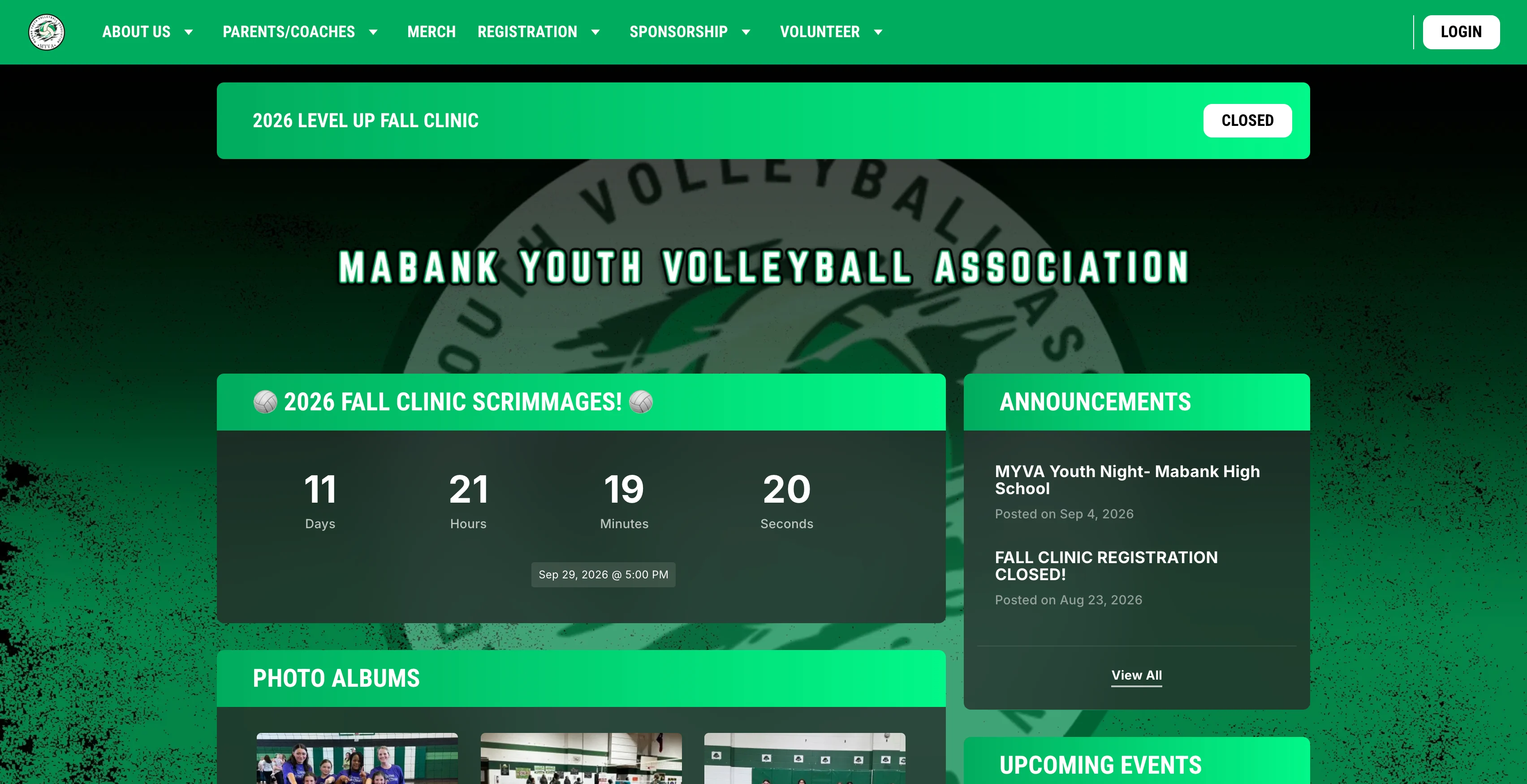
Kaylie Oxendine of Mabank Youth Volleyball Association describes running her volleyball league on Jersey Watch this way: "The platform is incredibly user-friendly, making it easy to manage our website, registrations, and communications all in one place."
Ready to get started building your club site? Browse our volleyball website examples and learn how Jersey Watch supports volleyball programs with an all-in-one platform.
Add important page content to your club website
Once you've chosen a platform for your volleyball club, the next step is to add important information. This will come in handy for current and prospective players as well as in Google and AI search results. We'll cover information components of a club website below.
Promote your club history, accomplishments, and staff bios
Your website should be the hub for promoting your club. Remember that a lot of people that visit your website won’t know anything about the club, so be sure to list and update all of your basic information:
- The year your club was founded – build some credibility with people who are new to the club
- Mission and values of the club – make sure everyone knows what you’re all about
- Accomplishments (team and individual) – pat your club on the back!
- College signings – competitive players care about your success getting players to the next level.
- Staff bios – parents and players will want to get to know you before signing up for events or tryouts. There’s no better place to promote your staff than on your website. Why is your staff qualified to coach and train players?
It’s also important that you list details of you club on your Homepage so Google can’t point searches to your club when parents/players are searching. For example, if you club is located in Madison, Wisconsin and serves players ages 12-18 and also offers camps in the summer, your homepage should have a sentence like:
Lakeside Volleyball is based in Madison, WI was founded in 2005 and has programs for players ages 12-18. We run successful and competitive club teams, as well as camps and private training.
A detailed description about your club including location, ages, and goals will help your site appear at the top of more search results. This can be a huge help to get more participants to find your club.
List player requirements and tryout info
Tryouts are a critical time to recruit new players and retain players from past seasons. Parents and players get excited in the summer researching clubs and registering for tryouts at different clubs, especially if they’re new to club volleyball.
If tryout information is difficult to find, parents will be frustrated. List your tryout dates, requirements, and any associated fees on your website. You should leave this Tryout Information page up year round. Parents and players will be curious when tryouts take place if they’re researching new clubs in the offseason.
Constantly update your schedules and events page
Parents need quick access to practice, event, and tournament schedules. If they can’t easily find schedules they’ll contact club administrators with questions or worse, choose not to participate.
Be sure to post tournament schedules for each team as soon as they become available. Event location details, hotel info, and links to the tournament website are also helpful and will prevent you from fielding endless phone calls and emails from parents in the days leading up to the tournament.
Post your fee details, and make it easy for parents to pay online
Convenient payment options are critical to make parents happy and to save yourself time as a coach or administrator. If you’re still primarily collecting cash and checks, you should consider setting up payments online for your tryouts, clinics, camps, and season fees right away. It’s simple to set up online forms to allow participants to pay online using debit or credit card. Funds get deposited straight into your bank account so you don’t have to chase down payments or make trips to the bank.
For higher payment amounts like your club dues for the season, make sure you offer flexible options for parents to pay. An initial deposit, followed by several payment due dates can give parents an easy way to pay their full season fees without paying up front all at once. Setting up a payment plan option gives parents a convenient way to pay in installments, and also guarantees that your club will get your money on time.
Parents will expect that there are easy ways to pay and to have a credit card option available. The good news is it’s easier than ever to collect payments online for your volleyball club. Don’t leave this out when you set up your website for your next season!
Give access to other administrators
Don’t take on all of the work yourself. You can give a few coaches or staff members access to post information, update events, or send messages.
Find a few of the tech savvier coaches (or even player parents) that want to help out with the website. We recommend assigning certain responsibilities to specific people at your program (like scheduling, payments, etc.) so you’re not taking on all of the work yourself. If you have set roles nothing will slip through the cracks.
Launch your club volleyball website with Jersey Watch
Jersey Watch is a comprehensive website builder to manage your volleyball league or club. You can create website content, register players, connect a domain name, and create schedules - all in just a few minutes. Plus, you get access to award-winning support backed by over 1,100 reviews.
You can create an account for free to explore all of the features.

Tim GusweilerCo-Founder / CEO
Tim is the Co-Founder of Jersey Watch, where he works with the product, marketing, and customer support teams to build software for youth sports organizations. He writes about youth sports management based on years of experience working with league administrators, coaches, and volunteers, along with a lifelong passion for sports.


