7 LeagueApps Alternatives Worth Considering for Small Sports Clubs

Kayleigh O'Keefe Last updated: August 31, 2026
Table of Contents
LeagueApps alternatives are sports management platforms that can replace some or all of LeagueApps' core functions, including registration, payments, websites, scheduling, and team communication.
LeagueApps works well for larger, multi-sport organizations with high registration and payment volume, but its broader platform and sales-led setup can feel like more than a 50- to 1,000-participant volunteer-run club needs.
This guide compares Jersey Watch, SportsEngine HQ, TeamLinkt, TeamSnap ONE, Sports Connect, TeamSideline, and Crossbar based on pricing transparency, ease of use, and support. For a deeper side-by-side, visit the Jersey Watch comparison hub.
Why do small sports clubs look for a LeagueApps alternative?
Small clubs start shopping for a LeagueApps alternative when a broad, sales-led platform doesn't match a lean, volunteer-run operation. LeagueApps positions itself as a comprehensive platform for leagues and facilities, which can work well for larger, more complex organizations but can feel like overkill for a rec league run by three parents and a group chat.
Pricing is a big part of it. LeagueApps doesn't publish exact rates, and getting started means booking a demo instead of just signing up and poking around. Volunteer commissioners are often short on time between practices and paperwork, so they'd rather try a product and launch it themselves than have to book a sales call.
Then there's the day-to-day reality. You're posting updates to a Facebook page, collecting cash at the field, and keeping rosters in a spreadsheet. That patchwork works until it doesn't, and switching to something more connected starts to feel necessary rather than optional.
Ease of use matters most here. You're managing everything from your phone, with no IT department to call when something breaks.
What should you look for in a LeagueApps alternative?
The best LeagueApps alternative for a small club offers transparent total subscription and processing fees, mobile-friendly administration, connected core workflows, dependable migration help, and responsive support.
Start with cost. Add up the subscription fee plus payment processing charges before you compare features, and find out whether pricing is published or requires a sales conversation. Confirm whether you’re committing to a long-term contract or can change platforms if your needs change.
From there, test how the platform runs on a phone, since most volunteer commissioners aren't managing rosters from a desktop between practices.
Next, check the features your season depends on. A strong contender should connect a website, registration and payments, scheduling, communications, and background checks in one system, so families and volunteers aren’t juggling separate logins.
Then look at what happens when you’re ready to switch. Ask how migration works, who handles moving your rosters and content over, and how quickly support responds when you hit a snag.
Keep this same checklist in mind as you weigh the options below.
LeagueApps alternatives at a glance
The quickest way to shortlist a LeagueApps alternative is by comparing each option on organizational fit, pricing visibility, and its standout capability. Skim the table below for who each platform is best for and how pricing works.
Rank | Platform | Best for | Pricing | Top feature |
1 | Jersey Watch | Volunteer-run leagues and clubs with under 1,000 athletes | $19 first month, then $348/year, billed annually | Unified website, player registration, and payments |
2 | SportsEngine HQ | Large multi-sport organizations and associations | Custom pricing, not published | Advanced data management |
3 | TeamSnap ONE | Leagues and clubs who already use the TeamSnap app | Custom pricing, not published | Mobile-first team scheduling and RSVP tracking |
4 | Sports Connect | Leagues that need registration data synced with governing bodies | No published, contact for pricing | Direct integration with governing body data systems |
5 | TeamLinkt | Large recreational organizations needing low-cost registration | Core plan free; paid bundles start at $425/year | Built-in AI assistant for forms, schedules, and messages |
6 | TeamSideline | Robust scheduling and facility tools | Starts at $599/year; additional add-ons available | Dedicated facility management module |
7 | Crossbar | Hockey clubs that also manage facility bookings and tournaments | Custom pricing, not published | Connected club, league, facility, and tournament products |
1. Jersey Watch: Best for volunteer-run leagues and small clubs
- Pricing: $19 first month, then $348/year, billed annually
- Standout feature: Unified website, registration and payments built for volunteers
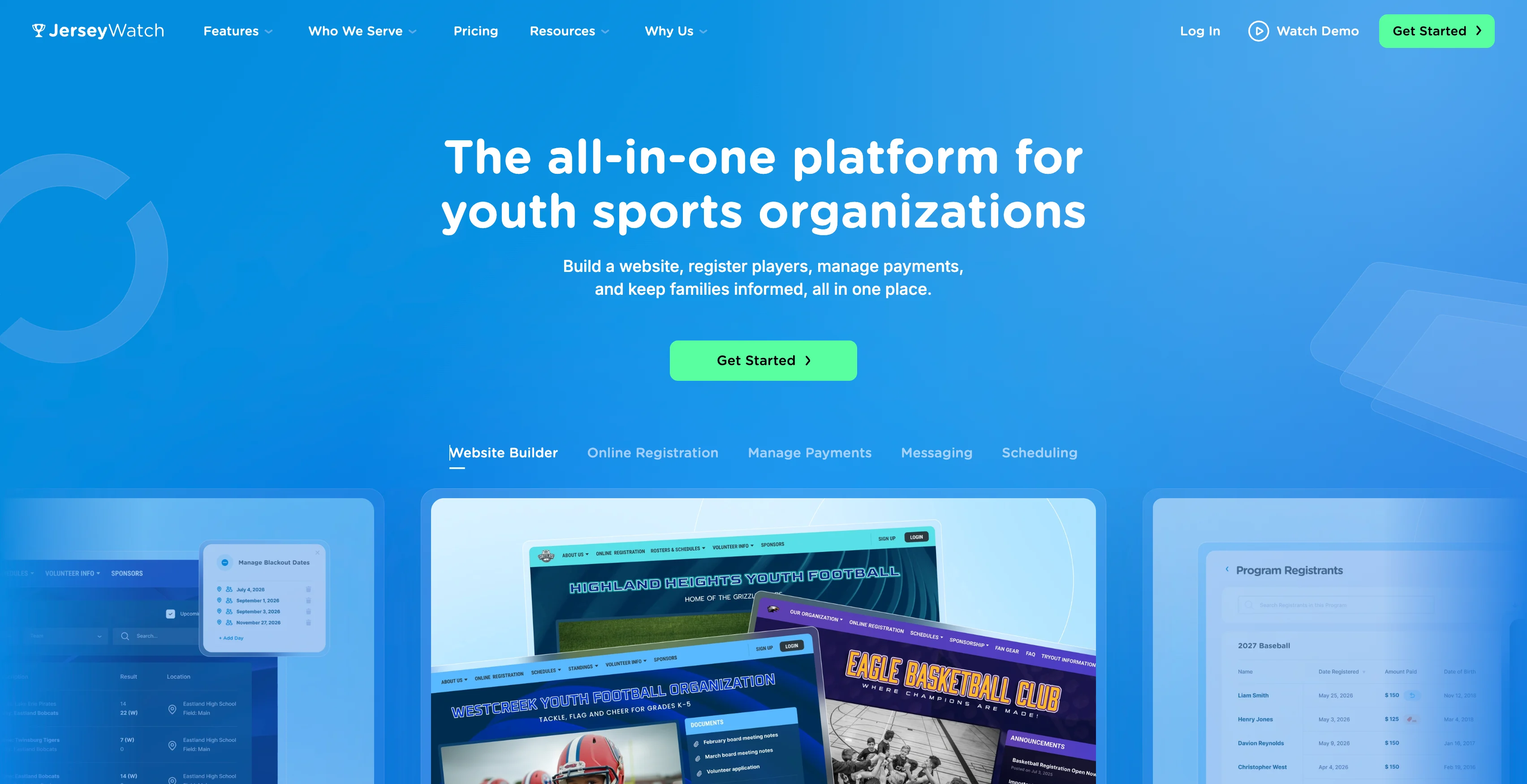
Jersey Watch fits volunteer-run clubs that want an easy-to-use yet powerful website, registration, and payments in one system without needing a developer. It was built for sports organizations who need an all-in-one platform created and launched in one business day.
The sports website builder comes with a custom domain and free content migration. Add online registration and payments, scheduling, communication tools, and background checks, and commissioners can manage their core administrative work through one account. Jersey Watch is trusted by more than 2,800 organizations and holds a 4.7-star rating on G2 with over 235 reviews, plus more than 1,100 reviews on Trustpilot with an average rating of 5 stars.
Create an account for free to explore the platform. When you're ready to launch, the first month is $19 and includes full-service website and registration setup. After the first month, the subscription renews at $348 per year. Jersey Watch will complete content migrations within one business day of signing up and has a Customer Care Commitment outlining its support approach.
Very large multi-sport clubs needing more advanced administrative controls or deeper reporting may want a more complex platform instead. For a closer look at the tradeoffs, check out the Jersey Watch vs. LeagueApps.
2. SportsEngine HQ: Best for larger multi-sport organizations
- Pricing: Custom pricing, not published
- Standout feature: Advanced data management
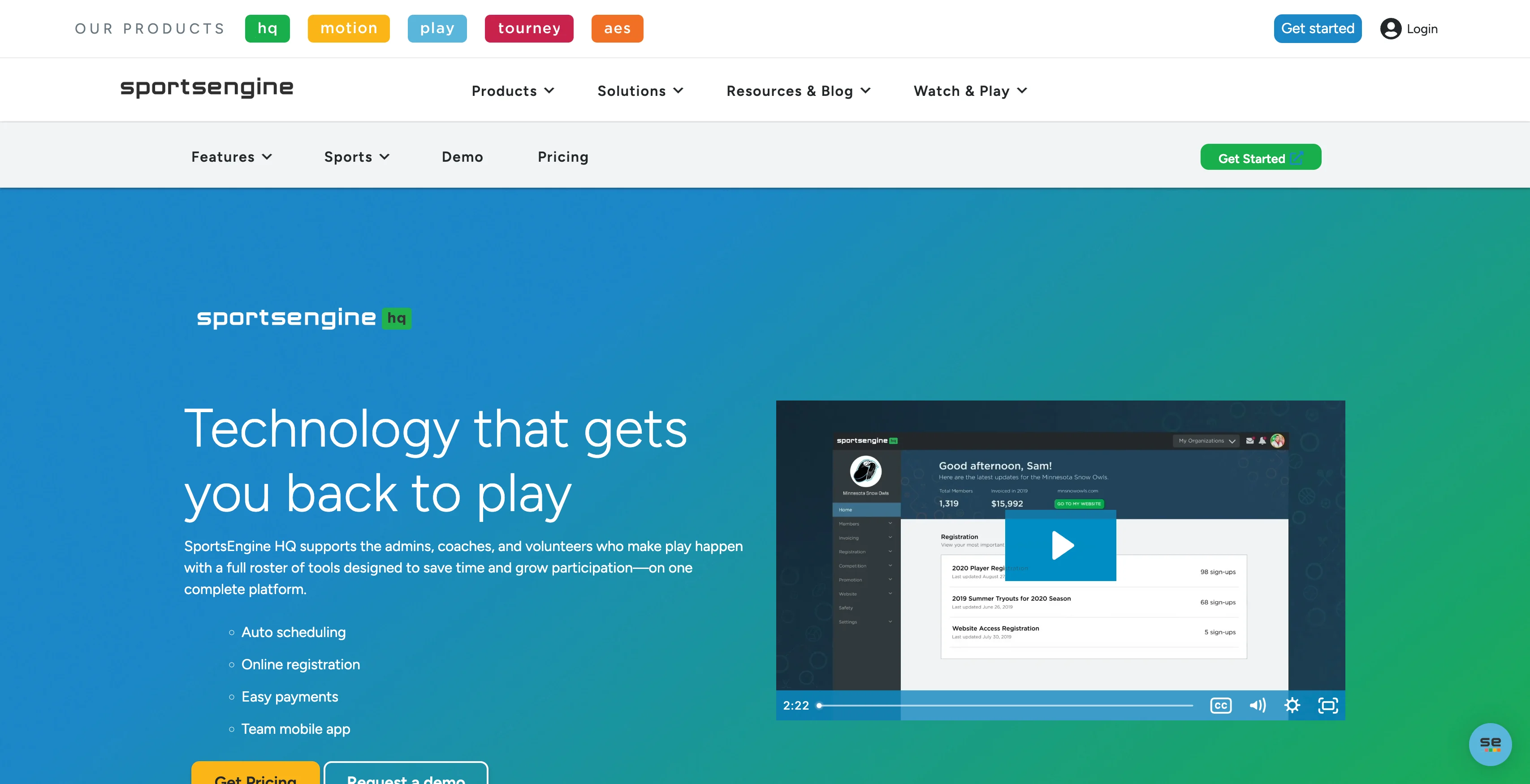
SportsEngine HQ suits larger, multi-sport clubs and associations that need scalable features and a high level of data management for their day-to-day operations. This is a heavier platform built for organizations that have outgrown a simple registration tool and now juggle multiple sports, divisions, and reporting requirements. SportsEngine HQ states it powers more than 45,000 organizations, including governing bodies like USA Hockey and USA Swimming.
That scale shows up in the details. SportsEngine's registration builder documentation describes a highly configurable form-building system designed to handle complex data collection across large leagues, which is more configuration than most small volunteer-run clubs will need. It also includes a Team Management app for iPhones focused on scheduling and chat.
SportsEngine HQ doesn't publish pricing upfront. Because its cost depends on your organization's structure, size, and goals, you'll need to fill out an online form to get a quote before you know what it costs.
SportsEngine was acquired by PlayMetrics in May 2026. For organizations evaluating it now, that change in ownership is worth keeping in mind alongside its features and pricing.
Overall, SportsEngine HQ’s depth can be useful for complex, large-scale administration, but potentially more than a small commissioner-run league needs. See how the two stack up on the Jersey Watch vs. SportsEngine comparison page.
3. TeamSnap ONE: Best for teams prioritizing mobile team management
- Pricing: Custom pricing, not published
- Standout feature: Mobile-first team scheduling and RSVP tracking
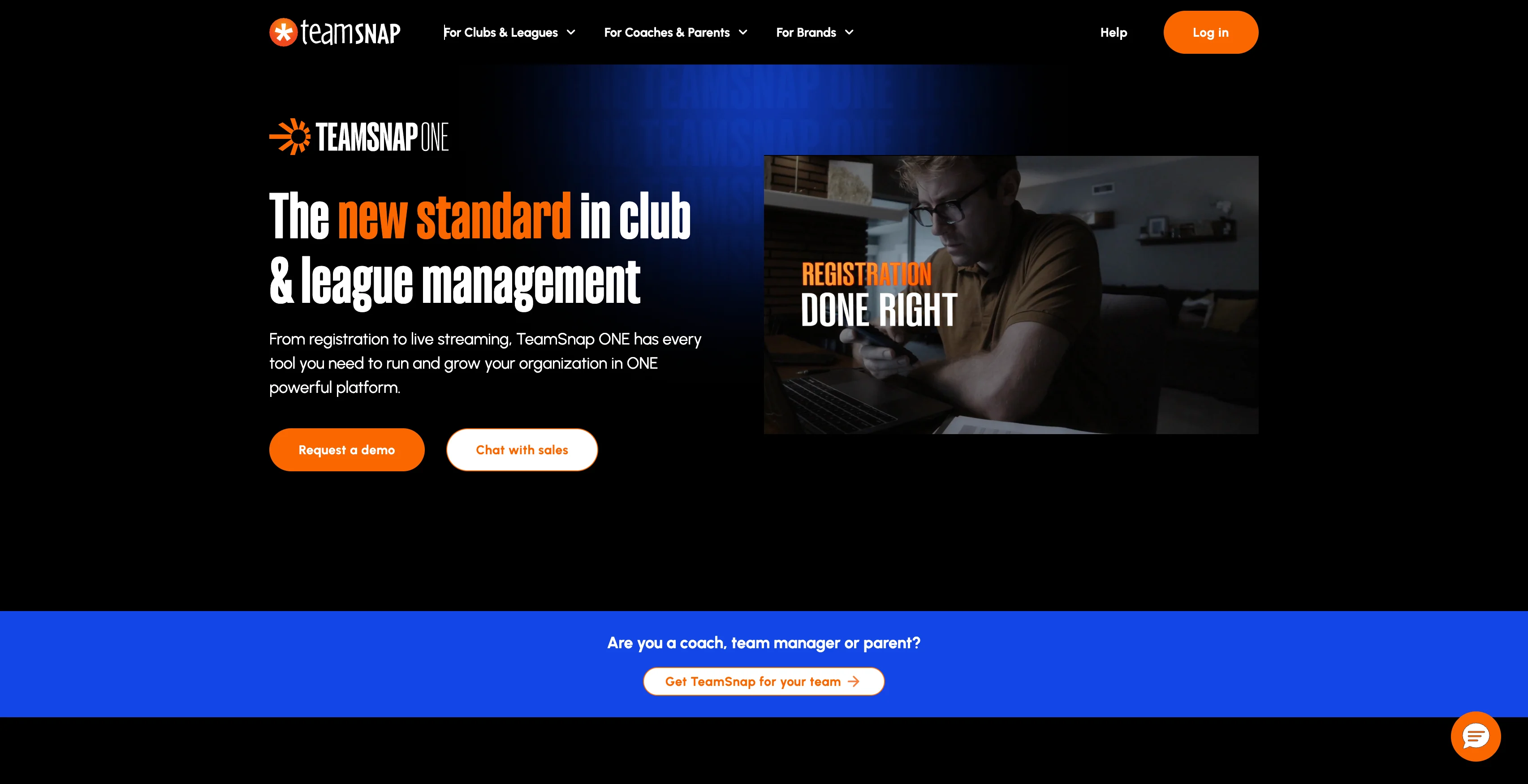
TeamSnap ONE is a practical LeagueApps alternative when your coaches and parents already use the TeamSnap app for schedules and RSVPs, and your club wants to layer on league-level registration and payments. That familiarity can make adoption easier for families and coaches.
TeamSnap ONE builds on TeamSnap's original consumer team app, so registration and payments get added to a workflow families already know instead of asking them to download something new. For clubs juggling other software, TeamSnap Sync also connects data across additional tools, cutting down on duplicate entry.
TeamSnap’s pricing is customized to the organization, so confirm exact costs directly before comparing totals. G2 lists TeamSnap among the alternatives buyers consider when replacing LeagueApps, alongside Jersey Watch and Spond.
Clubs that need a full public-facing website may want to compare TeamSnap ONE's site tools closely with other options. If that matters to you, read this breakdown of TeamSnap alternatives or check the Jersey Watch vs. TeamSnap comparison.
4. Sports Connect: Best for leagues needing registration data synced with governing bodies
- Pricing: Not published, contact for pricing
- Standout feature: Direct data sync with governing body systems
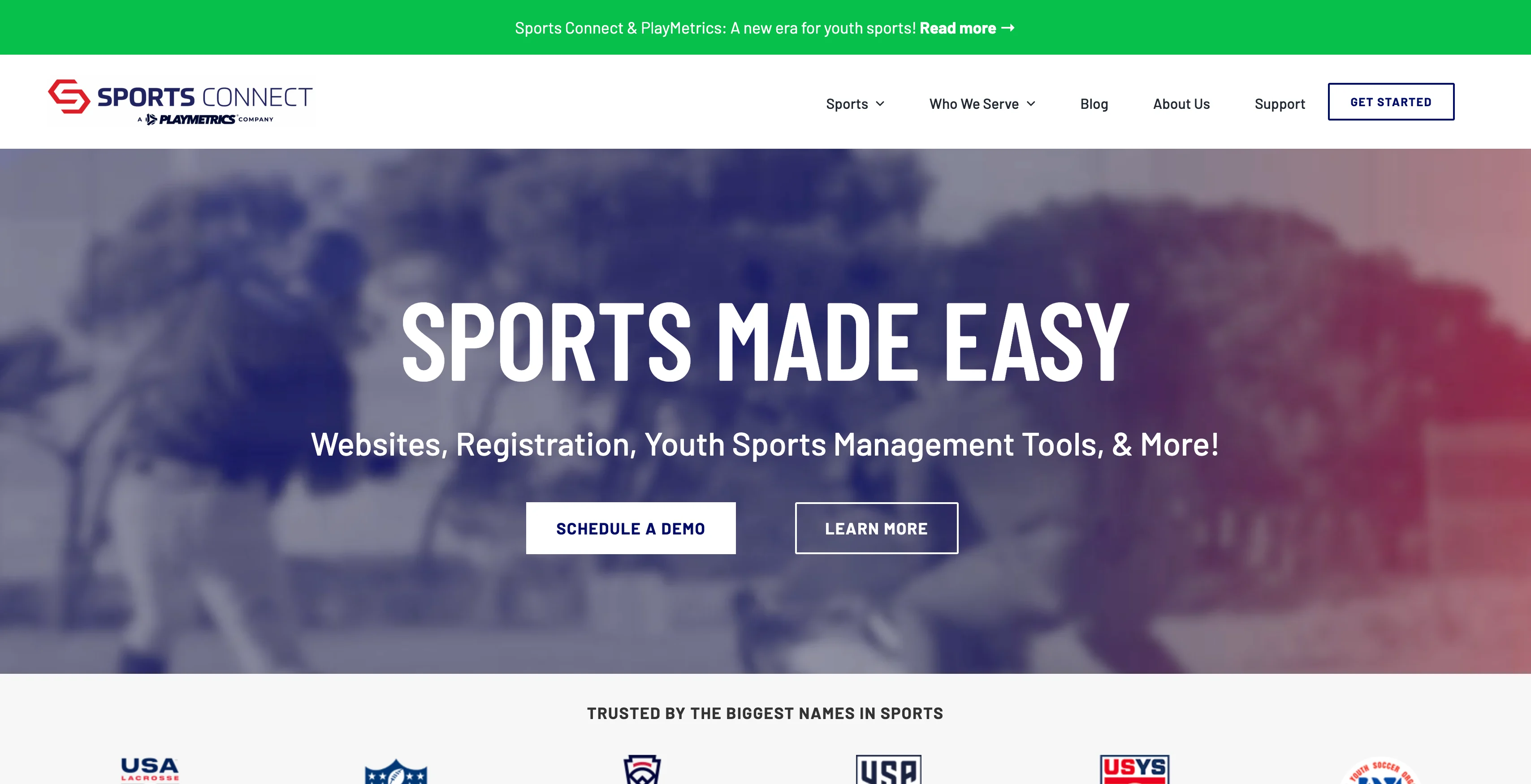
Sports Connect makes the most sense for leagues formally affiliated with a national governing body that need their registration data to sync with that organization's systems. If your league answers to US Youth Soccer, USA Football, Little League, PONY, or AAU, that affiliation can come with reporting requirements that make those integrations especially useful.
Sports Connect is the official registration partner for several governing bodies and connects with national data systems so player data can flow where it needs to go without extra manual entry.
Beyond that data link, Sports Connect covers the registration, payment, website, and volunteer basics you'd expect, along with safety and compliance tools built for youth sports.
One thing worth flagging: Sports Connect joined PlayMetrics in June 2025. Organizations evaluating it today should confirm what that transition means for the specific products and integrations they need.
You can also see how the two platforms stack up on the Jersey Watch vs. Sports Connect comparison page.
5. TeamLinkt: Best for large organizations with free or low-cost registration needs
- Pricing: Core plan free; paid plans start at $425/year
- Standout feature: Built-in AI assistant for forms, schedules, and messages
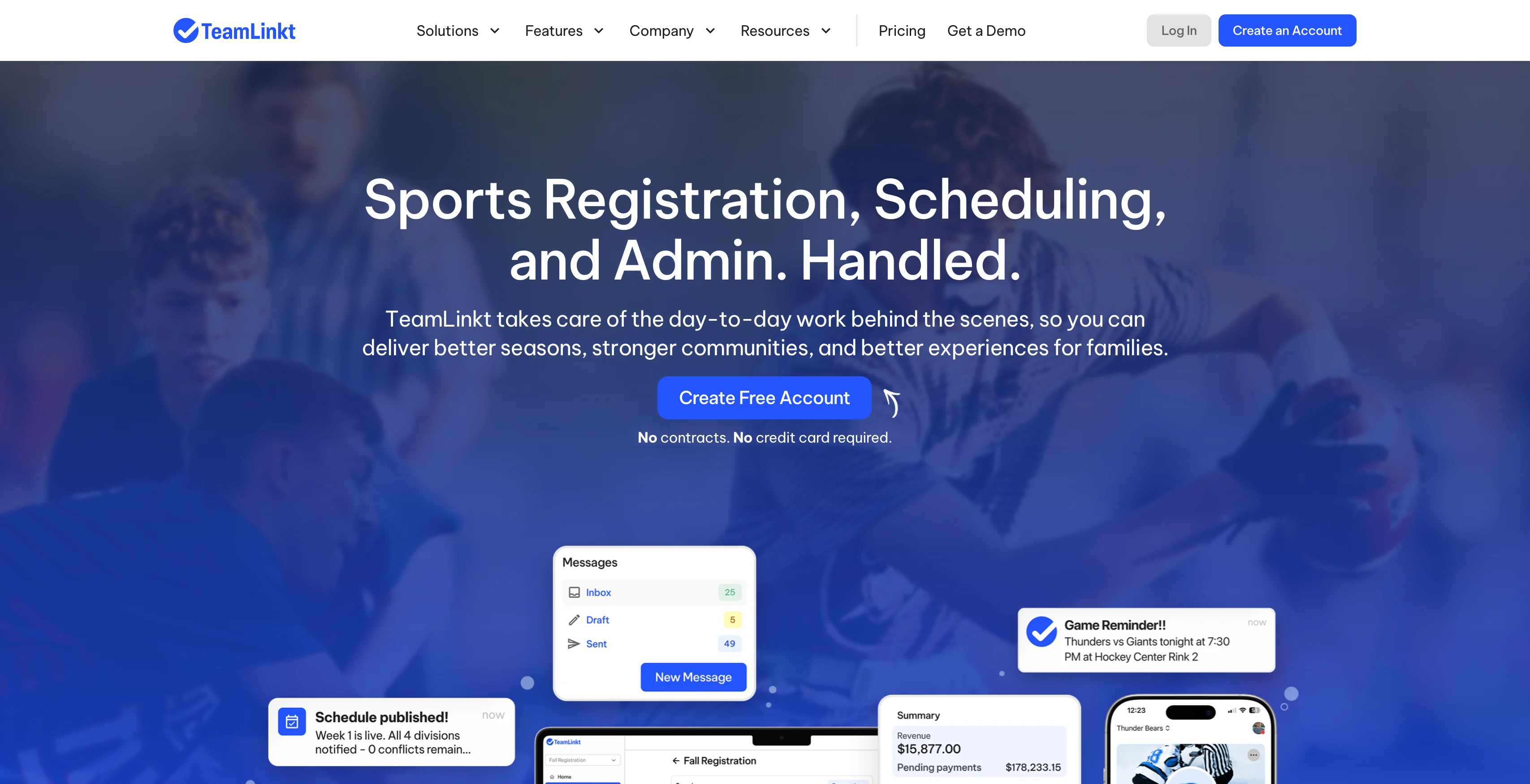
TeamLinkt is a solid fit for larger recreational organizations and parks-and-recreation programs that want to keep costs down without giving up modern tools. Its Core plan is free, with paid bundles for operations, revenue, and full-platform access layered on top.
A built-in AI assistant sets it apart from a lot of registration software. It can build registration forms, set up schedules, and draft messages right inside the platform, cutting down on the setup work that usually falls on volunteers.
TeamLinkt also runs migration promotions aimed at organizations moving off SportsEngine or Sports Connect. The current promotion is $3,000+ in savings so confirm details directly with their team.
If pricing transparency and hands-on support matter just as much as AI features, the Jersey Watch vs. TeamLinkt comparison lays out where each platform stands on both.
6. TeamSideline: Best for leagues needing robust scheduling and facility tools

- Pricing: Starts at $599/year; add-ons available
- Standout feature: Dedicated facility management module
TeamSideline fits recreation associations, CYOs, and parks departments that need facility booking alongside registration and game scheduling. Most platforms handle registration and rosters, but shared fields, gyms, and courts across multiple age groups need their own coordination layer.
TeamSideline builds that layer directly into its product with a dedicated facility management module for booking fields, arenas, and courts, separate from its scheduling and registration tools. That can be useful if your association juggles shared diamonds or gym time across several programs and needs one place to see what's booked and by whom.
Beyond facility booking, TeamSideline offers tournament-focused registration and reporting, automated game and practice scheduling, a free mobile app for teams and officials, and live phone and email support seven days a week.
TeamSideline has run league management software for more than 15 years and has received Capterra and Software Advice recognition for value, ease of use, and support.
If you're weighing TeamSideline against other options, Jersey Watch's comparison hub can help you evaluate the alternatives.
7. Crossbar: Best for hockey clubs that manage facility bookings and tournaments
- Pricing: Custom pricing, not published
- Standout feature: Club, league, facility, and tournament products stay connected
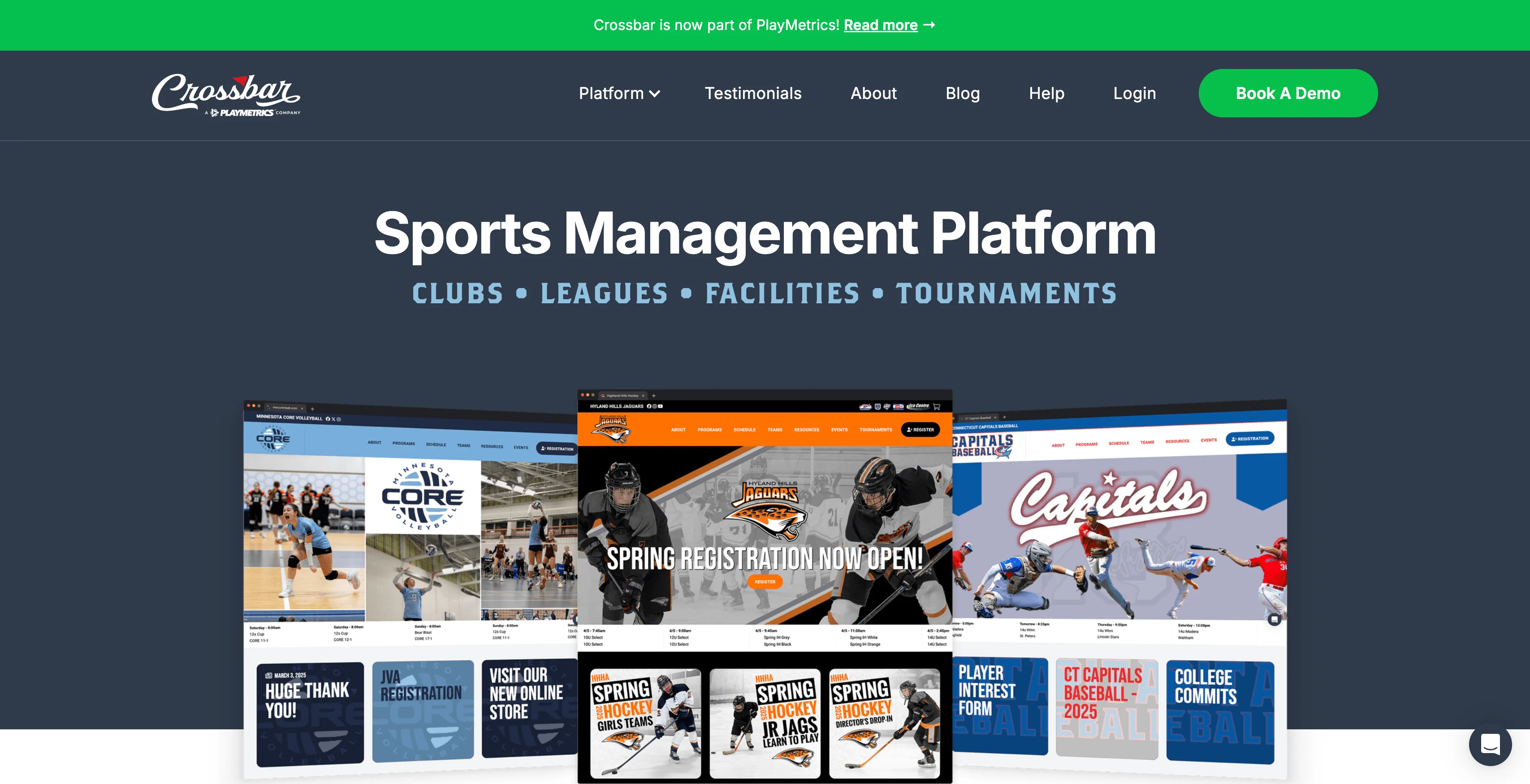
Crossbar is most relevant to youth hockey clubs that also handle facility bookings and tournaments. It works for soccer and multi-sport clubs too, but hockey remains a central focus for the platform.
What sets Crossbar apart is how its club, league, facility, and tournament products stay connected. A team created in the league module shows up automatically across connected products, reducing the need to re-enter the same information.
That connected setup runs on a few core capabilities, including automatic online payment collection, auto-rostering, and booking tools for fields, arenas, and courts. In 2023, Crossbar became a part of PlayMetrics and is their dedicated platform for youth hockey.
Crossbar doesn't publish pricing, so plan on requesting a quote directly. For a side-by-side look at how the two platforms compare, see the Jersey Watch vs. Crossbar comparison.
Choosing the right fit for your club's size, budget, and staff
The right fit for your club comes down to matching a platform to your organization’s size, staffing model, and biggest pain points, not simply choosing the one with the most features.
For volunteer-run and small-to-mid-size clubs, Jersey Watch brings website management, registration, scheduling, and team communication into one place. Larger organizations with more complex administration and data needs may be better served by a broader platform.
Once you've narrowed your options, compare them against your budget and the tools you’re replacing. Then try Jersey Watch free.
FAQs
How difficult is it to migrate registrations, rosters, schedules, and website content away from LeagueApps?
Migrating registrations, rosters, schedules, and website content away from LeagueApps is usually manageable, since many alternatives include guided or free data transfer, though the difficulty depends on the platform. When records are organized and the new provider offers hands-on help, that provider may move core rosters, schedules, contact information, and website content within a few business days. Confirm exactly which data you can export and import before canceling the old account.
Is switching sports management platforms mid-season a good idea, or should I wait?
Switching between seasons is the safer bet for most organizations, since a mid-season change can disrupt active registrations, payments, schedules, and family communication. If waiting isn't practical, run the two systems in parallel for a short period and give families a clear cutover date. Starting the planning process one season ahead leaves time to export data, test workflows, and train volunteers.
Do I need to keep collecting cash or checks during a transition to a new registration platform?
An organization can move to online-only payments as soon as the new registration and payment workflow is ready, eliminating the need to keep collecting cash or checks during the transition. A short transition period with both online and offline options may help families adjust, but it should have a firm end date. Clear instructions about where and how to pay will prevent duplicate or missed payments.
What happens to family data and past registration history when I switch platforms?
Past registration history usually remains in the old platform unless someone exports and imports it into the new system. Some providers can move rosters, contact details, and payment records, but the exact process and supported file formats vary. Export and securely store all needed records before ending access to the previous platform.
How long does it typically take to launch a new sports league website and open registration on a new platform?
A new sports league website and registration system can take anywhere from a few days to a few weeks to launch, depending on the platform and setup complexity. A template-based site with straightforward registration can move quickly, while multiple divisions, custom scheduling rules, or extensive content migration take longer. Confirm the onboarding timeline before choosing a launch date.

Kayleigh O'KeefeGrowth Team Lead
Kayleigh is Growth Team Lead at Jersey Watch, where she works with the marketing, product, and customer care teams to help youth sports organizations grow their programs. She writes about growth and community building for youth sports organizations, drawing on her background in fundraising and partnerships with schools and teams, along with a lifelong passion for football, hockey, and soccer!


