What Is the Best Football Team Management App for Your League?

Nick Rattermann Last updated: September 1, 2026
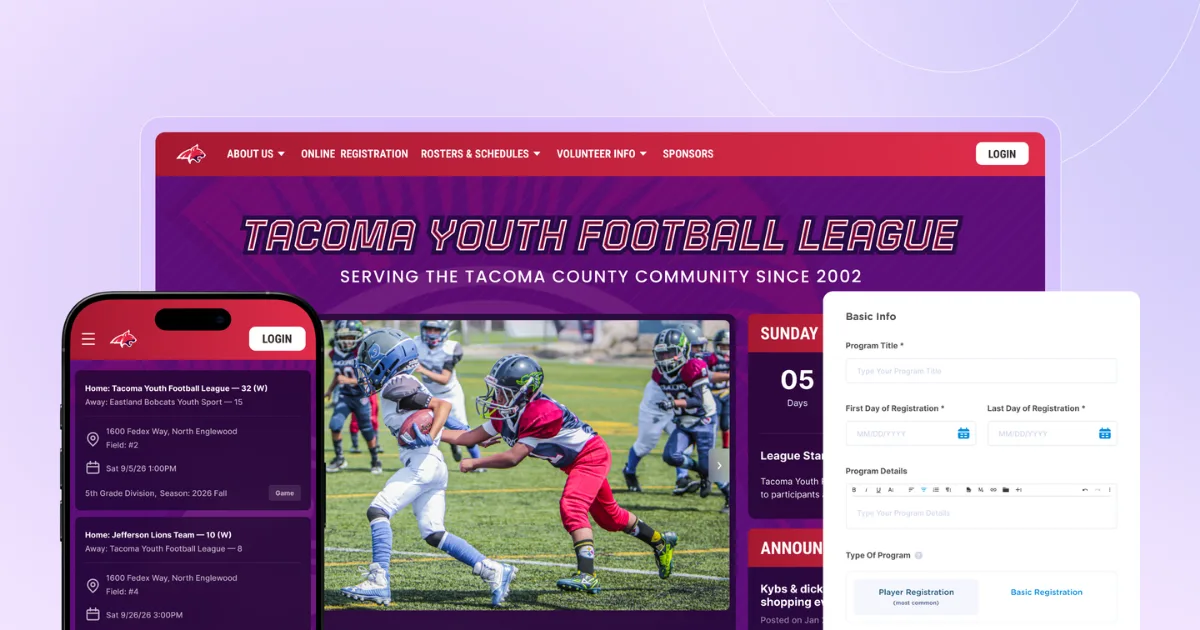
Table of Contents
Your Saturday mornings shouldn't start with three group texts, a paper roster, and a spreadsheet that keeps freezing. Running a youth football league with multiple divisions and fields makes that scramble the norm.
The best football team management apps handle registration, payments, websites, schedules, rosters, and family communication in one place instead of five disconnected tools. The right one depends on whether you're coordinating one team's practice schedule or running an entire league.
You don't need to rank every feature list out there. You need a clear way to match your league's size to the tool that fits it, so you can spend Saturdays on the sideline instead of in the spreadsheet.
What should a football league look for in a team management app?
Test any app against football's specific pressure points, not a generic feature checklist. Can it:
- Handle a registration surge when sign-ups open
- Collect waivers and family-based discounts
- Build schedules across multiple divisions and fields
- Publish those schedules publicly
- Send a rainout text to one division without spamming the whole league
Don’t just pick the app that has the most features. Instead, list your must-haves and run each vendor through that list. Make sure to weigh volunteer adoption and support responsiveness, and get the total cost in writing.
Do you need a full league platform or a team coordination app?
A multi-division football league that collects fees and publishes organization-wide schedules needs a full league platform, while a single squad tracking practice attendance can usually get by with a lighter coordination app.
One team just needs to know who's showing up on Tuesday. A league running six age divisions across three fields needs registration, payment collection, public schedules, and rainout messages that reach every family at once.
Full league platforms suit multi-division football leagues. Single-team apps suffice for one squad's scheduling needs. Count your divisions, participants, and fields. If you're collecting fees or need a public website, you're in full-league-platform territory. If you're just coordinating one roster, a team communication app fits.
Before booking any demos or creating accounts, write down what tasks you currently handle so you’re prepared to see how software can help.
Best football team management apps at a glance
These six tools are split by organization size and complexity rather than by feature count, so you can narrow down this list based on what your league manages day to day.
Rank | Name | Best For | Pricing | Top Feature |
1 | Jersey Watch | Volunteer-run leagues | $19 first month, $348/year | Website, registration, and payments in one |
2 | InstaTeam | Single-team coordination | Free core, ad-free from $3.99/mo | Messaging and attendance |
3 | SportsEngine | Large multi-association leagues | Custom pricing, contact for details | Advanced data management and compliance |
4 | TeamSnap ONE | Familiar full-suite experience | Custom pricing, contact for details | Built-in streaming |
5 | LeagueApps | Clubs, camps, tournaments | Payment processing fee + one-time setup | Auto-billing payment plans |
6 | Spond | Free team-level scheduling | Free at team level | Event and participant management |
1. Jersey Watch: Best for volunteer-run football leagues
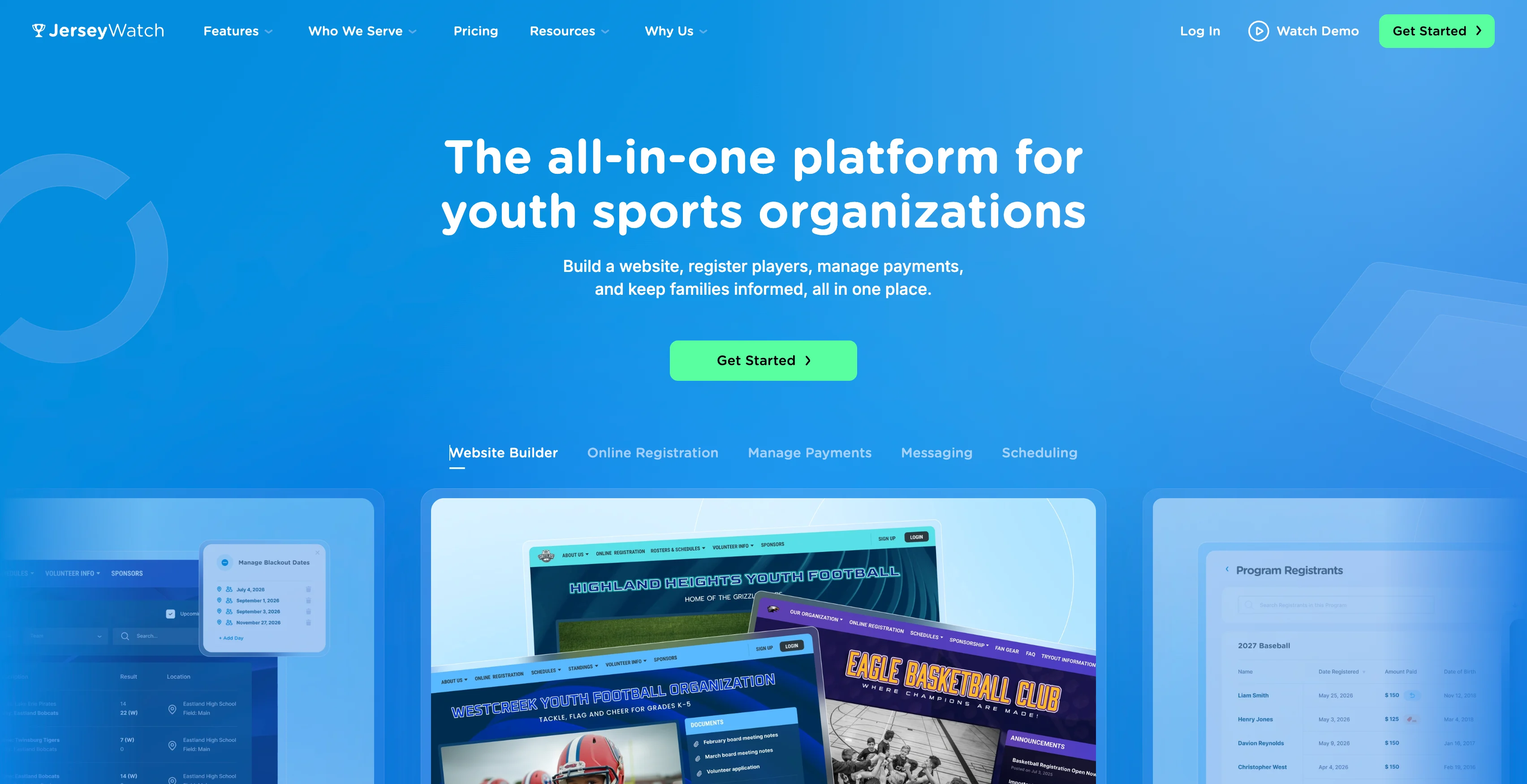
Jersey Watch is the ideal fit for volunteer-run football leagues that need core administrative tools in a single affordable system without dedicated technical staff. It bundles a website builder, online registration and payments, scheduling, and text and email communication into one login. It works well for organizations with 50–1,000 participants.
Best fit, key capabilities, pricing, and tradeoffs
Jersey Watch gives small and midsize volunteer-run football leagues a simple, published-price platform that volunteers who aren't tech-savvy tend to pick up fast. While many organizations get up and running on their own, their customer support team is there to help via email, phone or video call. They publish what to expect when working with their team.
The drag-and-drop website builder lets you update your homepage or post a rainout notice in just seconds. Registration and payment tools handle sign-ups and collect fees directly, scheduling keeps your divisions and fields organized, and text and email tools push updates to parents so nobody misses a schedule change.
Jersey Watch believes volunteers deserve transparent pricing so details are listed on the website. You can create a free account to explore all features, then pay $19 for your first month when you're ready to launch your live site and registration, and $348 annually after that, with no setup fees or contracts.
Registration payments are charged a flat 3.5% + $1 transaction rate and the platform maintains a 4.7 out of 5 rating across 235+ G2 reviews. One youth football program, the Shabbona Park Saints, grew from 23 to 124 players in a single season after moving registration online.
Jersey Watch uses simple admin and owner accounts instead of a tiered permission structure, so leagues nearing 2,000 participants or running multiple associations may need deeper enterprise tools. Use your free trial to test a registration form and a website update with the actual volunteers who'll run them.
2. InstaTeam: Best for straightforward team coordination
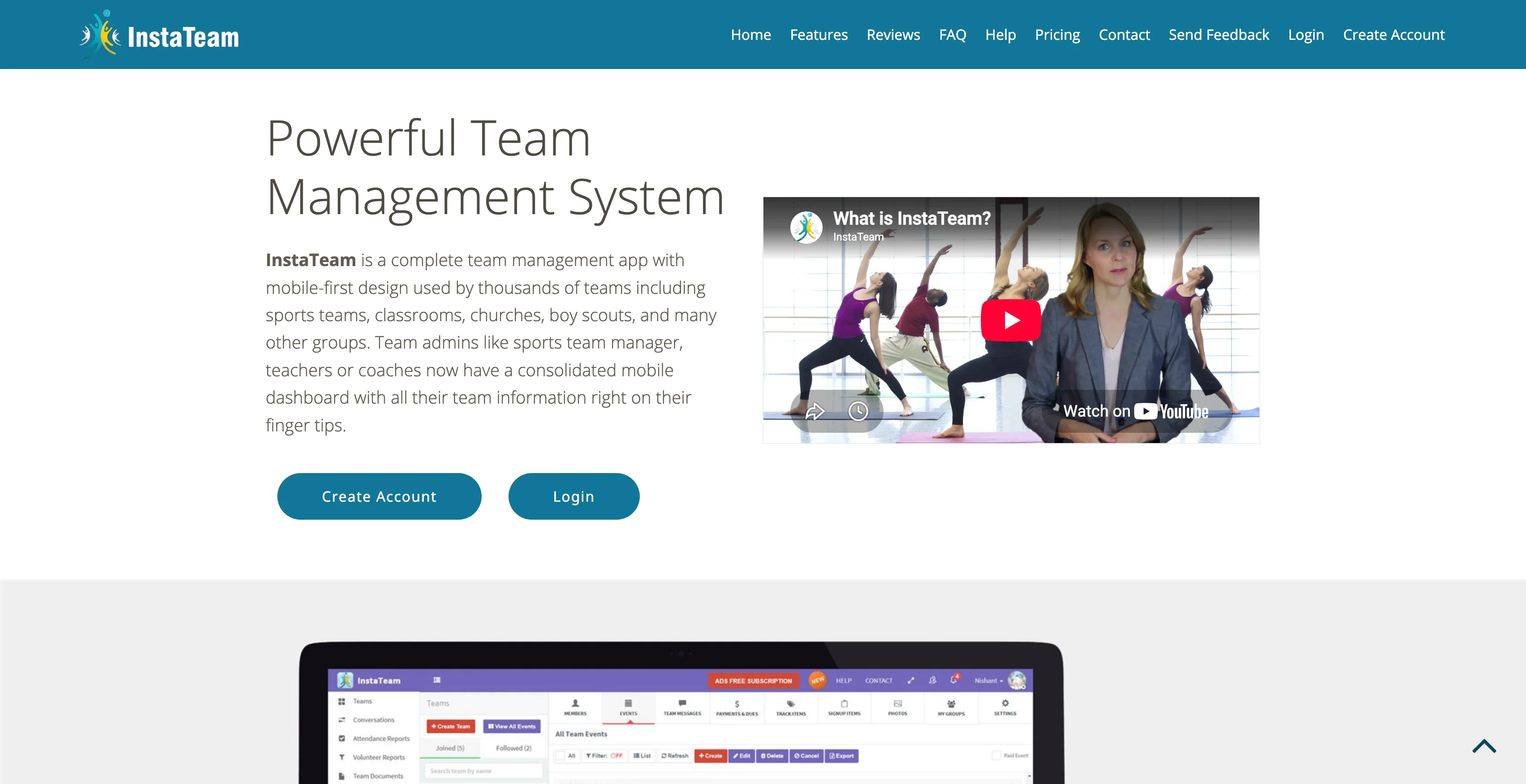
InstaTeam is best suited to an individual football team that wants low-cost scheduling and messaging without full league administration.
Best fit, key capabilities, pricing, and tradeoffs
InstaTeam gives one football team a free way to handle scheduling and messaging. Its mobile dashboard puts practices, games, and events in one place, with messaging and attendance tracking that replace the usual scramble of a group text nobody reads in time. Coaches can post a game time, track who's confirmed, and skip the "Did everyone see that?" follow-up texts.
If your team wants an ad-free experience, that's optional. The Team Ad-Free plan runs $9.99 a month or $64.99 a year, SMS bundles cost $7 per 100 messages, and InstaTeam applies a 2% + $0.50 payment fee. An individual's ad-free purchase only removes ads for that person, not the whole roster.
InstaTeam wasn't built specifically for football, so before leaning on it for anything bigger than one team, confirm its registration, financial reporting, multi-division scheduling, and support meet your needs.
3. SportsEngine: Best for large multi-association football leagues
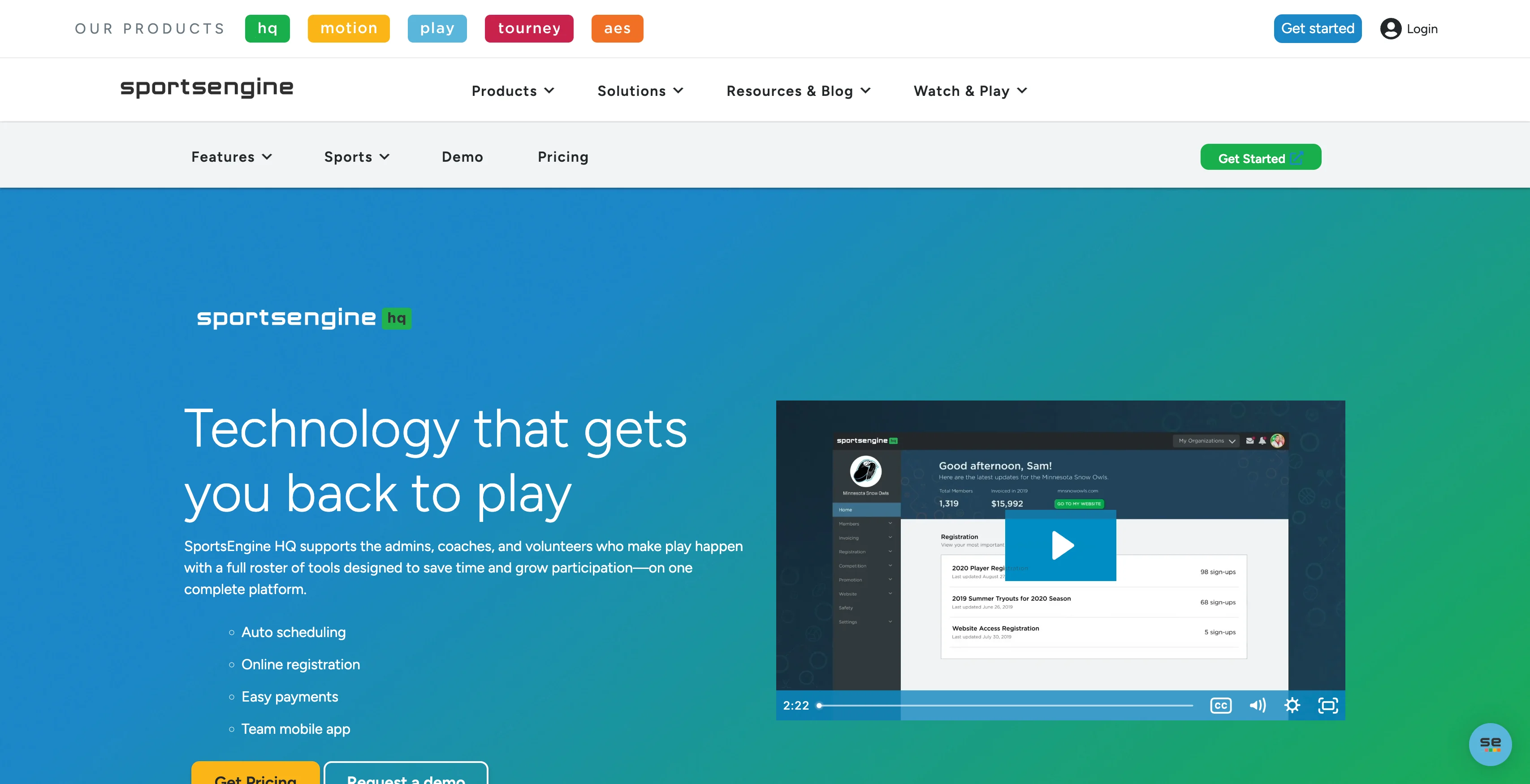
SportsEngine is built for large football leagues juggling multiple member associations that need advanced data management and compliance at scale. That compliance depth comes with higher pricing and a setup that may be more than a smaller volunteer league needs.
Best fit, key capabilities, pricing, and tradeoffs
SportsEngine gives large multi-association football leagues the advanced data management and compliance depth they need to manage risk across multiple member organizations simultaneously. Their HQ tools include background checks, eligibility checks and requirements, staff training and volunteer credit tracking.
SportsEngine offers several products. Motion is class management software tailored to dance studios, cheer gyms and gymnastics clubs. Tourney runs tournaments from start to finish. Play focuses on live streaming. AES is specifically for volleyball competitions. HQ is the piece built for club and league administration and the product compared throughout this post.
Aside from compliance and data management, HQ includes registration, payment processing, a team app, website builder and roster management. Before committing, decide which products your league needs and reach out to their team for a quote.
4. TeamSnap ONE: Best for a familiar full-suite team experience
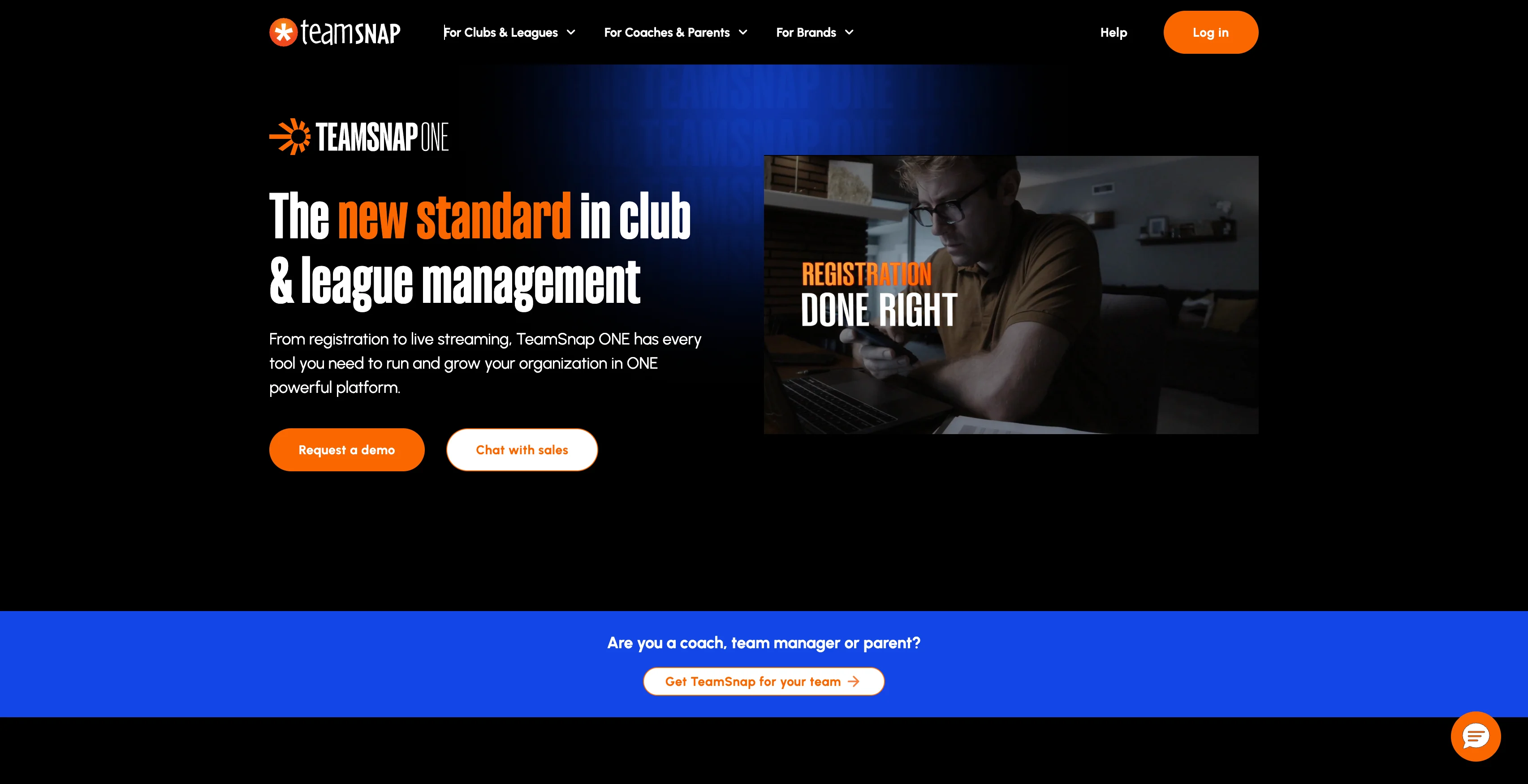
TeamSnap ONE can work well for football clubs that want a familiar parent experience, with registration, scheduling, communication, and streaming in a single suite.
Best fit, key capabilities, pricing, and tradeoffs
TeamSnap ONE combines a familiar family experience with a full suite of club tools. Many parents and coaches on your roster have likely used the consumer version of TeamSnap for communication, and that head start can mean fewer questions when you roll out registration to your league.
The suite bundles registration and payment collection, organization-wide alerts, group chat, scheduling, and built-in live streaming into one club offer. It also advertises a team website but this may be a separate feature.
TeamSnap ONE's core team app is free with ads, but league-level administrative features require a paid subscription that scales with team count. Before committing, weigh the full cost and feature set against your actual team count, and check our TeamSnap alternatives comparison for other options.
5. LeagueApps: Best for high-volume clubs, camps, and tournaments

LeagueApps best fits football clubs and camp operators who handle high registration volumes, multiple programs, and facility bookings alongside team management. Think large travel clubs, tournament hosts, or camp operators juggling revenue across many sessions and locations.
Best fit, key capabilities, pricing, and tradeoffs
LeagueApps fits football organizations managing multiple leagues, camps, and tournaments at once, especially when registration volume spans several thousand players across facilities and age groups. If your club runs a spring league, a summer camp, and weekend tournaments out of the same office, LeagueApps is built for that kind of workload.
The platform's auto-billing payment plans handle installment collection without your treasurer having to chase families down. Facility scheduling coordinates multiple fields and time slots, advanced reporting tracks revenue across programs, and built-in e-commerce flows let you sell camp merchandise or tournament passes alongside registration.
LeagueApps positions itself less as a registration tool and more as a full business operating system for club administrators. But its auto-billing payment plans, facility scheduling, advanced reporting, and website options come with setup complexity a small seasonal rec league likely doesn't need.
LeagueApps also doesn't publish flat pricing. It charges a percentage-based transaction fee plus a setup fee, with the total scaled to your organization's size.
6. Spond: Best for free team-level scheduling and communication
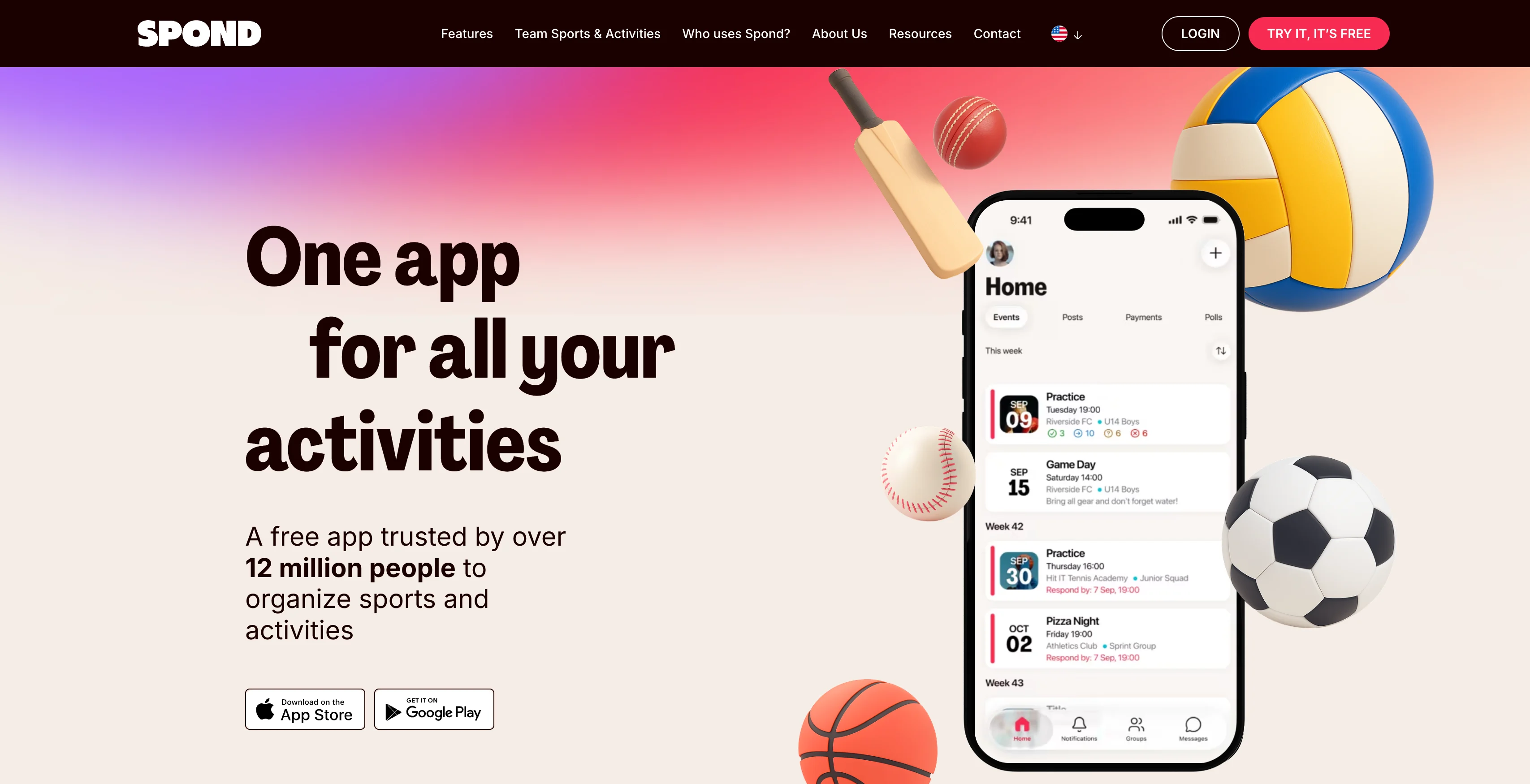
Spond can be a good solution for an individual football team or small squad that wants free scheduling, availability tracking, and secure communication. It offers a season and event planner, participant management, secure messaging, polling, and payment requests, but they’re all built for one team's needs, not full league administration.
Best fit, key capabilities, pricing, and tradeoffs
Spond handles scheduling and communication well for one football team, but it's not built to replace full multi-division league administration. Your coach can build the season schedule with the free event planner, poll parents on practice availability, and send secure messages that don't get buried in a group text thread.
Beyond scheduling, Spond handles the day-to-day coordination a single squad needs. Coaches can track attendance for each event, manage a participant roster, and send payment requests for things like uniform fees or tournament costs, all inside one app instead of juggling Venmo and a spreadsheet.
Before you lean on it as your only tool, confirm a few details directly with Spond. Payment processing fees, what's free versus paid, geographic availability, and how the core Spond app relates to the separate Spond Club offering can all change.
If your organization needs multi-division registration, public league-wide schedules, reporting, a website, or background-check compliance, map those needs against what Spond currently confirms it supports.
Choose the football management app that fits your league
Matching your platform to your league's size and capabilities matters more than chasing every feature on a comparison chart. Before your next signup cycle opens, pull up your current registration process and time how long it takes a parent to finish it. That single test tells you more about whether your system fits than any feature list will.
Jersey Watch was built around that exact test: a registration and website setup simple enough for a volunteer board to run without a technical coordinator, backed by support that answers when something breaks mid-season. For smaller and mid-sized leagues that don’t need deep compliance reporting, ease and predictable cost win out over feature count.
Test your league's registration for free and judge the fit for yourself.
FAQs
How much does it typically cost to move a football league from paper forms to an online management app?
Costs range from free team-level apps to paid platforms that charge a monthly or annual subscription plus payment-processing or registration transaction fees. Compare the complete annual cost, including the subscription, setup charges, add-ons, contracts, and percentage-based or fixed transaction fees. A free coordination app may work for one team, while a multi-division league usually needs a paid platform with registration, payments, scheduling, communication, and website tools.
Do parents need to download a separate app to receive schedule updates and messages from their football league?
Parents do not always need to download an app, as some platforms send updates directly via text and email or publish them on a mobile-friendly website. Other tools require an account or a dedicated mobile app to receive notifications and use team features. Ask each vendor whether families need an account, app download, or enabled push notifications before choosing a platform.
How long does it usually take to migrate an existing football league's registration and schedules to a new app?
Migration timelines vary widely: a small team may be ready within days, while a large multi-division football league may need several weeks to migrate rosters, payment records, registration forms, schedules, and website content. Start before the next registration cycle, so volunteers have time to test the parent experience and correct imported data. Confirm which dedicated onboarding support, content migration, and data import services the vendor provides before setting the launch date.
What should a football league do if volunteer staff are uncomfortable using new management software?
Choose software designed for non-technical volunteers and test its customer support before committing. Give board members short, hands-on training sessions using real tasks such as opening registration, updating a game, and sending a rainout message. Designating one comfortable volunteer as the main point of contact can also make questions easier to resolve during the season.
Is a football-specific management app necessary, or will a generic sports team app work just as well?
A generic sports team app can work for one squad that only needs scheduling, availability tracking, and messaging. A football league with seasonal registration surges, multiple age divisions, several fields, payment collection, and frequent weather changes usually benefits from a full sports management platform built for those workflows. Evaluate the actual registration and scheduling complexity rather than choosing solely because an app is labeled for football.

Nick RattermannCo-Founder / CTO
Nick Rattermann is the Chief Technology Officer at Jersey Watch with more than 10 years of experience building software for volunteer-run youth sports organizations. He writes about youth sports technology and league management, drawing on both his technical expertise and his experience as the parent of a son who plays soccer and basketball.


