Baseball Sponsorship Form: What to Include and How to Collect Payments

Courtney Calvo Last updated: November 3, 2026
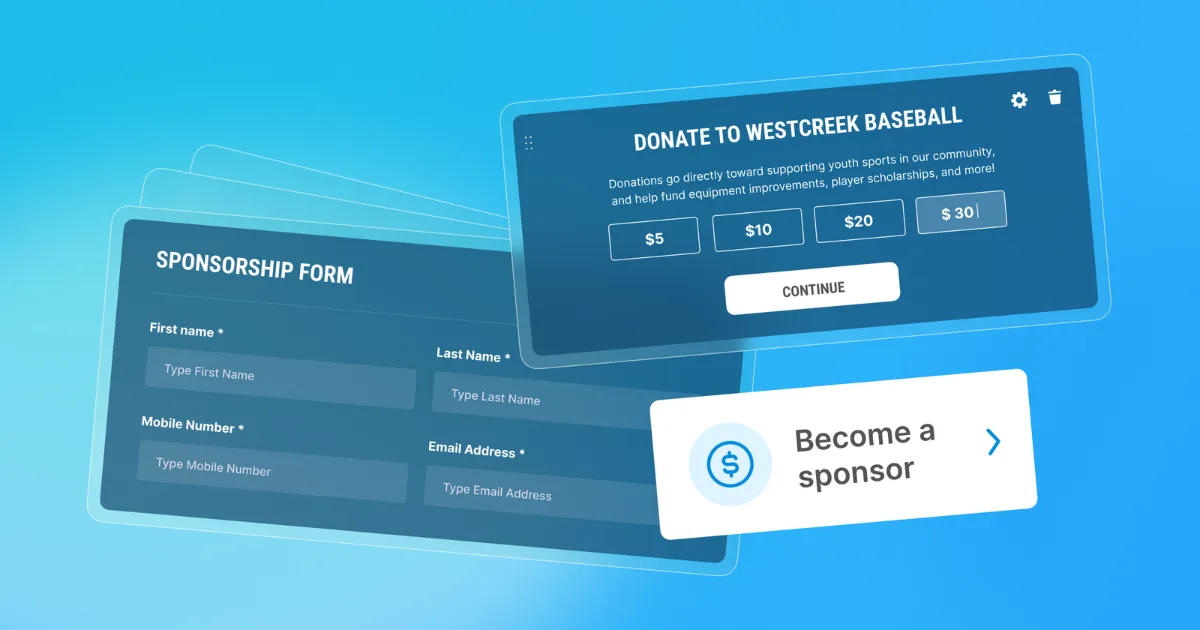
Registration fees are already stretching family budgets thin. According to the 2026 Good Sports Cost of Play Index, a notable share of parents cite cost as a reason for leaving sports altogether. Local sponsorships can help, but only the benefits are clear, which is where a baseball sponsorship form comes in: the formal agreement a local business commits to in order to confirm its sponsorship of your team or league.
Without that form, a promising conversation with the owner of a local hardware store stays a conversation. With it, you have a confirmed commitment, a clear record of what the sponsor gets in return, and a path to collecting payment before the season starts.
This post covers exactly what your sponsorship form needs to include, how to build tiers that local businesses will resonate with, and how to create an online form that can collect payments.

What is a baseball sponsorship form?
A baseball sponsorship letter asks a local business to participate whereas the sponsorship form comes only after they say yes. A sponsorship form keeps everyone on the same page because it spells out the tier selected, the dollar amount committed, the benefits the sponsor receives, and the payment terms.
What every sponsorship form must include
A complete baseball sponsorship form separates five clearly defined fields:
- Sponsor contact details
- Tier selection
- Promised benefits
- Payment terms
- Agreement confirmation
1. Sponsor contact and business details
Your form should have a built-in section to collect contact information. This is important in case you need to follow-up with questions, contact them for next steps or save their information for future opportunities.
Collect the business name, primary contact name, phone number, and email address. Add a mailing address when physical signs or banners may need to be shipped. Request a logo file if the sponsor expects placement on your website, banners, or jerseys.
2. Sponsorship tier selected
A dropdown showing each tier and its exact dollar amount lets a sponsor commit to a level with a single selection. Using a pre-determined dropdown is more clear than a short answer since it prevents a potential sponsor from filling in an option you don’t offer.
Where a short answer question can come in handy is through any extras outside the standard tiers, such as a one-time banner purchase. This section should be short and to the point.
3. Benefits the sponsor receives
This section may be added as a description for the entire form or as an individual question itself. Either way, your form needs to list every specific benefit included with the selected tier. Businesses want to understand what they receive once they sponsor your baseball league, so don’t keep them guessing.
Phrasing like "logo on team website homepage for the full season" is a commitment. "Logo on website" is too vague to mean much. Do the same for every benefit: banner dimensions, number of social media posts, and how many games include an announcer shoutout.
The sponsorship form shouldn’t be a surprise to sponsors. In addition to listing benefits on the form, create a sponsorship page on your website where prospects can see what’s in it for them before they get to this spot.
4. Payment terms and amount
Your form should either have an online payment section to collect payment there and then, or it should outline payment details. Details include the total amount committed, the due date, the accepted methods (check, credit card, or online payment), and whether the sponsor pays in full or on a split schedule.
A simple split option, like half at signup and half mid-season, removes a common barrier for smaller local businesses. On a platform like Jersey Watch, you can collect full or partial payments at the time of the form submission.
5. Terms, conditions, and agreement confirmation
Make your form clear by adding an agreement section or question that spells out any conditions upfront, including your refund policy if the season is canceled. Then collect consent with an "I agree" acknowledgement checkbox, a printed name, and a date. That's all you need to confirm the sponsor understood and accepted the terms.
Build sponsorship tiers local businesses will fund
Local businesses can evaluate sponsorship tiers more easily when each level pairs a clear price with specific, measurable advertising exposure. Little League International recommends creating multiple sponsorship levels so a range of businesses can participate, from the neighborhood pizza shop with a modest budget to the regional contractor ready to invest more.
Think of each tier as a distinct advertising package, not just a price point:
- A base tier might include a banner on the outfield fence for all 12 home games.
- A mid-level tier adds a logo on team jerseys and a listing on the league website.
- A top tier includes all of the above plus a dedicated sponsor spotlight post and public address recognition at every game
The key is connecting each price to exposure numbers. Tell sponsors how many home games they'll appear at and what your average game attendance looks like. A business owner evaluating a sponsorship package thinks differently when they know it means visibility in front of families across a full season.
When you're transparent about what each tier delivers, local businesses can make a confident decision without back-and-forth negotiation. That transparency also helps your volunteer team move sponsorships from just a conversation to actually paying faster.
Host your form on your website
A dedicated sponsorship page on your league website gives local businesses one place to review tiers and complete the form without a phone call or an emailed PDF.
Keep the page simple: list your available sponsorship tiers with their prices and benefits, then place a link to the form directly below. When a business owner can read the options and submit their information in one visit, you remove the back-and-forth that slows down commitments.
Jersey Watch's sports website builder includes a sponsor page feature, so you're not building anything from scratch. Add your tiers, include a link to your form, and your league looks credible from the moment a potential sponsor lands on the page.
A live sponsorship page also signals organizational credibility to potential sponsors, which can help businesses feel more confident committing to your program.
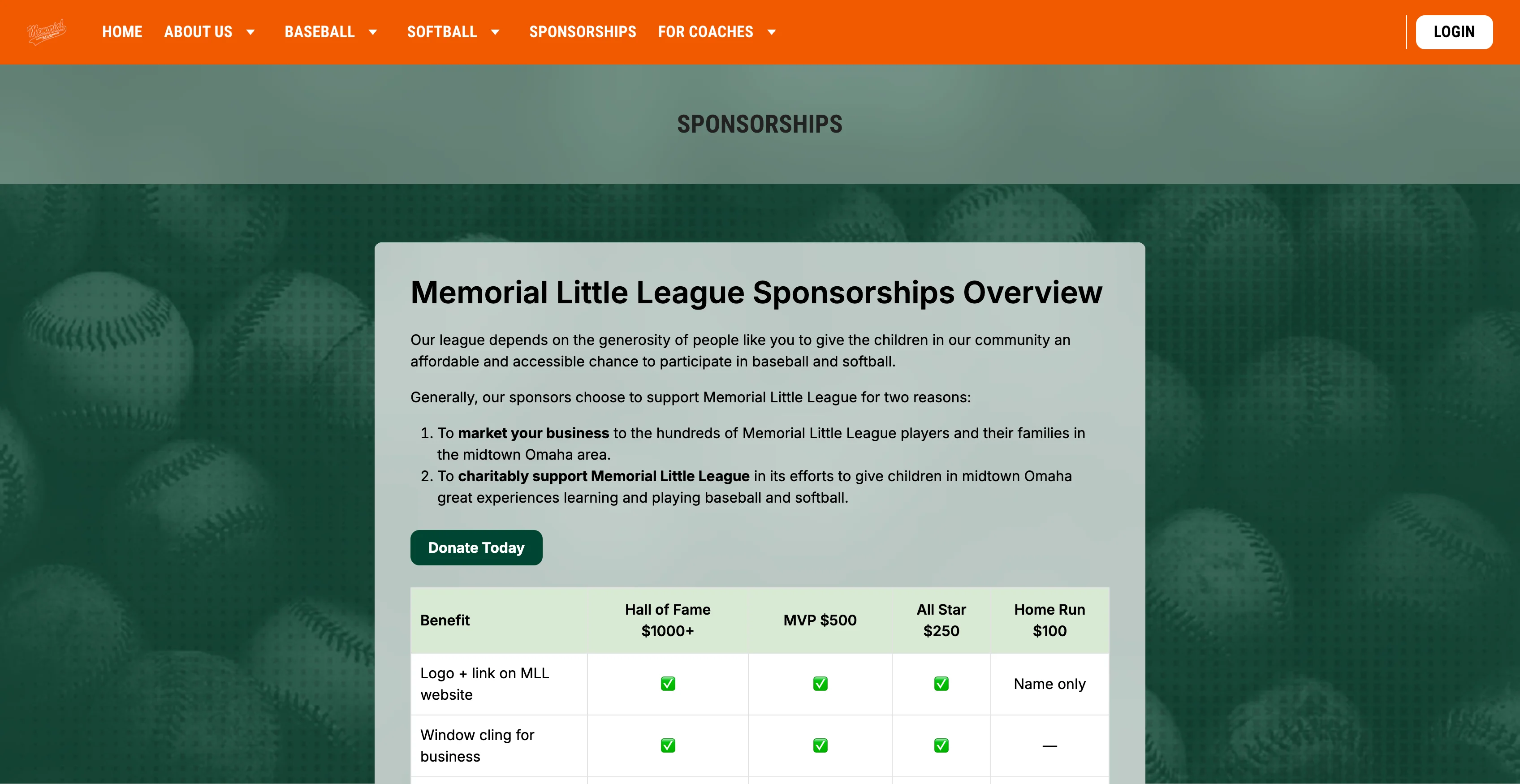
With Jersey Watch, baseball organizations can easily display sponsorship information on their website
Collect sponsorship payments online
Collecting sponsorship payments online means the treasurer records payment the moment a business completes the form, with no check to deposit and no spreadsheet to update separately.
Jersey Watch lets leagues collect sponsor payments through the same organized flow used for registration fees. A business submits the form, pays online, and receives an automatic receipt showing the amount, card used, and date.
That's less time hunting down payments and more time focused on the season ahead. When payments arrive automatically, your volunteer treasurer can spend energy on what matters: supporting your teams and players, not chasing down outstanding balances.
Start collecting sponsorships, not paperwork
Moving your sponsorship process off paper and online takes the guesswork out of tracking commitments and payments. Jersey Watch makes it simple to build a sponsorship form, host it on your league website, and collect payments all in one place.
Build your sponsorship form and start collecting payments today with a free Jersey Watch account.
FAQs
What is the difference between a baseball sponsorship letter and a baseball sponsorship form?
A baseball sponsorship letter is the outreach document you send first to pitch the opportunity to a local business. The sponsorship form comes later: it's the formal agreement a business commits to once they've said yes, locking in the tier, dollar amount, benefits, and payment terms. Keeping these two documents separate makes your sponsorship program look organized and professional to potential sponsors.
Are sponsorship payments from local businesses taxable income for a nonprofit youth baseball league?
Payments from local businesses may qualify as "qualified sponsorship payments" under IRS guidance, meaning they're generally not treated as taxable advertising income for the nonprofit, as long as the business receives no substantial benefit beyond acknowledgment of its name or logo. That said, every league's situation is different, so consulting a tax professional for your specific circumstances is a smart move. Building clear benefit packages into your sponsorship form helps document that distinction from the start.
How do I collect sponsorship payments without tracking down checks?
Collecting sponsorship payments online, rather than waiting for a mailed check, removes the manual follow-up work that can slow down a volunteer treasurer for weeks. A platform like Jersey Watch lets you collect sponsorship payments the same way you collect player registration fees, all in an organized system with automatic receipts. That setup can reduce payment tracking errors and free you up to focus on the season instead of outstanding balances.
How do I host a baseball sponsorship form online so local businesses can find it?
Adding a dedicated sponsorship page to your team or league website gives local businesses a place to browse your tiers, download your form, and reach out without needing a phone call or an emailed PDF. A purpose-built sports website builder like Jersey Watch includes a sponsor page feature out of the box, so no technical skills are needed to set it up. A live sponsorship page also signals organizational credibility, which may help businesses feel more confident committing to your program.
How much should local businesses typically pay to sponsor a youth baseball team?
Sponsorship pricing for local youth baseball teams varies widely. Structuring tiered packages gives businesses options that feel like advertising investments rather than charity donations. Little League International advises local leagues to create tiered sponsorship levels because structured packages make it easier for businesses to evaluate and select an option without custom negotiating. Quantifying specific exposures, such as the number of home games and average attendance, makes any price point easier for a sponsor to justify internally.

Courtney CalvoCustomer Care Team Lead
Courtney Calvo is the Customer Care Team Lead at Jersey Watch, where she helps youth sports organizations get started with registration, websites, and league management tools. She brings both professional expertise supporting leagues and firsthand experience as the parent of a youth soccer player.


