

The volunteer sign-up sheet has three names on it in May. By August, half the parents on the roster haven't opened a single email, and the board is fielding the same complaints it heard last season and the season before that. Every empty slot and confused parent points to a missing system, not a communication mystery.
Engaging parents in youth sports means building communication, onboarding, and involvement systems that keep families informed and invested all season, not just posting behavior rules.
Most advice on how to engage parents in youth sports focuses on sideline behavior: what to say, what not to yell, and how to model good sportsmanship for the kids watching. That’s worth knowing, but it won't help a league admin build a program. This guide is built for league commissioners, club directors, and board members who need parents to show up informed, volunteer without being begged, and come back next season.
Below are specific engagement practices, each paired with a tool or process a volunteer-run league can put in place without hiring technical staff.

Strategies built for volunteer-run league admins
Volunteer-run leagues can engage parents through practical, admin-led systems for communication, involvement, and feedback. You don’t need a bigger budget or staff. Your admin team builds the system before the season starts, then follows it consistently.
Much of the existing parent-engagement advice, including from groups like Positive Coaching Alliance and CASEM, focuses on behavior and psychology: what to say on the sidelines or why some parents become overinvested emotionally. Understanding parents is useful, but it doesn’t give an admin a process to implement. The practices below are different. Each one is a system decision, not a personality fix.
The recommendations pair an admin action with the tool or process behind it, from setting up your website and registration to sending a kickoff message, following a communication cadence, opening volunteer roles, collecting feedback, and tracking what works. No IT department required.
Build your website as the parent hub
A league website can serve as the single source of truth for schedules, policies, and codes of conduct before a family ever shows up to a game. New parents shouldn't have to dig through old texts or ask around to find out where practice is or what's expected of them on the sideline. One current, reliable site solves that problem.
Registration, payments, scheduling, and communication can all live there too. When parents register, pay, check the schedule, or read a league update, they return to the same trusted hub instead of hunting across different apps and forms.
A clean, professional site builds confidence in your organization. Volunteers with no design background can set one up and keep it updated themselves. Most new organizations on Jersey Watch have their website and registration live within one business day, with Customer Care helping with setup. For more guidance, see these youth sports website best practices.
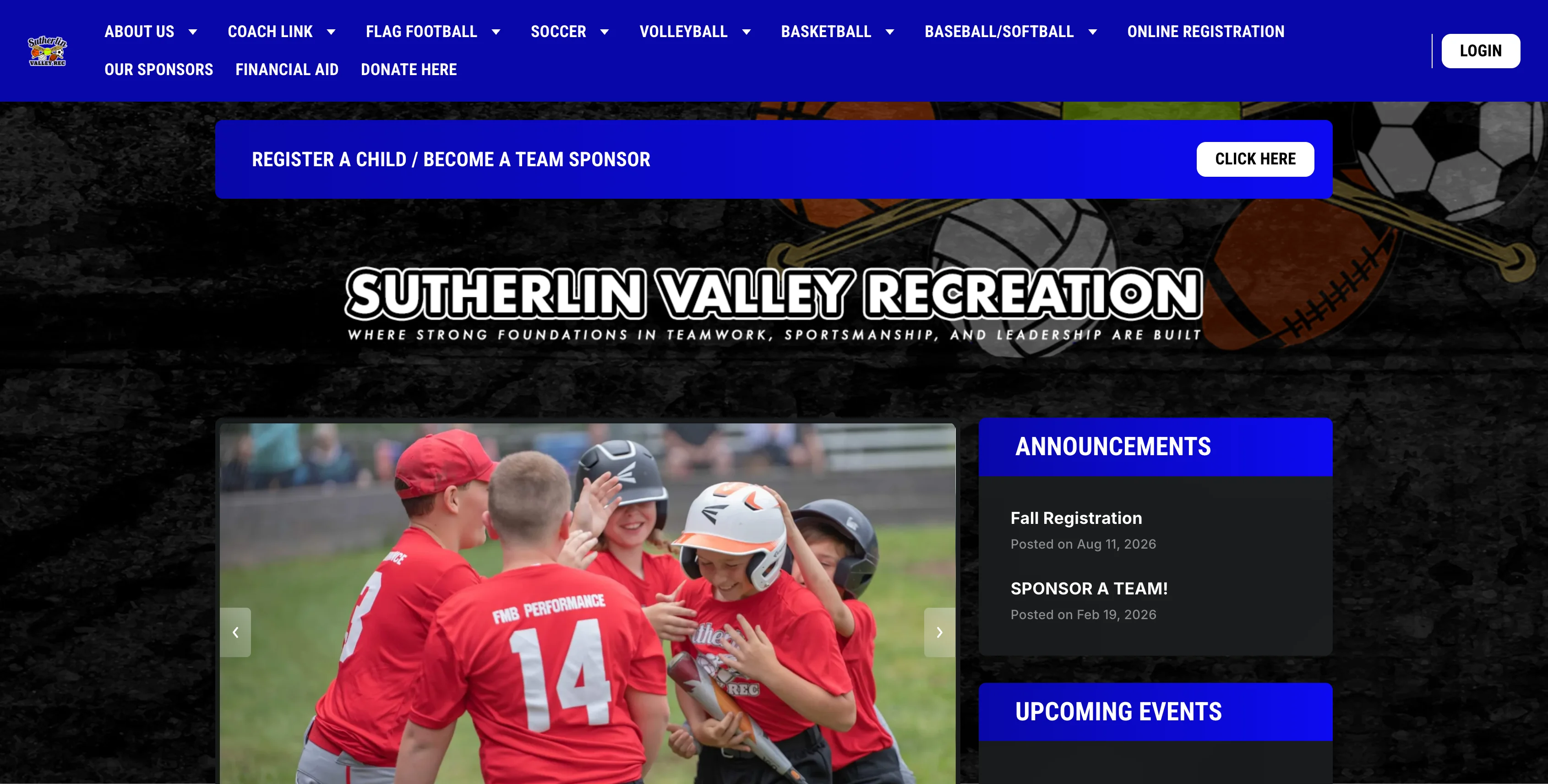
A youth sports organization that built their multi-sport website and registration on Jersey Watch
Move registration and payments online
Moving registration and payments online replaces cash envelopes and paper forms with one clear, trackable process. Because registration is often a parent's first interaction with your league, it’s also an early opportunity to build trust.
A single online form can collect eligibility details, waivers, and payment at once. That means fewer missing signatures, fewer questions about whether a check reached the treasurer, and fewer dropped registrations.
Parents also receive an instant receipt when they pay. Jersey Watch keeps its processing fee at 3.5% plus $1 per transaction, so the cost of each payment is clear upfront. Leagues can create a free account to explore the platform and launch registration when they’re ready, with setup support available from Customer Care.
Share a parent code of conduct before the season starts
Publish your league's parent code of conduct before the first practice, not after the first sideline incident. Waiting until a problem occurs puts the league in a reactive position. Sharing expectations early ensures every parent receives the same standards before tensions arise.
The code of conduct needs one permanent home parents can always find, and your league website is a natural place for it. Post it as its own page alongside your schedules and policies, then link to it in your registration confirmation so it reaches every parent before the season starts.
You can also require parents to acknowledge the code during registration, creating a clear record that everyone received the same expectations. If you need a starting point, this code of conduct template for players, coaches, and parents is easy to adapt for your league.
Send a season kickoff message before day one
A season kickoff message is a single preseason note that welcomes families, previews the season, sets expectations, and explains how the league will communicate throughout the year. Send it before the first practice or game, not once the season is underway.
Build it in this order:
- Welcome: Introduce the coaching staff and thank families for signing up.
- Season overview: Cover the start date, general schedule, and locations.
- Expectations: Explain the attendance policy, gear or uniform needs, and payment deadlines.
- Communication channel: Close with one clear line telling parents where to watch for updates, whether that's email, text, or the league website.
Send this message through the same tool your league will use all season. Parents learn your communication habits from the first message. If updates arrive in their inbox before the first practice, they'll know where to look when a game gets rained out in week four.
With Jersey Watch, you can send or schedule text messages and emails to key contacts
Keep parents updated on a regular cadence
A weekly recap paired with immediate alerts for schedule changes gives parents a rhythm they can count on without flooding their inboxes. Pick one day for a short update covering practices, upcoming games, and reminders. Then send a separate alert as soon as something changes, like a cancellation or moved start time.
Use the same communication system for both. With Jersey Watch, admins can send or schedule email or text messages from the league website and post those updates to the site, so families who miss a message can still find the latest information. Every recap and alert should point parents back to the same current schedule.
Without a set cadence, admins may juggle a group text, social post, email blast, and phone calls whenever a game moves. A weekly recap and instant alerts through one system reduce those scattered messages and the need to repeat the same update in several places.
Open volunteer roles parents can claim
Organize parent volunteer opportunities into two clear categories: season-long roles and game-day jobs. List both before opening day instead of scrambling to fill slots once the season starts.
Online registration makes season-long opportunities visible from the start, so parents can express interest while registering their child rather than waiting for separate outreach.
Season-long roles at registration (assistant coach, team photographer, concession coordinator)
Season-long volunteer roles are easier to fill when you ask about them during player registration. Every parent already completes that form, so adding one question lets you reach your whole league at once.
Build a short checklist into the registration form with defined roles, such as assistant coach, team photographer, or concession coordinator. Each option gives a parent a specific, recurring responsibility instead of a vague invitation to "help out."
Once registration closes, filter the responses by role and create a list of everyone who expressed interest. Follow up directly by email or phone to confirm the details and assignment. The system won't sort or match volunteers automatically, but it gives you a ready-made list before practices begin.
Game-day jobs (scorekeeper, snack duty, water table)
Game-day jobs let time-strapped parents support the league through one-game commitments instead of season-long roles. A parent who can't coach or manage a team all season may still be able to keep score on a Saturday.
List open jobs, such as scorekeeper, snack duty, or water table setup, alongside each week's schedule. Tell parents exactly how to claim a slot, whether by email, reply, or a separate sign-up form.
Small, clearly defined jobs lower the barrier to volunteering. Rotate assignments across families when possible so the work doesn’t fall on the same small group each week.
Make fundraising a shared team effort
Fundraising can build parent engagement when families understand the shared goal behind it. That might mean raising money for new equipment, facility improvements, travel, or lower registration costs. Parents can contribute by selling items, helping at an event, sharing a donation page, or connecting the league with local sponsors. If your organization is ready for a more formal structure, this step-by-step guide to starting a booster club explains the process.
A simple online donation page can track progress toward the league’s goal, helping families connect each contribution to a specific outcome. Sponsorship shoutouts on your website or social pages can also give participating businesses visible credit and encourage broader community support.
Spreading that visibility across the whole roster helps prevent a handful of families from feeling like they're covering everyone else's costs. When parents can see the results of their contributions and what the money is funding, fundraising feels more like a team effort.
Ask parents for feedback each season
A short end-of-season survey shows league admins which communication, volunteer, and conduct systems should change next season, especially when sent right after the last game or tournament. Send it through the same channel parents already check for weekly recaps and schedule alerts so more families see it, and you get an honest read on how the season went.
Keep the survey to a handful of focused questions. Ask if parents felt informed about schedule changes, whether the volunteer roles were clearly explained, and if the code of conduct established clear expectations for games.
Review the responses before planning next season. If several parents say they missed a schedule change, tighten up your alert system. If volunteer slots went unfilled or felt confusing, revisit how you present them at registration. The survey closes the loop by showing where your systems helped and where they need adjustment.
Track sign-ups and response rates as proof
Four numbers can help show whether your parent-engagement system is working season over season:
- Volunteer sign-ups: How many parents claimed a role before the season started
- Message response rates: Whether parents are responding to and acting on your weekly recaps and alerts
- Survey completion: How many families responded at the end of the season
- Complaint volume: Whether board calls about sideline behavior or missed updates are trending up or down
Keep those numbers connected to the practices that produced them. If your registration and communication both run through one system, you can see how many parents expressed interest in a volunteer role and track responses to your kickoff message and end-of-season survey without digging through spreadsheets or old email threads.
Then compare seasons directly. If 15 parents signed up for volunteer roles last fall and 30 signed up this spring, your recruiting approach is working. If your survey completion rate climbed and complaint calls to the board dropped, your communication cadence and code of conduct are doing their job. Rising participation and fewer complaints are your signal to keep the system as is. Flat numbers or more complaints tell you something needs adjusting before next season.
Turn these practices into this season's playbook
Parent engagement is a system that includes a website families trust, registration and payment collection that removes friction, clear expectations, steady communication, defined volunteer roles, and a simple way to gather feedback.
You don't need all these practices running by opening day. Pick two or three, maybe start with the code of conduct and one consistent communication channel, and build from there as the season goes on.
A small volunteer board doesn't need more hours to make this work. It needs one centralized place to run registration, collect payments, and reach parents without juggling five different tools, which is exactly what Jersey Watch was built for.
Ready to stop patching together spreadsheets and group texts? Launch your parent-friendly league site today.
FAQs
What is the 7-7-7 rule for parents in youth sports?
The 7-7-7 rule is a popular sports parenting guideline, not an official league policy. It encourages parents to pause before reacting, wait before discussing a game with their child, and keep feedback brief and supportive. Leagues can reference guidelines like this when writing a parent code of conduct, since it gives parents a concrete habit to practice.
How much parent involvement is too much in youth sports?
Parent involvement crosses a line when it shifts from encouragement to control, like coaching from the sidelines or pressuring a coach for playing time. Admins who deal with overinvolved parents consistently see it lower a child's enjoyment of the sport and raise the odds they quit altogether. A clear, written code of conduct helps a league define these limits before a season starts rather than relying on parents to guess.
What should a league do if parents don't respond to digital communication tools?
Not every parent checks email or text messages right away, so leagues should treat a website as the backup source parents can visit anytime. Pairing a website with one primary communication channel makes it easier for less tech-comfortable parents to find one reliable place to check. For parents who still struggle, a phone call or a printed schedule at the field can fill the gap without abandoning the system.
How long does it take to set up an online system to improve parent communication?
Most volunteer-run leagues can launch their website with registration and communication tools in a single afternoon, since these platforms are built for self-service setup. Most new organizations on Jersey Watch have their website and registration live within one business day, with Customer Care handling migration and setup. That kind of turnaround means a league can start sending its first parent update before the season's first practice.
What's the difference between engaging parents and managing parent behavior?
Engaging parents means building systems, like a season kickoff message, regular updates, and volunteer roles, that keep families informed and invested all season. Managing behavior focuses narrowly on sideline conduct after a problem occurs, which is reactive. Leagues that focus on engagement first often see fewer behavior issues, since informed, involved parents tend to feel less frustrated on game day.

Nick RattermannCo-Founder / CTO
Nick Rattermann is the Chief Technology Officer at Jersey Watch with more than 10 years of experience building software for volunteer-run youth sports organizations. He writes about youth sports technology and league management, drawing on both his technical expertise and his experience as the parent of a son who plays soccer and basketball.


